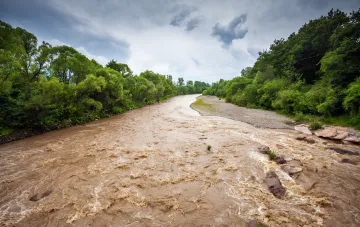
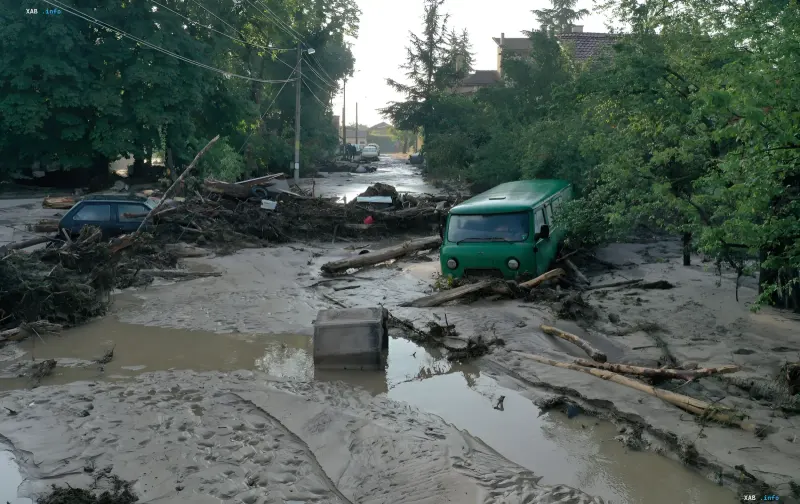
In the mountain valleys on the Nepal–China border, a flow of ice, rocks, and mud formed by a glacier collapse struck settlements and rivers on Wednesday. According to the latest data, the death toll has risen to nearly 800 people, while more than 3,000 remain missing. Nepali authorities report 781 dead and 2,502 missing; the Chinese side has confirmed 16 dead and 546 missing. The Red Cross estimates the total number of affected people at more than 90,000. China's Foreign Minister called the event the most severe cross-border disaster in recent years for both countries, and the rescue operation unprecedentedly complex.
Scale of the Disaster and Its Cross-Border Nature
In addition to citizens of the two countries, 261 foreigners from 23 countries cannot be found in the Tibetan district bordering Nepal. The mountainous terrain of the Himalayas sharply complicates the search: in recent days, locals and rescuers have had to move to higher ground due to a new rise in the level of the Trishuli River following fresh rainfall. The operation is further complicated by the fact that the flows carry bodies and debris far from the epicenter, making both rescue and the accounting of victims difficult.
Threat of New Flooding and Hydropower Facilities
Work has been repeatedly halted due to fears that a lake formed on the Nepal–China border as a result of the collapse would trigger a new wave of flooding. By Saturday evening, this reservoir had largely been drained, but drones have already detected a new landslide further downstream, where a new natural reservoir is forming. Particular attention is focused on five flooded hydropower facilities — in particular, the Upper Trishuli complex, where, according to available information, around 350 people may be trapped in a tunnel.
Challenges of the Rescue Operation
About 10,000 Nepali military personnel, together with specialists from China and India, have been deployed to the operation. On Sunday, the army delivered heavy equipment to a hard-to-reach location, and rescuers began clearing debris at the entrance to one of the tunnels. "It is very difficult, because there is a lot of rubble there, and we cannot carry out blasting to break through," explained the head of Nepal's emergency services. Nepali authorities have appealed for international assistance: they need specialists in tunnel rescue operations, DNA testing, equipment for storing bodies, and forensic identification.
Mass Burials and Identification of Victims
After days of unsuccessful searches for relatives in hospitals and morgues, Nepali authorities began mass burials of hundreds of unidentified victims due to the risk of rapid decomposition of the bodies. In Chitwan district, a hundred kilometers from the disaster zone, graves were dug for bodies that the current carried out of the affected region. On Saturday alone, 96 unidentified people were buried, and more than a hundred more were planned to be buried on Sunday. Before burial, DNA samples were taken from the authorities and burial sites were recorded so that families could later identify their loved ones. According to police, more than half of the recovered bodies cannot be identified — some have no face, and in some cases only limbs or individual body parts remain.
Contradictory Data
There is no single consolidated figure for the dead and missing in public statements: the Nepali and Chinese sides publish separate data (781 dead and 2,502 missing in Nepal; 16 dead and 546 missing in China), and the overall estimate of "nearly 800 dead and over 3,000 missing" is obtained by summing them and may change as figures are refined. The data on Ukrainian citizens also differ: as of August 26, 53 were listed as missing, while by August 28 the number had risen to 56. These discrepancies reflect not a contradiction of versions but the dynamics of refinement as the search progresses, although at the time of publication the exact number remains unstable.
Situation with Ukrainian Citizens
According to data obtained on August 28, the number of missing Ukrainians rose to 56; at that time, none of them were injured or killed. It was previously reported that the destructive flood hit the border of Nepal and Tibet, and as of August 26, 53 missing Ukrainians were known. Confirming their fates remains one of the priority tasks for diplomatic and rescue services amid the general uncertainty surrounding the identification of bodies.