With the arrival of October, many indoor plant enthusiasts begin to wonder about autumn care requirements for their green pets. Experts note that performing a transplant in mid-autumn solely due to the calendar season change is not only unnecessary but often harmful. The main task during this period is to carefully assess the condition of the root system and check how effectively the soil substrate absorbs moisture and dries out after watering.
Key Signs That Repotting Is Needed in October
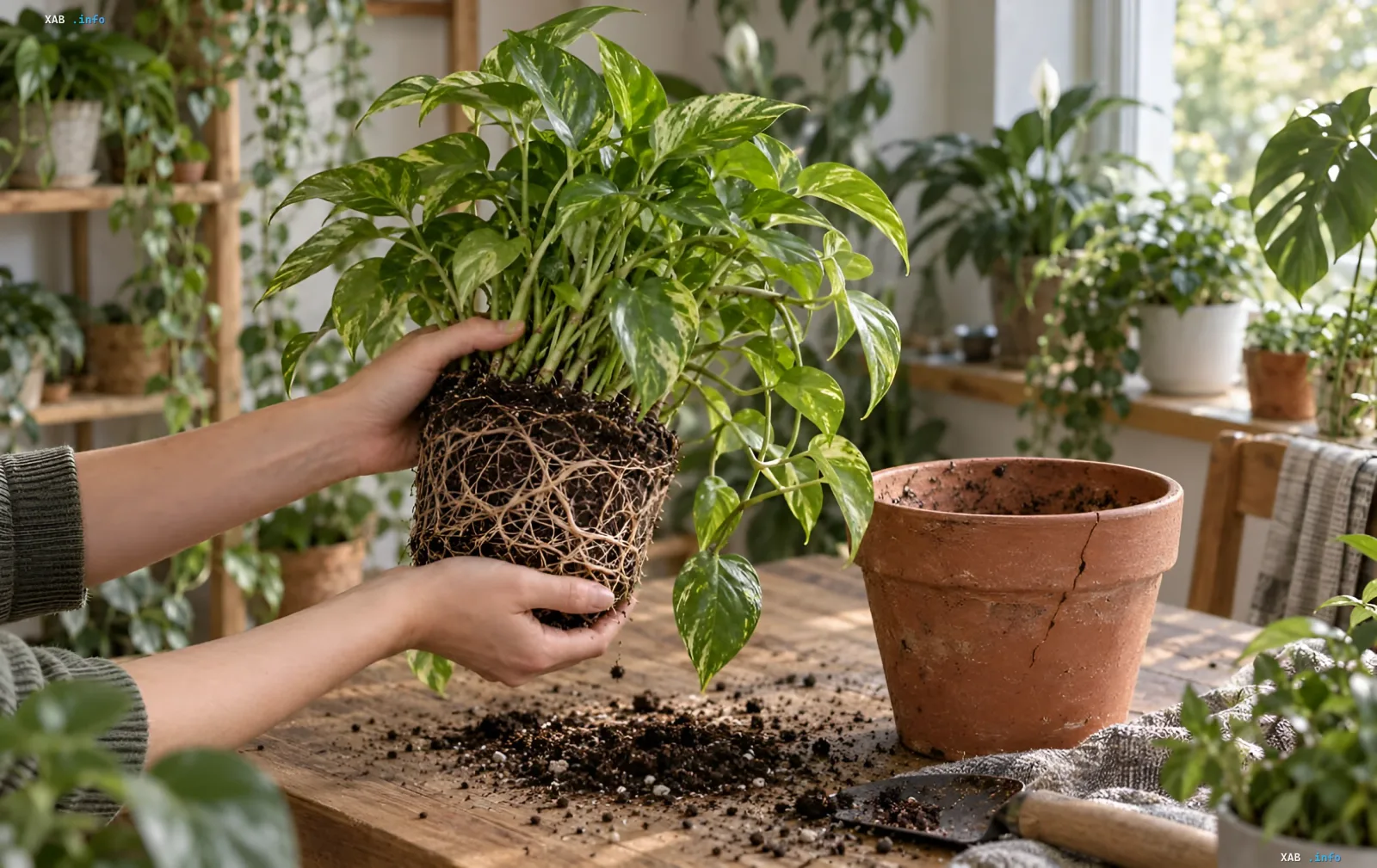
It is best to schedule planned repotting during periods of active growth — in spring or early summer. However, an October transplant is permissible if there are clear agronomic indications. Slow growth or yellowing leaves do not automatically mean the pot is too small. Specialists at the University of Minnesota strongly advise paying attention to roots growing through drainage holes or twisting into tight circles inside the pot.
Contradictory Data
There are certain discrepancies between institutional guidelines regarding soil moisture assessment and watering frequency. For instance, if soil dries out quickly after usual watering and the plant wilts, it may indicate crowding. However, the Royal Horticultural Society of England warns that in autumn and winter, pots can dry out faster due to lower air humidity caused by heating systems. On the other hand, Iowa State University experts note that severely dried-out peat or coconut coir can repel water entirely, creating a false impression that a larger pot or new soil is urgently required.
When Soil Replacement Alone Without a Bigger Pot Is Enough
Over time, any soil mixture loses its initial structure, compacts, and settles, reducing air supply to the roots. If the root system still has enough space, but water is absorbed poorly or stays waterlogged, buying a larger pot is completely unnecessary. In such cases, experts recommend repotting the plant into fresh substrate while keeping the previous container size, which prevents root rot from excess unused soil volume.
Rules for Safe Autumn Repotting
If diagnostics reveal a critical lack of space, choose a new pot strictly one size larger, based on root system dimensions rather than plant height. Never transplant a small plant immediately into a much larger container. Excess soil volume will stay wet for too long, restricting oxygen and causing root rot. If the plant is healthy, roots have enough space, and soil drains properly, October repotting is unnecessary.