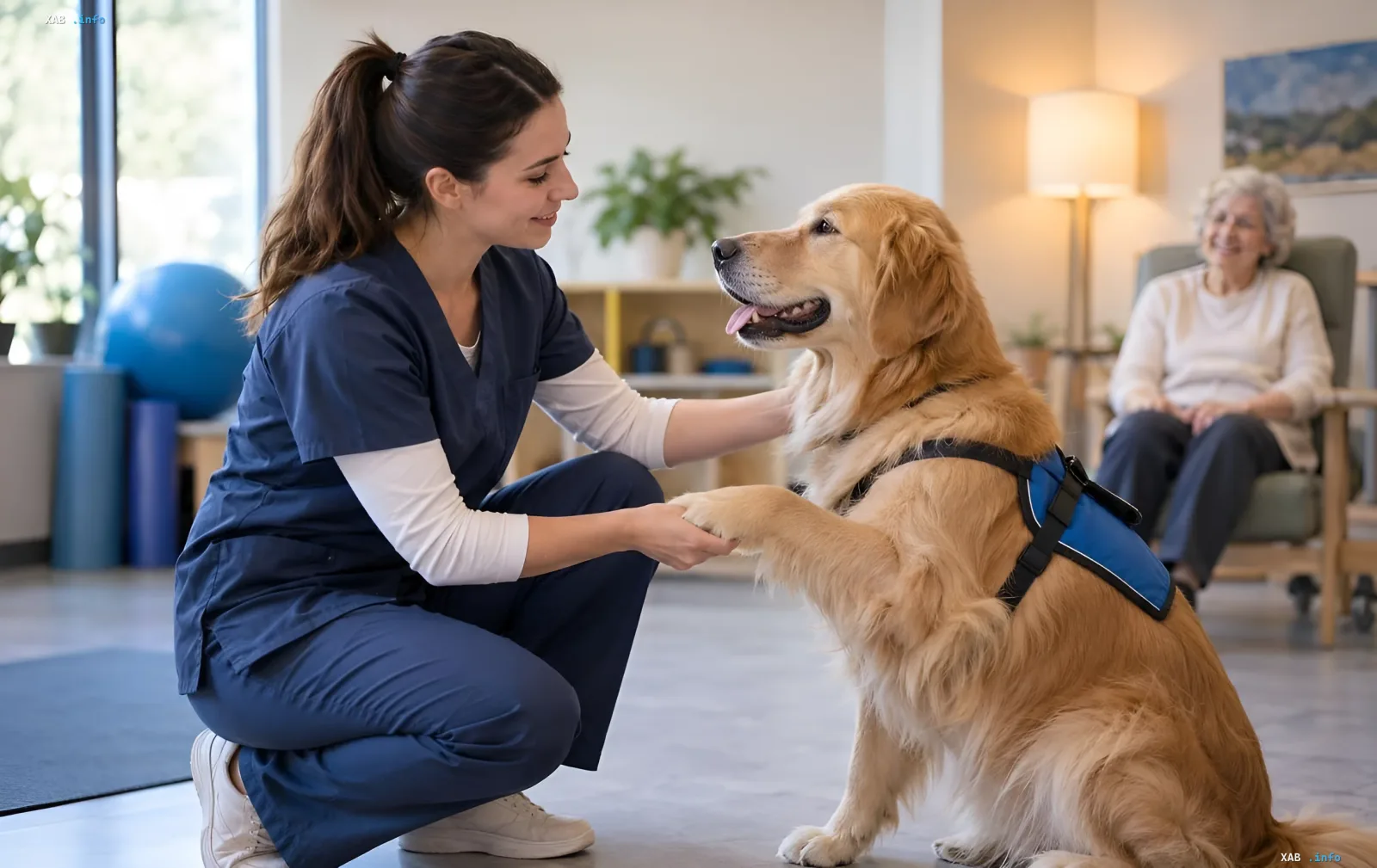
Canine-assisted therapy is a complementary form of therapy in which a specially trained dog acts not as a treating physician, but as a "bridge" between the specialist and the client. This is how Marina Prokopenko, a dog trainer and head of the INNIKOS canine-assisted therapy centre, describes the essence of the method. In her words, the dog does not make diagnoses or prescribe treatment: its role is to help a psychologist, rehabilitation specialist, or other professional establish contact with the person who has come for therapy. For many patients, the animal becomes the main motivation to take the first step toward a specialist or to continue their rehabilitation. Scientific research confirms that interacting with a dog helps lower cortisol levels — the stress hormone — and stimulates the production of neurotransmitters associated with feelings of joy and safety.
Nature matters more than breed
Becoming a "therapy dog" requires more than being an obedient and friendly pet. Daria Reznichenko, a dog trainer at the INNIKOS centre, emphasises that one of the most important qualities is innate stress tolerance: "We can teach a dog a great deal, but most of the traits needed for this work are laid down by nature." The list of key characteristics includes sociability, curiosity about new things, the ability to recover quickly from stress (resilience), a desire to interact with strangers, as well as strong food and play motivation. It is fundamentally important that the dog enjoys its work, rather than simply performing tasks on command.
Three selection stages: from puppy to final testing
Preparing a dog for canine-assisted therapy begins in puppyhood, although an early start does not guarantee a successful outcome. The first assessment stage is carried out at a few months of age: specialists observe the puppy's reactions to new objects, people, and sounds, as well as its ability to refocus attention after a stressful stimulus (a sudden movement or unexpected sound). Only after a successful preliminary assessment is the animal recommended for further training. The second testing stage comes after the adolescent period, when genetically conditioned fears and phobias that were absent in puppyhood may emerge. Prokopenko advises, where possible, to study the dog's pedigree and observe its parents and older siblings in order to better predict behavioural traits. The final testing evaluates not only the level of training but also how comfortable the animal itself feels working with people and whether such a load harms its health.
Breed is not a guarantee, but only a starting point
Canine-assisted therapy is most often associated with Labrador and Golden Retrievers — these breeds are traditionally considered good candidates thanks to their friendly temperament. However, as explained at INNIKOS, Labradors with the appropriate qualities are very hard to find in Ukraine. The specialists stress that breed alone does not determine suitability: the decisive factor is the individual innate qualities of a specific animal. Training a therapy dog continues for almost its entire life: the dog must react calmly to wheeled chairs, crutches and their swinging, the smell of medicines, loud noises, crying, and sudden human movements.
The dog's well-being is as important as helping people
At the INNIKOS centre, it is emphasised that a dog working in canine-assisted therapy must enjoy its activity. The final testing includes an assessment of how the animal copes with the load, how quickly it recovers, and whether it experiences excessive stress from interacting with new people, objects, or unfamiliar environments. The dog's well-being is regarded as an equal priority alongside helping people. INNIKOS is one of four canine-assisted therapy centres in Ukraine; their opening and operation became possible thanks to the public organisation "Communications for Change" and the support of the international Royal Canin Foundation.