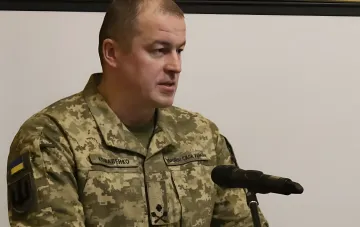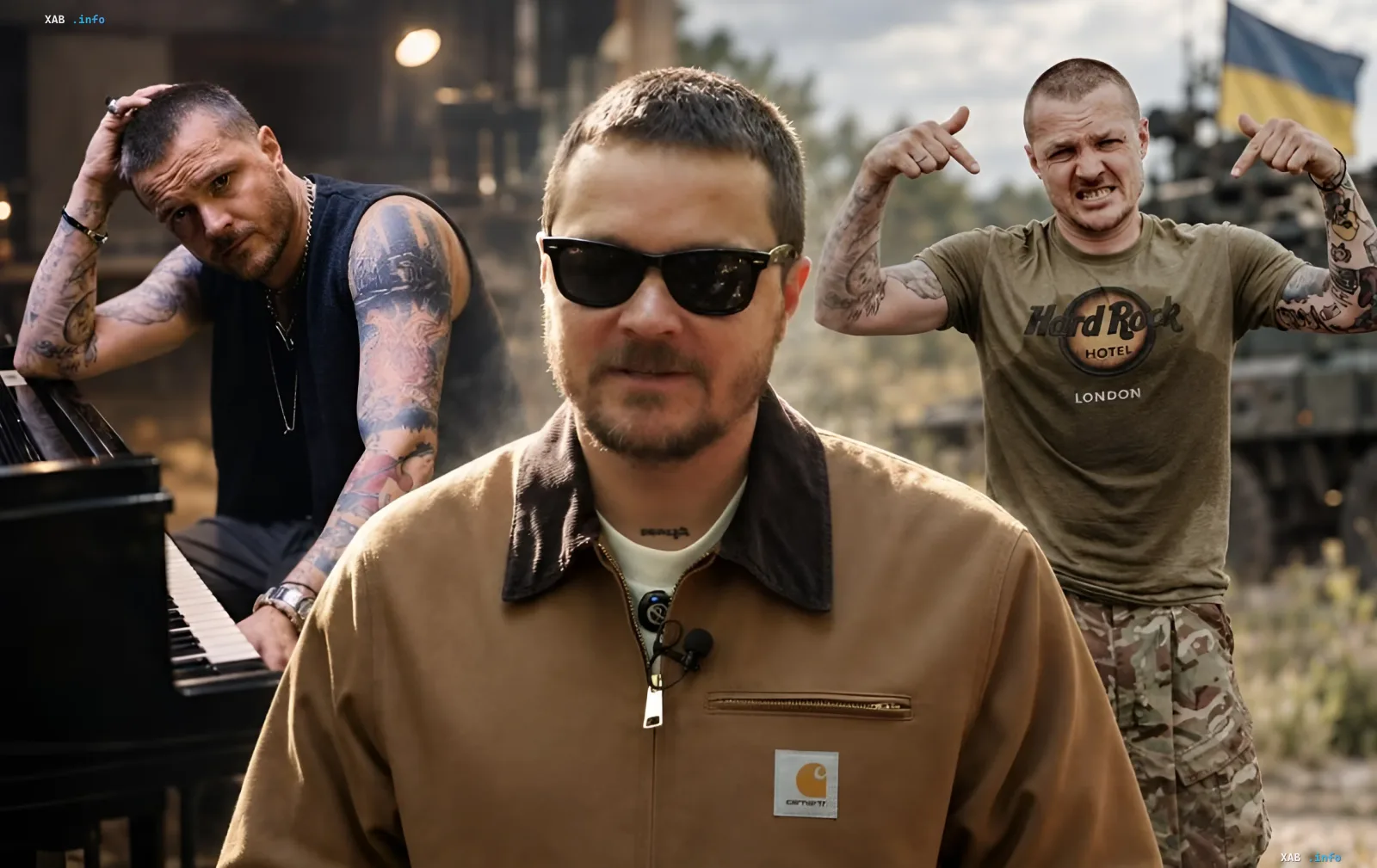
Evhen Galich, the leader of the rock band O.Torvald, candidly commented in a new interview with journalist Alyna Dorotiyuk on his “discharge” from the ranks of the Armed Forces of Ukraine and responded to the waves of reactions in which his situation was compared to the experience of other servicemen. The musician, who has been actively working on the topic of invisible combat injuries since 2025, stated that the word “concussion” (kontuziia), familiar to the layperson, does not reflect the real scale of the war's consequences for a person's body and psyche.
“That was our choice in 2022”
Galich began the conversation by emphasizing his immense respect for everyone who voluntarily took up arms in 2022 to defend the country. In his words, it was then that a collective decision was made, and each person who went to war did so consciously. However, the musician sharply drew a line: he considers it wrong to “compare” lengths of service and the nature of injuries received. “Everyone is saying now: my husband is over there with wounds, concussions… Well — I am too,” Styler quotes Galich. “But when we started comparing service lengths, traumas…” — it is precisely this logic, in his opinion, that devalues the real experience of those whose injuries are not visible to the naked eye.
Invisible wounds: from barotrauma to schizophrenia
A separate block of the interview is devoted to medical terminology and the nature of combat injuries. Galich explained that the word “concussion” is a simplification: the correct diagnoses are “traumatic brain injury due to a mine-explosive wound” or “barotrauma” in case of damage to the hearing organs. “And there is a huge number of such variations,” he noted. The musician also said that he has been working on the topic of invisible injuries since 2025 and has personally observed how the consequences manifest with a delay of two to three months: a person continues to serve on adrenaline, because “the hands are in place, the legs are in place,” and then he literally develops schizophrenia and an adjustment disorder, after which returning to civilian life becomes extremely difficult.
Afghanistan and Iraq statistics as a warning
To illustrate the scale of the problem, Galich cited data that, in his words, he had seen in the context of the experience of servicemen after the wars in Afghanistan and Iraq: about 20% of soldiers returned with invisible wounds, and the destabilization of civilian society was largely linked to them. “They cannot control their emotions. This is severe PTSD, this is an adjustment disorder, these are depressive syndromes. No one ever talks about them,” the frontman emphasized. He also mentioned a case in which a serviceman had an episode right during a concert, and he urged not to dismiss such manifestations as “ordinary alcohol consumption,” since a person in such a state uses substances not out of a “good life” but as an attempt to cope with his condition, which only worsens it.
Why some are discharged while others are not
Wrapping up the conversation, Galich returned to the original question — about the criteria for discharge. He stated that it is impossible to assess a person's real condition and their ability to continue serving based on external signs. “I know guys who are lying in a psychiatry ward. We go to them, we talk, we find specialists who will work with them. The probability that they will return to this world is very small,” the musician said. In his belief, society still considers mental trauma, and damage to the brain, hearing, and vision “invisible” and less important than physical injuries, and it is precisely this attitude that needs to change.
Contradictory data
The provided sources contain no direct factual contradictions regarding the date of Galich's discharge or the nature of his injuries. However, in the interview he does not disclose the exact date of his exit from the AFU ranks or a specific diagnosis, limiting himself to general formulations about “invisible wounds” and working on this topic “since 2025.” In other publications (including on Unian), the musician previously spoke of two instances when he “barely died,” which may point to a more severe condition than follows from the current quote. The difference in emphasis is explained by the format: in the Styler interview, Galich focuses on the public discussion rather than on personal medical details.