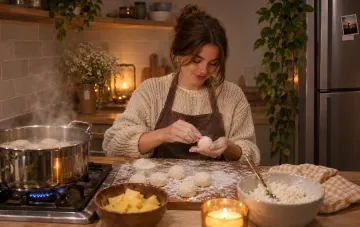
Dumplings and pierogi seem like the simplest dishes, but they are often overcooked until they fall apart or, conversely, left with raw dough and filling. The key difference between the two lies in the filling. Dumplings traditionally contain raw meat, so it is critical to bring the minced meat to full doneness, whereas pierogi usually feature pre-cooked ingredients: potatoes, cottage cheese, or cabbage. Hence, there are different cooking times and doneness indicators that are important to consider to avoid ruining the dish.
Fresh Dumplings: 4–5 Minutes, Frozen: 5–7 Minutes
According to Styler, citing a Food Network recipe, fresh homemade dumplings are usually ready about 4–5 minutes after the water returns to a boil. Frozen items need about 5–7 minutes after they float to the surface. If the dumplings are large or have thick dough, the cooking time increases. The main indicator of readiness is the meat filling: according to USDA recommendations, the internal temperature of beef or pork mince must reach at least 71 degrees Celsius (160°F), and chicken mince 74 degrees Celsius (165°F). Meanwhile, dumplings with veal, chicken, and turkey of the same size and dough thickness cook in roughly the same amount of time.
Pierogi: The Main Task Is Preventing Soggy Dough
Unlike dumplings, most fillings for pierogi are already cooked, so the primary goal is to cook the dough without letting it get soggy or the filling leak out. In the Food Network recipe featuring potato and mushroom filling, pierogi are cooked until the dough is done and they float to the surface — about 2–3 minutes. The exact time always depends on the size of the items and the thickness of the dough, so the timer is supplemented by appearance: the dough should become soft while holding its shape.
Submersion, Heat, and the No-Thawing Rule
The items are lowered into boiling salted water. It is important not to overload the pot: after adding cold products, the water temperature drops, and the dough can stick together. Immediately after submersion, the dumplings and pierogi are stirred gently. Frozen items should not be thawed beforehand — they are placed directly into boiling water, and once they float to the surface, the heat is reduced to a moderate boil while following the recommended time. These recommendations coincide with the advice of chef Alexei Tkachenko, who also emphasizes that frozen pierogi should be added in small batches so as not to lower the water temperature.
Serving and Common Mistakes
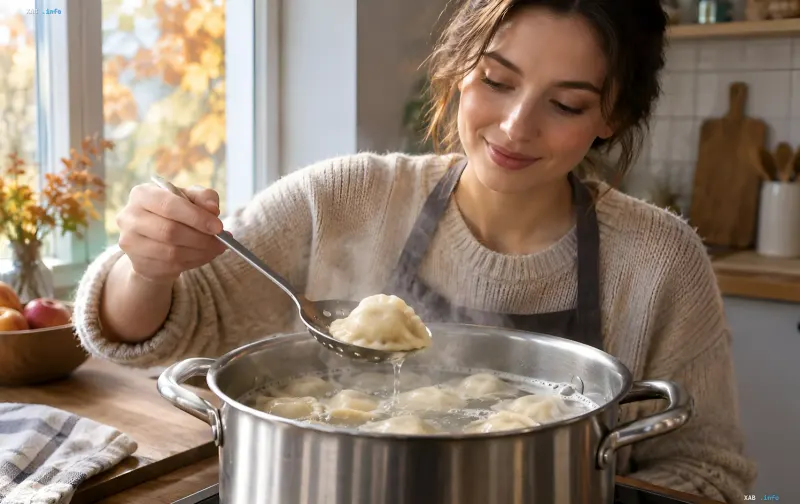
Ready items are removed with a slotted spoon and optionally brushed with butter so they do not stick together on the plate. According to Glavred, the average cooking time for dumplings generally ranges from four to twelve minutes: less time is needed for small poultry items, and more for large beef and pork ones. Experts also remind us that dumplings do not need constant stirring, and pierogi should be cooked over medium heat: on low heat, the dough sticks to the bottom; on high heat, it falls apart. Following these simple rules allows you to get soft dough and a fully cooked filling without the risk of overcooking the dish.