Choosing the right onion plays a crucial role in cooking, as this ingredient can dramatically affect the aroma, texture, and overall flavor profile of the finished dish. Some varieties are ideal for long thermal processing, while others reveal their potential best in fresh appetizers or quick frying.
Characteristics of Yellow Onions
Yellow onions possess the most expressive and versatile flavor, which develops wonderfully in dishes requiring long boiling or stewing. Under the influence of heat, the structure softens, and during prolonged frying, it caramelizes, acquiring a pleasant sweetness. They are traditionally added to soups, various sauces, meat gravies, and vegetable stews. The authoritative National Onion Association deservedly calls the yellow onion the most reliable and versatile choice for almost any culinary task.
Features of White and Red Onions
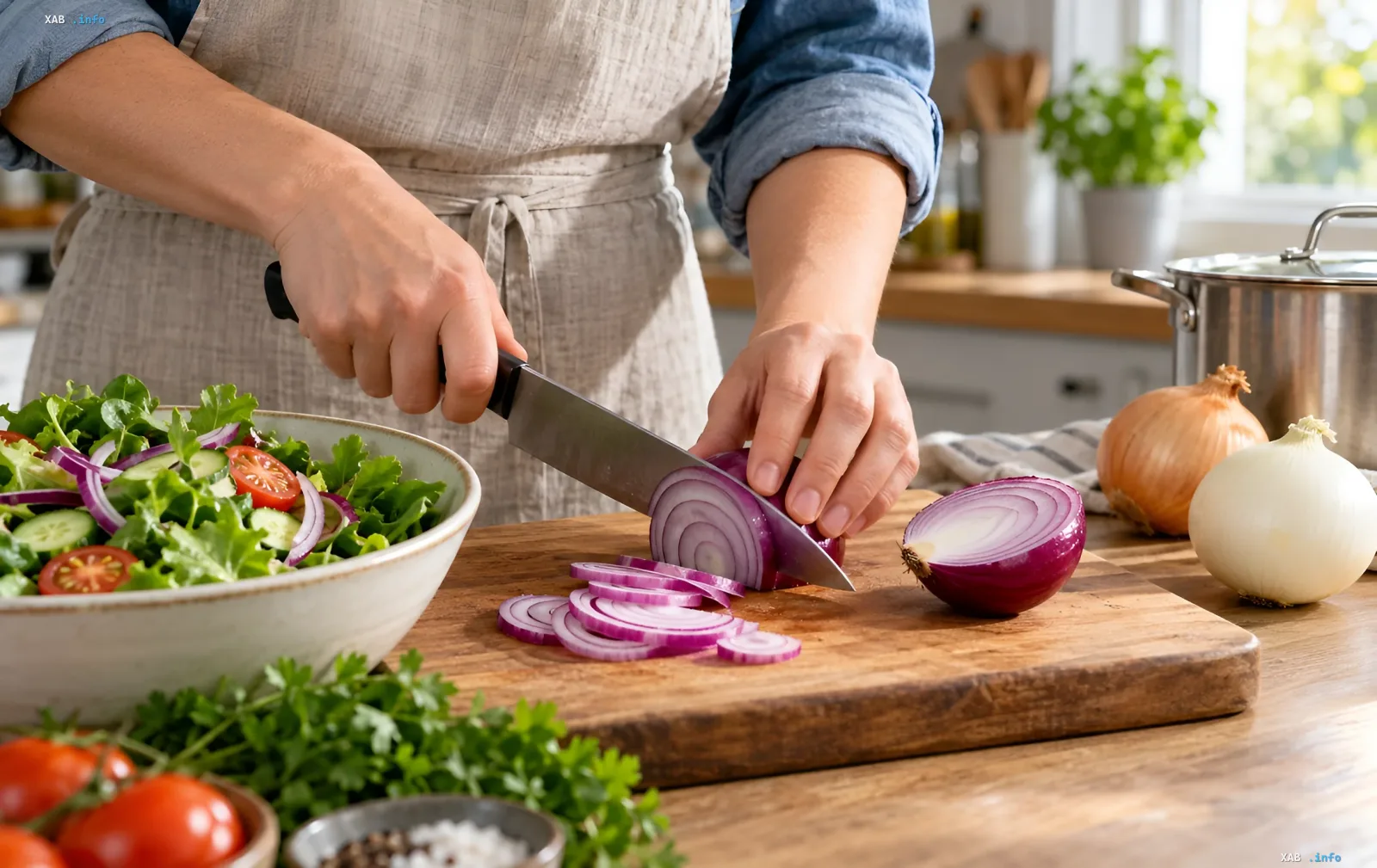
White onions feature a characteristic crisp texture and a pungent flavor, making them popular for raw use in salads, sandwiches, and light sauces. However, they can also be fried: during short-term thermal processing, the sharpness mellows, and the onion acquires an appetizing golden hue. Meanwhile, red onions attract attention with their purple-red color, making them an indispensable component for food presentation. They are ideal for fresh salads, grilling, and quick vinegar pickling, which effectively softens their natural bitterness.
Quality Criteria and Selection Rules
Despite existing culinary recommendations, there are no rigid rules, and in many recipes, one type of onion can be substituted for another, though this will inevitably affect the taste, color, and texture. When purchasing, it is important to choose exclusively firm and hard bulbs with no soft spots, traces of mold, or visible mechanical damage. For long-term home storage, it is essential to ensure the vegetables are thoroughly dried before placing them in a dark, cool place.