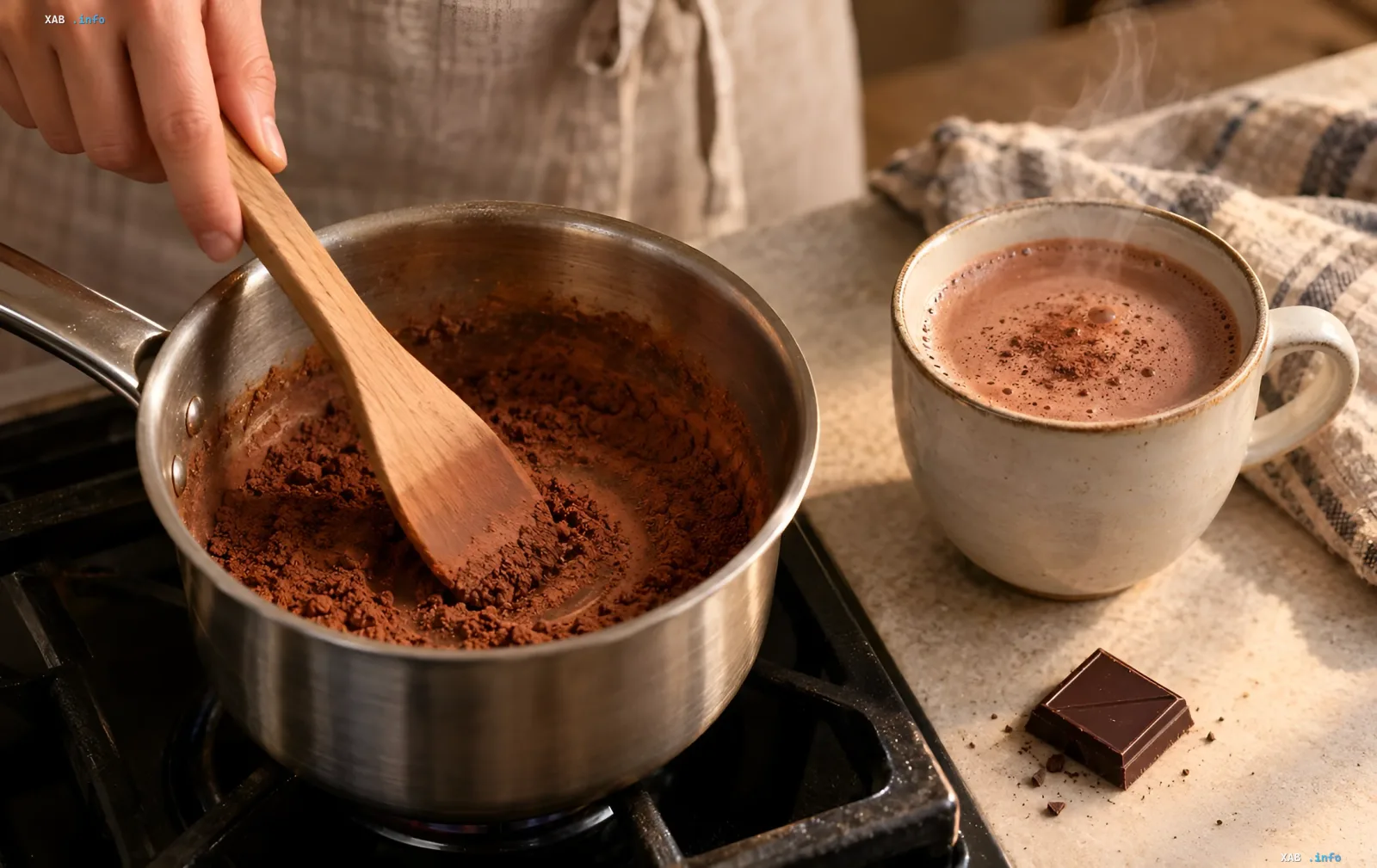
In the autumn of 2026, lovers of cozy homemade drinks are increasingly looking for unconventional ways to improve traditional recipes. Regular cocoa with milk can be turned into an exquisite restaurant-level treat if you use a simple culinary trick — preliminary light roasting of the dry powder. This method allows you to fully reveal the natural potential of cocoa beans, making the drink's taste deep, multi-layered, and velvety.
The Secret of Perfect Cocoa Roasting
The cooking process begins with the preparation of the dry ingredient. Pour the cocoa powder into a non-stick saucepan and place it over low heat. Constantly stir the mass: the powder should darken slightly, and a rich chocolate aroma will fill the kitchen. It is extremely important to control the time — the process takes just a few seconds. If you overheat the cocoa, it will acquire an unpleasant bitterness that will ruin the entire drink.
Proper Mixing Technology with Milk
After roasting, reduce the heat to a minimum and gently pour a small amount of milk into the saucepan. Thoroughly mix the liquid with the powder until you get a completely smooth mass without a single lump. At this stage, culinary experts recommend adding a pinch of salt: it works as a natural flavor enhancer, neutralizes excess acidity, and makes the chocolate notes sound brighter.
Final Touches and Serving
Once the base is smooth, gradually pour in the remaining milk while stirring the contents continuously. For maximum richness, throw a few pieces of high-quality chocolate into the saucepan and heat the drink over low heat until completely melted. Remember the main barista rule: the milk must not boil under any circumstances. Carefully monitor the temperature to remove the saucepan from the stove in time and enjoy the perfect warming drink.
Contradictory Data
There are different opinions in the culinary community regarding the addition of salt to sweet milk drinks. Some experts and chefs argue that a pinch of salt is an essential element for flavor balance, highlighting the sweetness of chocolate. At the same time, traditional home recipes often bypass this ingredient, considering it unnecessary for classic cocoa, preferring to regulate the flavor profile solely by the quality of chocolate and the amount of sugar.