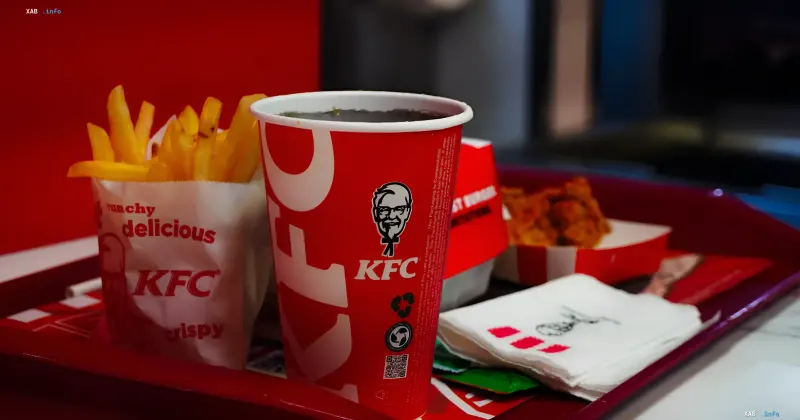
On October 15, 2026, the fast-food restaurant chain KFC, owned by Yum Brands, signed an agreement selecting Coca-Cola as the exclusive soft drink supplier for its locations across the United States. This officially concludes a partnership with PepsiCo that lasted for nearly four decades and was considered one of the most stable in the fast-food industry. According to the parties' plans, Coca-Cola beverages will begin appearing in US KFC restaurants in the spring of 2027, while the financial terms of the new contract were not disclosed at the time of publication.
History of Alliances: From Acquisition to Spin-Off
The relationship between KFC and PepsiCo began in the 1980s when PepsiCo acquired the popular fried chicken chain as part of its strategy to expand its footprint in the food industry. In 1997, PepsiCo spun off KFC and other restaurant brands into an independent company that later became Yum Brands. Despite the organizational separation, the two corporations maintained their beverage partnership for decades, making Pepsi the standard choice on KFC menus worldwide.
The Shift to Coca-Cola: Scale and Timeline
The decision to change suppliers involves a massive scale: KFC currently operates 3,718 restaurants in the United States. This makes the transition one of the most notable turns in the competition between the world's two leading beverage giants. Experts note that changing suppliers in such a large chain is a rare event because it requires overhauling logistics, reprogramming equipment, and updating menus, which usually takes more than one quarter.
Additional Pressure on PepsiCo
Losing a major partner like KFC is expected to place additional pressure on PepsiCo, which has been trying to revitalize its US beverage sales in recent months. PepsiCo's beverage division is facing headwinds not only in that segment but also in its snack business, which has been impacted by rising prices and a persistent consumer trend toward healthier eating. Cost pressures continue to weigh negatively on the company's profit forecasts. In early October, PepsiCo CEO Ramon Laguarta publicly admitted that the recovery of the company's growth and profitability is happening slower than expected.
Partnerships Outside the US Remain Intact
It is important to emphasize that KFC's transition to Coca-Cola in the US does not mean a complete end to PepsiCo's cooperation with Yum Brands. A PepsiCo spokesperson stated that the company recently renewed its beverage supply agreements with Taco Bell and KFC restaurants outside the United States, with the Taco Bell agreement spanning 10 years. In addition, PepsiCo maintains partnerships with several major chains, including Subway, Jersey Mike's Subs, and Pizza Hut—the latter of which switched from Coca-Cola to PepsiCo back in 2011.
Context: Not the First Precedent
This is not the first time PepsiCo has lost a major partner to a competitor: in 2012, the coffee and bakery chain Dunkin' switched to Coca-Cola after about five years of partnership with PepsiCo. Conversely, Coca-Cola has steadily strengthened its position in the fast-food supply segment and is already a long-standing partner of brands such as McDonald's and Wendy's. Together, these factors form a new market configuration in which Coca-Cola is increasing its presence in QSR channels, while PepsiCo is forced to make up for losses through long-term contracts and geographic diversification.