Regular cleaning of a dehumidifier is not just a cosmetic procedure; it is a necessary condition for its stable operation. A dirty filter restricts airflow and reduces drying efficiency, while a neglected condensate tank eventually develops slimy residue, mold, and unpleasant odors. At the same time, improper filter washing or careless handling of components can damage the unit. Below is a summary of recommendations from GE Appliances, Frigidaire, De'Longhi, and LG on how to safely care for the main parts of your device.
Preparation and Cleaning the Housing
Before any cleaning begins, the device must be turned off and unplugged. According to GE Appliances, the housing can be wiped with a soft, damp cloth and a small amount of mild detergent, while dust on the front grille should be removed using a vacuum with an attachment or a soft brush. Key constraint: never use abrasive cleaners or bleach, pour water inside the housing, or spray cleaning agents directly onto air vents. The control panel should be wiped with extra caution to prevent moisture from entering electronic components.
Tank and Drain Hose
Condensate constantly accumulates in the container, which becomes a source of problems if not maintained. Frigidaire experts explain that washing the tank with mild detergent helps reduce algae and odor build-up, while in pump-equipped models, it additionally reduces the risk of clogging. It is important not to force handles, covers, or other parts: if the design allows for tank disassembly, follow the manufacturer's manual strictly. Dehumidifiers with a drain hose require separate attention; the hose should be checked for debris and, before long-term storage, disconnected and dried, flushing it out before reuse.
Filters: What to Wash and What to Replace
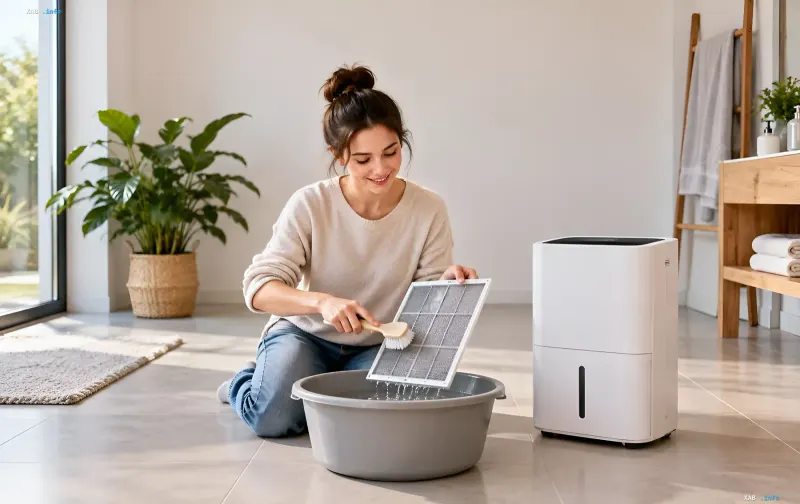
Filter care depends on the type. De'Longhi suggests cleaning dust filters with a vacuum and, if heavily soiled, washing them in water no warmer than 40 degrees Celsius. However, before washing, confirm that the manufacturer permits this method for your specific model, and ensure the filter is completely dry after washing—do not install damp parts. A separate category includes additional HEPA and carbon air purification filters: experts note that most of these must be replaced rather than washed, as water damages the filter material and lowers effectiveness. Dust filters should also not be placed in a dishwasher. Therefore, check the filter type and use only the manufacturer-approved maintenance method.
Full Tank Indicator and Stuck Float
A common problem after washing the tank is the full indicator remaining on even when empty. LG explains that in some models, the cause is a stuck float—the mechanism that determines water level. The manufacturer recommends turning off the device, carefully removing the tank, and shaking it gently up and down to check if the float moves freely. Do not open the protective cover of this mechanism, as it may disrupt its operation. If the indicator does not turn off after checking the float and reinstalling the tank, contact support or a service center.
Maintenance Frequency
The cleaning schedule is not universal: it depends on the model, room dust levels, and intensity of use. For home maintenance, focus on regular wiping of the housing and checking the tank and filter; however, if the manufacturer has set specific cleaning intervals, those take priority. Following these simple rules keeps the dehumidification efficient, avoids unpleasant smells, and extends the lifespan of the equipment without risking damage to electronics or filter elements.