Kyiv's capital transport system has faced serious challenges and large-scale changes in its operation. As of October 2, 2026, city authorities were forced to urgently revise public transport logistics due to the critical closure of key bridge crossings. These measures resulted from recent night shelling of the city's infrastructure, requiring an immediate response from municipal services and transport enterprises to ensure communication between the left and right banks of the Dnieper.
Changes in ground transport routes
In particular, bus routes No. 22 and No. 91, when moving from the left bank to the right bank, temporarily run via the Darnytsia Bridge. The detailed public transport route scheme towards the right bank is as follows: Mykola Bazhan Avenue turns into the Dniprovska Embankment, then transport proceeds along Bereznyakivska Street, Yuriy Shumsky Street, and Petro Radziyn Street. After that, vehicles cross the Dnieper via the Darnytsia Road and Rail Bridge, entering Prydniprovske Highway, Mykola Mikhnovsky Boulevard, and concluding this section near Holosiivskyi Avenue.
Transport operations via Northern and Paton bridges
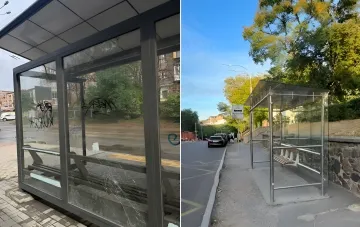
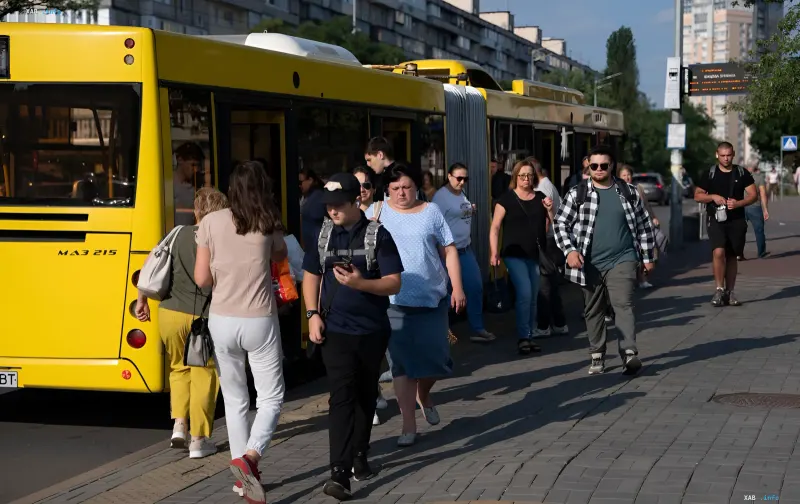
Due to the temporary traffic closure at the Podilskyi Bridge Crossing over the Northern Bridge, duplicate bus routes No. 110, No. 111, No. 112, and a special bus route No. 1-M are currently operating intensively. In addition, traffic across the Paton Bridge has been fully restored along their own customary schemes for several other public transport routes. However, passengers should take into account that buses, trolleybuses, and route taxis are currently running with a significant deviation from the standard schedule, which requires extra travel time.
Large-scale restrictions on capital bridges
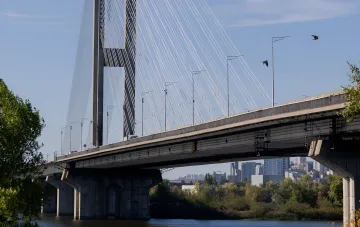
Kyiv Mayor Vitali Klitschko previously officially announced the introduction of strict traffic restrictions on all main capital bridges. The situation remains extremely tense: the South Bridge is completely closed to absolutely all types of traffic. On the Paton Bridge, traffic is blocked in the direction from the right bank to the left, while on the Metro Bridge in the direction from the left to the right bank, only one lane is left open for passage. Such security measures are dictated by the need for repair and restoration work.
Contradictory data
According to the city administration and emergency services, the bridge infrastructure sustained serious damage as a result of night attacks using long-range drones. At the same time, specialized military analysts from the Institute for the Study of War (ISW) suggest that Russian forces could have purposefully used new types of cumulative charges on UAVs to strike large fortified engineering objects, such as the South Bridge, which significantly complicates the nature of destruction and the timing of possible restoration of crossings.