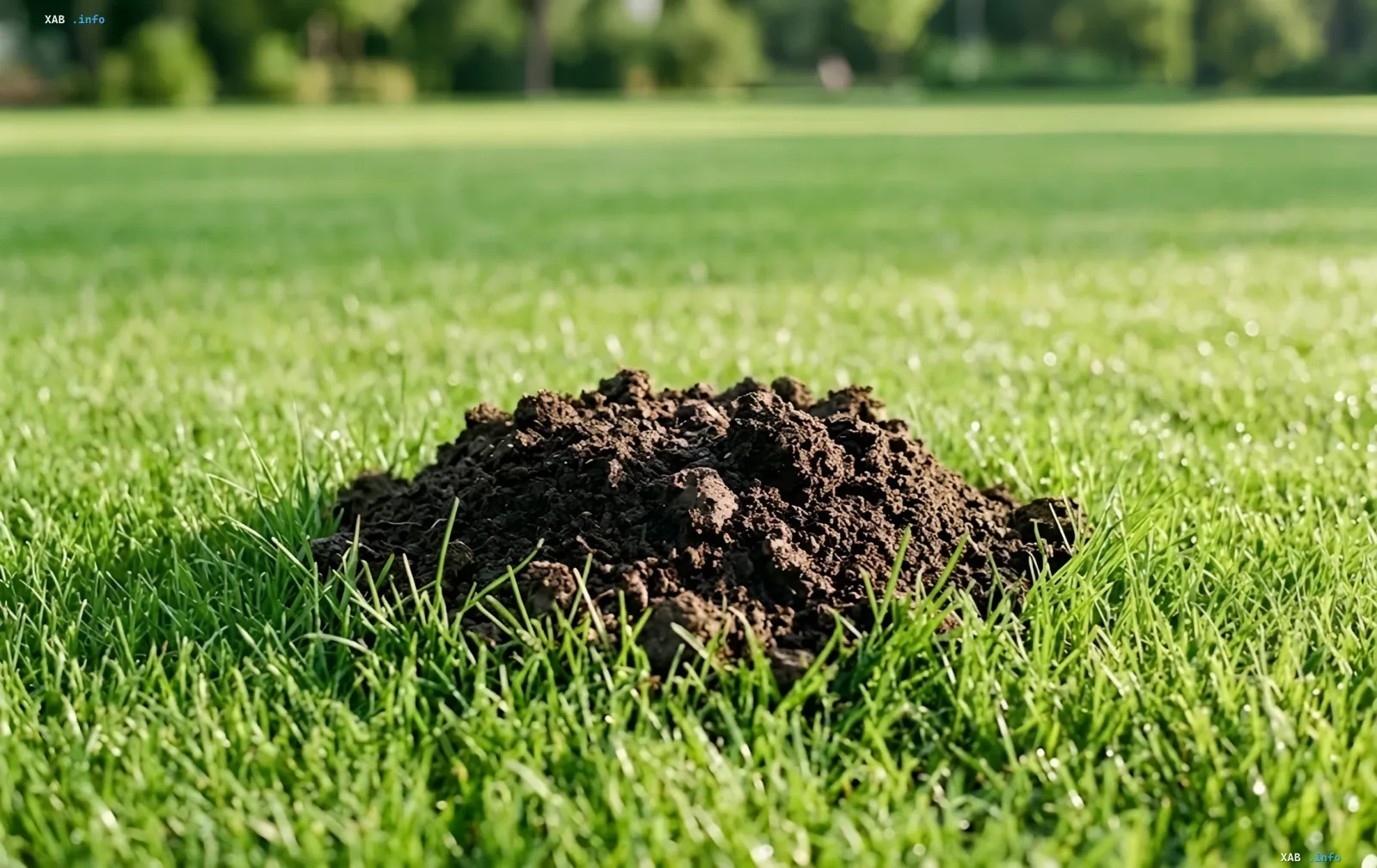
A mound of dirt on a perfectly mowed lawn or in the middle of a garden bed looks like a nuisance at first glance, but it's actually a sign that the soil on your property is healthy, moist, and rich in insects. That's exactly why moles choose such areas. It's important to understand: moles are exclusively insectivorous animals. They don't feed on plant roots, bulbs, or your harvest, but their presence causes serious damage to the landscape. The Styler project (RBC-Ukraine) explains how to humanely get rid of these animals, citing recommendations from Martha Stewart.
Why Moles Ruin Lawns but Leave Your Harvest Alone
The damage caused by moles is mostly mechanical. As they dig tunnels in search of food — earthworms and insect larvae — the animal tears apart the root systems of grass and shrubs, leaving patches of dead vegetation behind. The second, less obvious problem: ready-made mole tunnels are quickly taken over by mice and voles. It's these secondary rodents that eventually destroy your carrot, beet, and flower bulb crops. In other words, the mole itself doesn't eat the harvest, but it "prepares the infrastructure" for those who do.
Natural Repellent: Castor Oil
Pest control experts advise not wasting time on aggressive methods but instead changing the environment so it becomes unsuitable for the animal's life. One of the most effective natural repellents is a castor oil solution. Spraying the soil with this solution coats insects in a bitter film: the food becomes tasteless, and the mole migrates to another area. It's worth being honest: the phrase "drive them away forever," often used in headlines, is more marketing than reality. In practice, the animal doesn't disappear from the face of the earth but relocates, so the repellent needs to be maintained rather than applied just once.
Vibration, Watering Schedule, and Physical Barriers
Moles have an ultra-sensitive sense of hearing, so installing vibration or ultrasonic stakes directly into active tunnels creates unbearable living conditions for them. Changing the watering regime also works: the animals love overly moist soil, which is easy to dig tunnels in and where many worms gather. Switching to infrequent but deep watering dries out the top layer of soil and significantly makes life harder for moles. To protect raised beds, lay galvanized metal mesh with small openings at the bottom when forming them — a mole physically cannot gnaw through it.
A Living Barrier Around the Perimeter
It's recommended to plant a dense border of marigolds or ornamental onion (allium) around the perimeter of the garden. Their sharp scent acts as a reliable natural barrier that these animals try to avoid. This approach fully aligns with a humane strategy: instead of poisons and traps, the environment simply becomes uncomfortable for the mole, and it leaves the property on its own. Previously, Styler also told you about four shrubs that should absolutely not be planted near your house — these materials complement the overall picture of sensible landscaping.