Fallen autumn leaves stop being mere garbage and can serve as a valuable, completely free resource for garden care. Proper management of plant residues significantly improves soil structure, protects perennial crops from frost, and reduces fertilizer costs.
Using leaves for mulching and plant protection
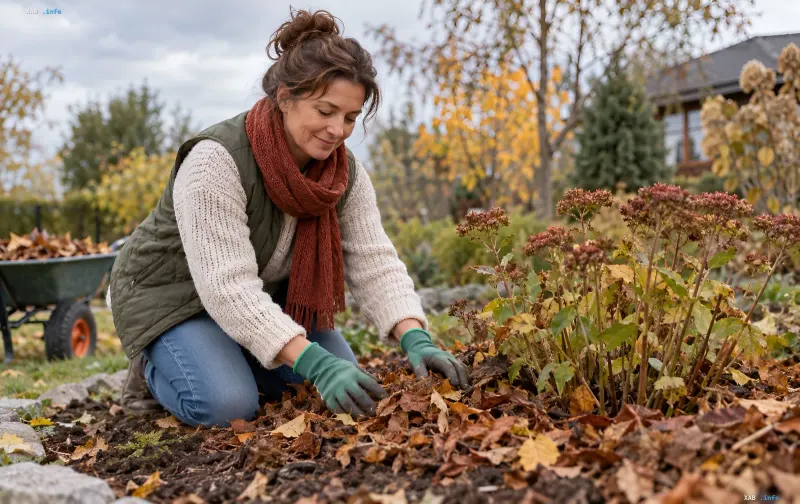
Crushed dry leaves are ideal as organic mulch. According to University of Maryland Extension recommendations, such a layer effectively retains soil moisture, suppresses weeds, and gradually enriches the earth with organic matter. Before spreading, it is recommended to shred the leaves with a lawnmower or garden shredder. For vegetable and flower beds, an optimal layer thickness is 2.5–5 cm, while under trees and bushes, 5–8 cm can be applied.
Creating compost and leaf mold
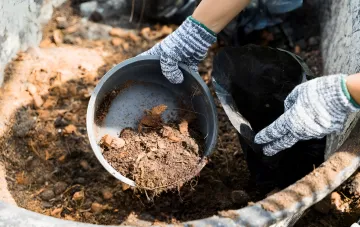
Leaves are an excellent source of carbon for compost piles, alternating well with freshly cut grass and nitrogen-rich materials. To obtain quality humus, the mass must be kept moderately moist. An alternative method is making leaf mold by placing leaves in perforated bags or mesh containers to ensure airflow. This substrate improves soil structure effectively.
Contradictory data
Opinions of experts regarding autumn garden cleaning partially diverge. Some specialists insist on total territory cleaning to prevent disease spread. At the same time, data from Oregon State University Extension and Iowa State University Extension confirm that a moderate amount of leaves on flowerbeds is beneficial, serving as natural shelter for insects and enriching the soil during natural decomposition.
Limitations and safety rules
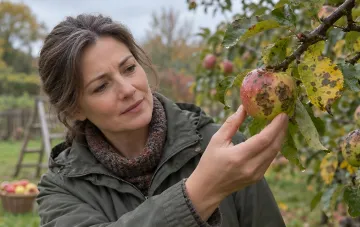
The main exception is diseased or pest-infested plant debris. Such leaves are strictly not recommended for garden beds or standard home compost, as the internal temperature of the pile is often insufficient to destroy pathogens.