
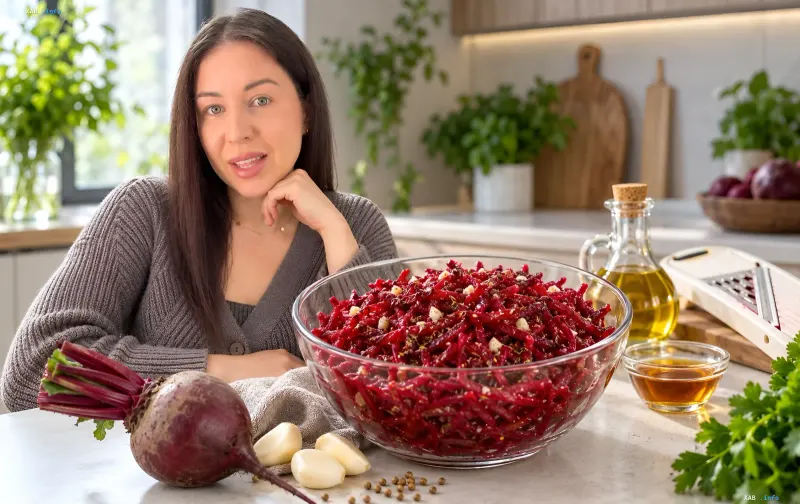
You can easily diversify your usual daily menu with a healthy and savory vegetable appetizer without any hassle, as you don't even need to turn on the stove to make Korean-style beets. The popular RBC-Ukraine entertainment project Styler, referencing recommendations from doctor and nutritionist Victoria Radostna, detailed how to create this simple yet incredibly delicious dish at home.
Ingredient Preparation and Grating Secrets
The cooking process begins with thorough preparation of the root vegetable: the beets must be washed well, completely peeled, and then shredded using a special grater designed for Korean-style carrots. This specific matchstick-like cut allows the vegetable to absorb spices, vinegar, and oil most effectively and quickly. The garlic is peeled and chopped in any convenient way—using a special press or on a fine grater, which gives the future appetizer its signature pungency.
Dressing and Marinating Process
Chopped garlic, salt, aromatic coriander, and a mix of Italian herbs for extra flavor are added to the prepared grated beets. Alternatively, you can use a ready-made store-bought spice mix for Korean carrots, but in this case, it is worth evaluating its composition beforehand to avoid excess salt. The vegetables are dressed with one tablespoon of high-quality cold-pressed unrefined oil and one tablespoon of vinegar, after which the mixture is thoroughly stirred.
Serving Features and Alternative Versions
The finished mixture must be tightly covered with a lid and placed in the refrigerator for at least six to eight hours so that the beets become softer and fully reveal their flavor potential. The optimal solution is to prepare the appetizer in the evening and leave it to marinate all night. Savory beets are served as an independent vegetable dish that will perfectly complement any lunch or dinner, bringing variety to the daily diet.Contradictory Data
Despite the classic cooking technology, culinary sources have certain discrepancies regarding the spice composition and marinating time. While nutritionist Victoria Radostna recommends using a combination of coriander, garlic, and Italian herbs with unrefined oil, other popular recipes suggest limiting oneself to ready-made factory seasonings for Korean carrots or adding a little sugar to the dressing for flavor balance, and the infusion time in some sources is reduced to two or three hours.