Almost every washing machine owner has at least once poured powder into the "wrong" compartment — and the wash finished, but the result was worse than expected. The problem is not that the machine is broken: it's that the detergent entered the drum at the wrong stage of the cycle. Manufacturers Bosch, Samsung, LG, and Electrolux unanimously emphasize that the three-compartment drawer is not three identical containers, but three dosing points tied to specific wash phases. Figuring them out is easier than it seems if you focus on the markings rather than the habit of "dumping everything in the middle."
What Roman numerals and the flower icon mean
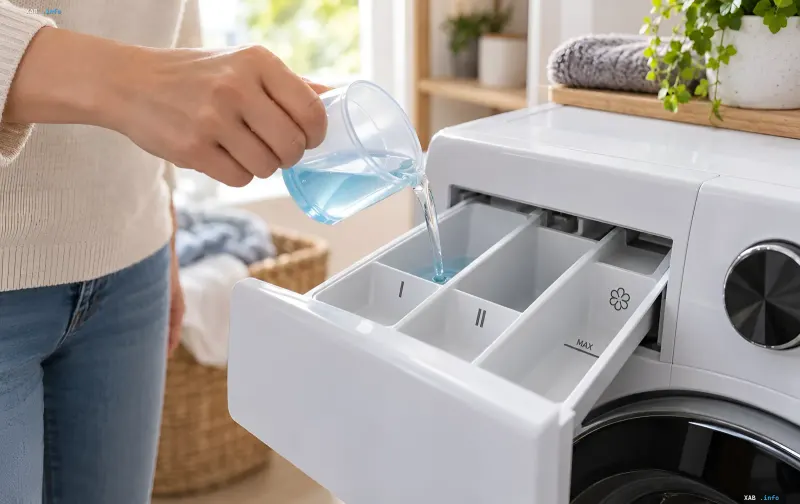
In most manually dosed models, the drawer is divided into three sections. Compartment I is intended for pre-wash — an additional stage activated when laundry is heavily soiled. If the pre-wash program is not activated, this compartment must remain empty: the detergent from it simply will not be dispensed. Compartment II is the main one: powder or gel for the main wash is added here, and it is used in the vast majority of programs. The third compartment, marked with a flower pictogram, is reserved for fabric softener or rinse aid. Important: the arrangement of compartments from left to right may differ from model to model, so the key reference point is the marking itself, not the "usual" side.
Powder, gel, and liquid detergents: the design nuance
It would seem that gel and powder are the same thing, just in a different form. In practice, the drawer design takes this into account. Samsung, for example, in models with a removable container for liquid detergent, recommends pouring the gel precisely into this insert, and when using powder, removing the container and pouring the detergent directly into compartment II. The position of the flap or the method of installing the insert may vary, so before the first load, you should consult the manual for your specific machine. Do not mix gel and fabric softener in the same compartment: each product has its own dispensing point and working phase.
Capsules and fabric softener: the rules most frequently broken
Capsules are a separate story. For models where their use is permitted, manufacturers recommend placing the capsule directly into the drum before loading the laundry, rather than in the drawer. This is because the capsule is designed to dissolve at a specific water temperature and volume, which are only provided in the drum. With fabric softener, another common mistake is pouring it above the MAX mark. LG explicitly states that exceeding the limit can lead to overflow into the neighboring detergent compartment. At the same time, MAX is an upper limit, not a mandatory dose for every cycle. The exact amount of softener to measure is determined by the instructions on the product packaging, taking into account the load size and soil level.
Auto-dosing: when the "I and II" scheme stops working
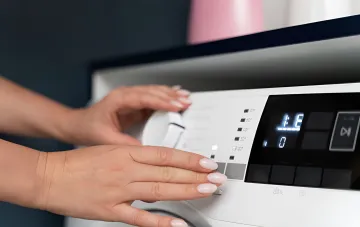
In modern machines with an auto-dosing system (for example, Electrolux AutoDose), the drawer is arranged differently: there are reservoirs from which the machine measures the detergent itself, and separate compartments for manual dosing. Here, the classic "powder in II, softener in the flower" scheme does not always apply. A critical point highlighted by Electrolux is that if you do not disable AutoDose, the machine may dispense detergent simultaneously from the reservoir and from the manual compartment, resulting in a double dose. Before starting a wash with manual detergent addition, you must check the settings and, if necessary, disable the automatic dispensing.
How much detergent is enough: no universal dose exists
Manufacturer Ariel emphasizes: there is no single "universal" dose of powder or gel for all washes. The amount of detergent is influenced by three factors — the degree of soil, water hardness, and load size. The reference point is the instruction on the specific product's packaging, not the familiar "one capful": the concentration of gels and the recommended amount vary among brands. Even when using auto-dosing, the machine's base setting may need adjustment after changing the gel — in this case, the dosage on the packaging should be checked against the parameters set in the machine's menu. Following these simple rules requires no extra costs, but allows you to get the exact washing result the product was bought for.