Simultaneously plugging several powerful electrical appliances into a single power strip or extension cord creates a critical load on the electrical grid. Experts from relevant agencies and electrical equipment manufacturers warn that neglecting safety rules can lead to wiring overheating, melted sockets, and domestic fires.
Risks of Simultaneous Connection of Powerful Equipment
The London Fire Brigade advises against plugging kettles, toasters, and microwaves into the same extension cord. These devices have significant power consumption, and their simultaneous operation can easily exceed the permissible load limit. The State Production and Consumer Service in the Ternopil region also warns against connecting powerful heaters to a single extension cord along with other household appliances.
Oil-filled radiators, convectors, washing machines, and dryers, as noted by equipment manufacturer Brennenstuhl, should be plugged directly into proper wall outlets designed for heavy loads. A heavier-duty extension cord does not increase the capacity of the fixed wiring inside the wall.
Load Calculation and Manufacturer Limitations
The total stated power of the devices is crucial for safety. A conditional example shows that operating a 2000 W heater and a 2200 W iron simultaneously results in 4200 W, which exceeds the typical 3500 W limit of an extension cord. Moreover, even if the total sum is lower than the limit, manufacturers' direct restrictions on using adapters must be strictly followed.
Experts remind us that two wall outlets in a room may be powered by the same electrical line. Moving a plug to an adjacent outlet does not guarantee a reduced load on the underlying cable. Powerful stationary appliances may require a separate dedicated line directly from the electrical panel.
Hazardous Signs and Emergency Procedures
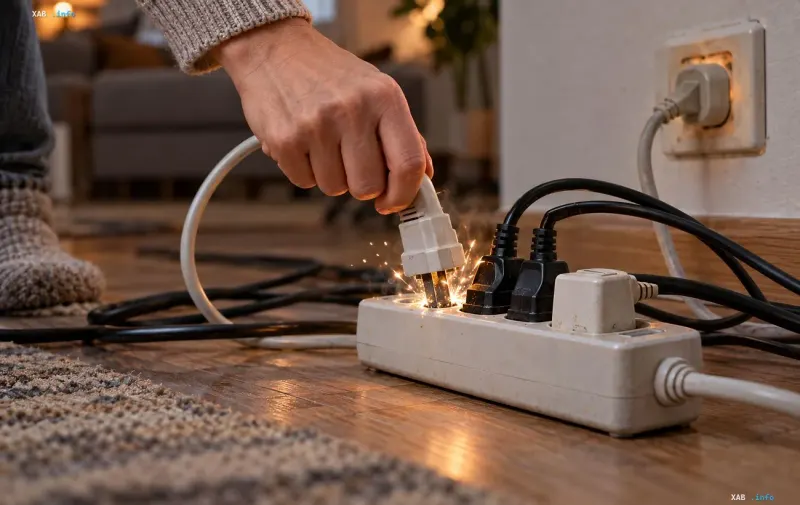
The Electrical Safety First organization urges users to immediately stop using a faulty socket or extension cord if sparking, smoke, or melting plastic is observed. Do not attempt to restore operation by repeatedly resetting the circuit breaker or daisy-chaining one extension cord into another.
If fire or smoke spreads, immediately leave the dangerous premises and call rescue services at 101 without lingering to reach the electrical panel. Emergency services emphasize that live electrical appliances and sockets must never be extinguished with water, and power should only be shut off when it is completely safe to do so.