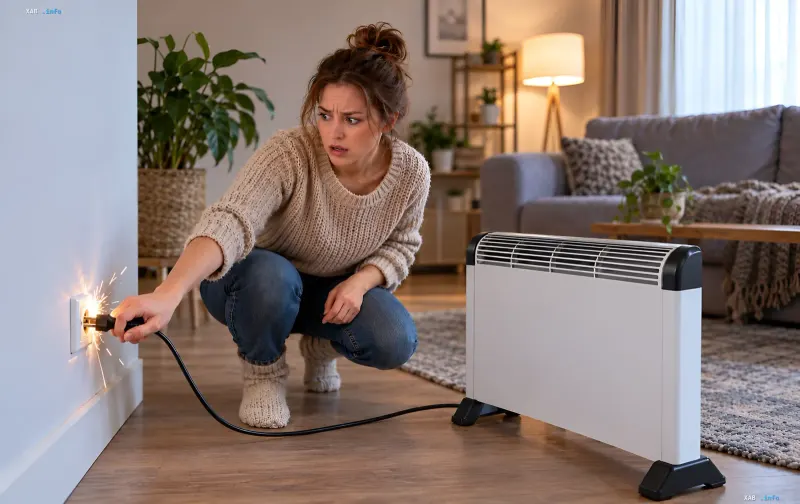
A short flash near the plug prongs at the moment of connecting a charger or any other device is something almost everyone encounters. In most cases, this is no reason for panic: while the prong is just touching the contact, the contact area is small, current is already flowing, and a small electrical discharge occurs between the metal parts, which is visible as a spark, explains ASUS support. However, it is precisely at this moment that it is important not to miss the boundary between a harmless 'click' and a sign of a real malfunction, because an overheated or damaged socket is one of the frequent sources of household fires and electric shocks.
When a Spark Is Normal
A single, weak spark at the very beginning of the circuit closure is considered acceptable. Current begins to 'flow' to the device the moment the contacts touch, and a short-term discharge at the metal-to-metal boundary is a natural consequence of this process. Both electricians and equipment manufacturers point to this: the flash itself when inserting the plug does not mean a breakdown. The problem becomes not a single spark, but its nature and location: if the discharge appears not near the prongs, but on the charger housing or where the cable is connected to it, the adapter must be stopped being used immediately. Apple directly calls sparks outside the metal prongs of the plug a sign of device damage.
Signs of a Damaged Socket
There are several clear signals that the socket is no longer in order. If the plug falls out under its own weight, the socket noticeably heats up, or smells of burnt plastic, you should stop using it and call an electrician, notes the electrical service City Power. Loose contact connections over time lead to the fact that the current jumps across the gap, causing constant sparking, overheating, and melting of the plastic—this increases the risk of fire. Importantly, a hot socket can crackle and spark even when the connected appliance is still working: a loose contact inside heats up regardless of the visible health of the equipment.
What to Do If the Socket Crackles and Sparks
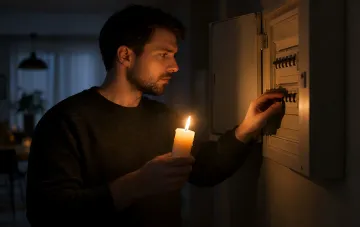
The main rule in such a situation is not to provoke and not to 'test' the socket. AB Electrical specialists warn: if a hot socket is crackling, sparking, or smelling of burnt, leave the plug in place, do not touch the faceplate to check the temperature, and do not try to reproduce the spark with another appliance. If there is no smoke, you can safely approach the panel and, knowing for sure which circuit breaker powers this socket, turn it off. The line should be left de-energized until inspected by an electrician. If the circuit breaker tripped on its own, do not turn it back on. Disassembling the socket yourself in search of the cause is dangerous, explain Graco electricians: without tools and knowledge, it is easy to worsen the damage or get an electric shock.
If Smoke Appears: Action Algorithm
The appearance of smoke changes priorities. According to the memo of the State Emergency Service of Ukraine in Odesa Oblast, you need to warn people nearby, exit via a safe route, and immediately call 101: the smell of smoke in the room is already a reason for a call, even if no open fire is visible. If smoke or fire prevents you from leaving, immediately inform the dispatcher where you are located. At the same time, do not linger to turn off the circuit breaker or pull out the plug, and it is strictly forbidden to extinguish the socket with water due to the risk of electric shock—the State Emergency Service emphasizes this in the rules for extinguishing electrical equipment. Thus, the safe sequence looks like this: de-energize the line via the panel if this can be done without risk, do not touch the hot socket with your hands, in case of smoke—evacuate and call emergency services.
Summary: How Not to Miss Danger
A single weak spark when inserting the plug is a normal physical phenomenon that does not need to be fought. Constant or intensifying sparks, sparking outside the prongs, heating, the smell of burning, a falling plug, and crackling of an already connected socket are dangerous. In these cases, the appliance is disconnected, the line is de-energized via the circuit breaker, and an electrician is called, and if smoke appears, the premises are evacuated and 101 is called. Compliance with these simple rules allows you not to confuse a harmless 'click' with a real threat and not to let a household trifle lead to a fire.