An extension cord is one of the most common elements of a home electrical grid, yet it is frequently the cause of household fires. When electrical current flows through a conductor, part of the energy is inevitably converted into heat due to electrical resistance. The higher the connected load, the more intense the heating. A slight increase in cable temperature is normal, but overheating of the plug, outlets, or the housing itself can lead to insulation breakdown and ignition. The State Emergency Service of Ukraine (SES) has repeatedly warned against simultaneously connecting multiple high-power appliances through a single extension cord, emphasizing that overloading can lead to smoke and open flames.
How to Tell if Heating is Dangerous
You cannot reliably determine by touch whether the cable temperature remains within safe limits. The U.S. Occupational Safety and Health Administration (OSHA) explicitly recommends not using cords that become noticeably warm during operation, as they can pose a real fire hazard. If the plug or extension cord housing has become hot, you must immediately stop using the device and not turn it on again until the cause is identified. It is strictly forbidden to check the temperature by hand if the housing is already damaged, smoking, or sparking—in such cases, the line must be de-energized and a specialist consulted.
Calculating Allowable Load: The "Weak Link" Rule
The number of outlets on an extension cord does not determine how many high-power devices can be connected simultaneously. The key parameter is the marking: the maximum allowable current in amperes and power in watts must be indicated on the housing or in the manufacturer's instructions. The State Energy Supervision Inspection of Ukraine explains that calculations should be based on the lowest permissible rating among all elements of the circuit. If the wall outlet is rated for 10 A and the extension cord for only 6 A, the characteristics of the extension cord limit the allowable load. For a rough calculation, multiply the mains voltage by the allowable current: if a 6 A extension cord at 220 V handles about 1320 W, connecting two devices with a total power of 1800 W already exceeds the limit. Importantly, even an extension cord with a high nominal load rating does not increase the capacity of outdated apartment wiring.
What Appliances Should Never Be Connected via an Extension Cord
High-energy-consumption devices place the heaviest load on the electrical grid. The U.S. Consumer Product Safety Commission (CPSC) recommends plugging portable space heaters directly into a wall outlet, bypassing extension cords and power strips. The U.S. Fire Administration (USFA) expands this list to include major household appliances: kettles, irons, toasters, microwave ovens, and other high-power devices can quickly overload an extension cord, especially during simultaneous operation. For each such device, you should check the manufacturer's requirements and avoid exceeding the allowable load of the home electrical grid.
Reel Extension Cords and Proper Cable Placement
Drum extension cords are convenient for storage, but when operated in a coiled state, they overheat much faster. The British electrical safety organization Electrical Safety First explains that a coiled cable dissipates heat less effectively, and under substantial load, this leads to localized overheating and potential ignition. The maximum allowable load of a reel in a coiled state can be significantly lower than that of a fully uncoiled cable. Furthermore, according to recommendations from the Electrical Safety Foundation International, extension cords must not be run under carpets, through doorways, walls, or floor structures. A covered cable loses its ability to dissipate heat, while rolling furniture or closing doors can damage the insulation.
What Not to Do and When to Call an Electrician
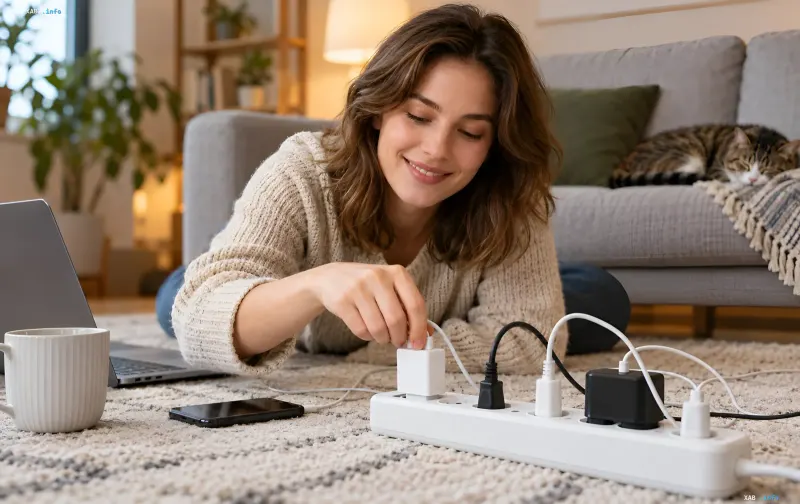
Connecting one extension cord to another ("daisy-chaining") does not increase the network's allowable load; it merely creates additional points of plug overheating in the wall outlet. Experts warn that such a connection increases the risk of overload and fire. If outlets are systematically lacking in an apartment, the correct solution is to contact a licensed electrician to install additional outlets rather than building a chain of extension cords. If cable length is insufficient, it is acceptable to use a single extension cord of the required length and ratings, but only if the appliance manufacturer permits such a connection and the total load does not exceed the minimum rating among all elements in the circuit.