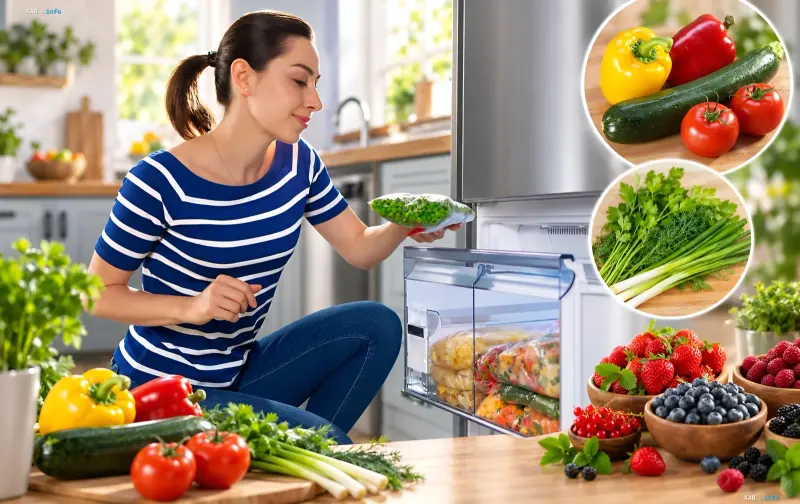
Freezing is one of the most affordable ways to preserve herbs, vegetables, and berries for the winter without boiling or excess sugar. However, as experts note, the result largely depends on food preparation: excess moisture, poor packaging, or freezing in large portions will cause the products to clump together, get covered in ice crystals, or lose some of their flavor properties. Styler's article (a RBC-Ukraine project) collects practical rules based on recommendations from Pennsylvania State University and Oregon State University that help preserve the taste and structure of foods for 8–12 months.
Herbs: Dill, Parsley, and Green Onions
According to Pennsylvania State University recommendations, herbs must be washed and thoroughly dried before freezing — paper towels or a salad spinner work well for this. Excess moisture, as other sources also emphasize, leads to the formation of a large amount of ice and clumping. Dill and parsley can be frozen in whole sprigs or individual leaves: to prevent them from sticking together, the leaves are first laid out on a tray in a single layer, and after freezing, poured into a bag. Green onions are more convenient to cut into rings and distribute in small portions. An alternative method is freezing in ice cube trays: chopped leaves are poured over with water, and the ready cubes are added directly to hot dishes such as soups, borscht, and side dishes.
Vegetables: Peppers, Zucchini, and Tomatoes
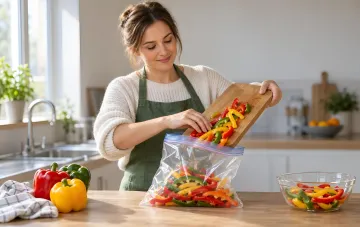
Sweet peppers are harvested for borscht, stews, soups, and gravies: they are washed, dried, have the stem and seeds removed, and are then cut into strips, cubes, or large pieces. According to Oregon State University recommendations, peppers can be frozen without preliminary blanching; however, to prevent the pieces from freezing together, they are first laid out on a tray and prefrozen separately, after which they are poured into a bag or container. Zucchini contains a lot of water, so before freezing, the sliced rounds or cubed vegetables are recommended to be blanched for about three minutes — submerged in boiling water and quickly cooled in cold water. Tomatoes are frozen whole, chopped, or as a tomato mass; after thawing, they lose firmness and become watery, so they should not be used for fresh salads.
Berries: Strawberries, Raspberries, Currants, and Cherries
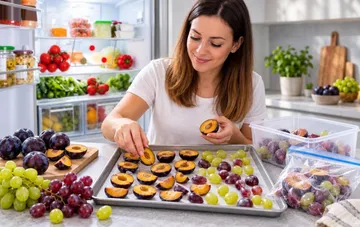
Berries are well-suited for homemade preserves: in winter, they are used for compotes, pies, porridges, and desserts. The main mistake is immediately putting damp berries into a large bag, causing them to freeze into a single lump. To avoid this, berries are laid out on a tray in a single layer and prefrozen before transferring to packaging. After thawing, raspberries and strawberries may become softer — this is a natural consequence of ice crystals forming inside the fruit, not a sign of spoilage.
Temperature, Packaging, and Storage Terms
To keep foods retaining their properties as long as possible, the freezer temperature should be −18 °C or lower. Most properly frozen fruits and vegetables retain their best quality for about 8–12 months. It is best to store them in small portions in special freezing bags or airtight containers: before closing the package, it is advisable to remove excess air, and indicate the product name and freezing date on the bag. Following these simple rules allows you to take out only the necessary amount of food in winter without defrosting the entire supply, preserving their taste and structure throughout the entire season.