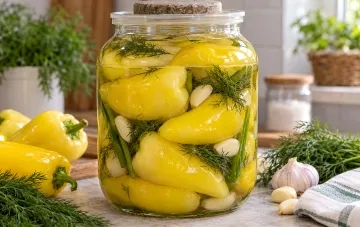
Preparing peppers for winter doesn't have to mean classic canning. The vegetable can be baked, stuffed, turned into a versatile sauce, or simply sliced and frozen — in winter, these preparations become the base for soups, stews, sauces, pizza, and other dishes. Styler (an RBC-Ukraine project) explains how to quickly turn a large stock of vegetables into a supply for the whole season, referencing an idea by Emilia Yevtushenko from Instagram.
Baked peppers with garlic and parsley
Peppers are cut in half, deseeded, and baked at 190 degrees for about 20–30 minutes. Then they are transferred to a bowl, covered with plastic wrap, and left to "steam" for a while, after which the skin is peeled off. Minced garlic and parsley are added to the peppers, the mixture is vacuum-sealed and placed in the freezer. After thawing, the preparation can be dressed with vegetable oil, apple cider vinegar, and salt.
Stuffed peppers with a rice filling
For the filling, rice is cooked until half-done, then sautéed onion and carrot, ground meat, an egg, salt, pepper, and spices are added. The peppers are cut in half, filled with the mixture, and first frozen individually. Once the preparations have set, they are vacuum-sealed and stored in the freezer. In winter, these peppers simply need to be cooked with tomato juice in the oven or on the stove.
Universal tomato-pepper sauce
Peppers, tomatoes, onion, and garlic are baked until soft and lightly charred. The skin is removed from the peppers and tomatoes, after which everything is blended. The finished sauce is portioned out and frozen. In winter, it can be added to pasta, meat, sauces, or used as a base for soup.
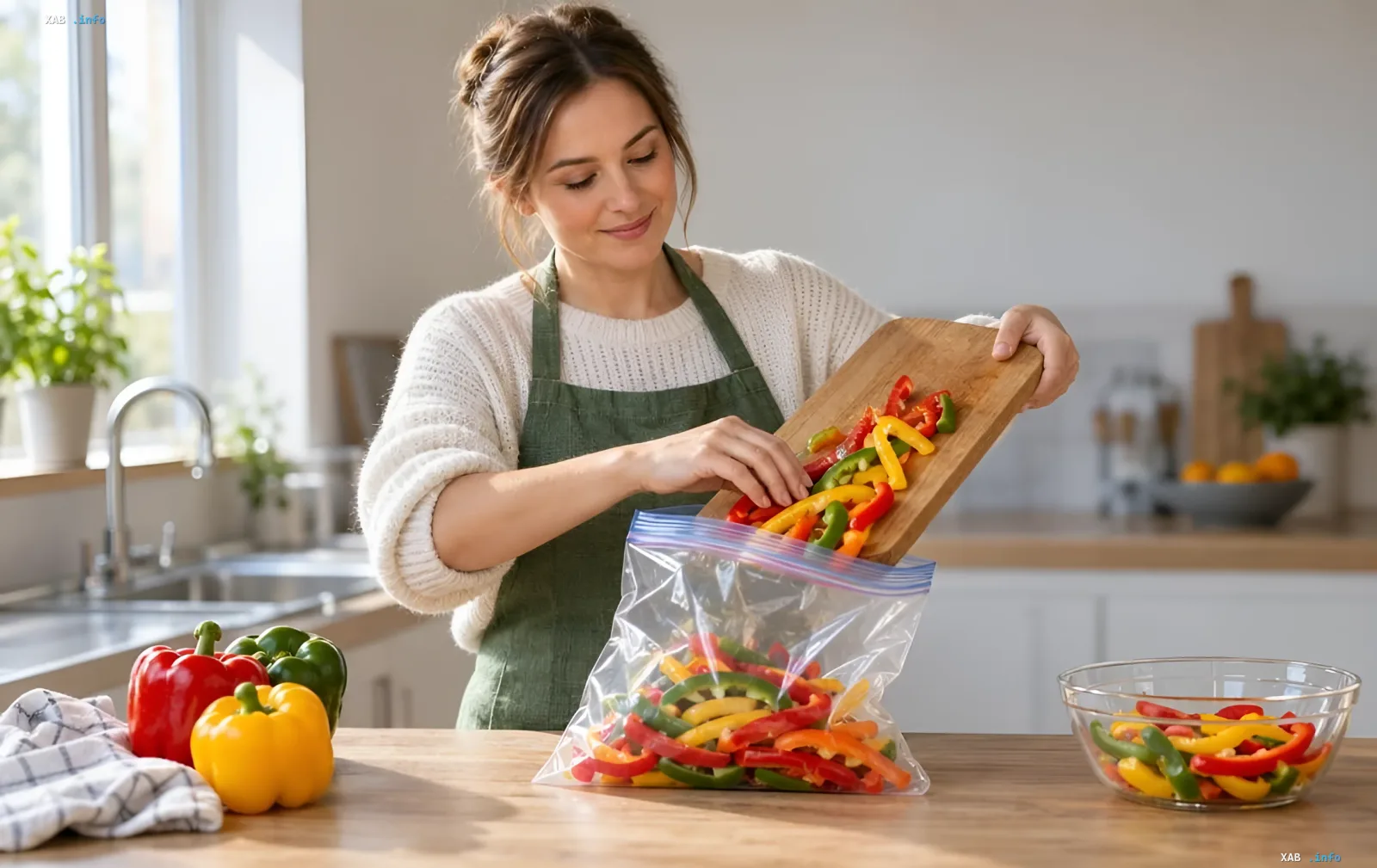
The simplest way — freezing sliced peppers
Fresh peppers are simply sliced into strips or cubes and frozen. After freezing, they are transferred to bags, and the needed amount is taken out as required. Such peppers are great for soups, sauces, stews, pizza, glass noodles, and other home-cooked dishes.
Contradictory data
Approaches to winter pepper preparations in different sources differ on the question of using vinegar and preservatives. In the method presented by Styler, vinegar is not part of the preparations themselves — it is mentioned only as an optional component of the dressing after thawing, while preservation is ensured by freezing and vacuum-sealing. At the same time, classic lecho recipes published by other outlets (including those "per GOST" or "without vinegar") either include vinegar as a preservative or rely on sterilization and precise acid dosing. The choice between a "live" frozen preparation and canned lecho ultimately depends on the available freezer space and taste preferences.