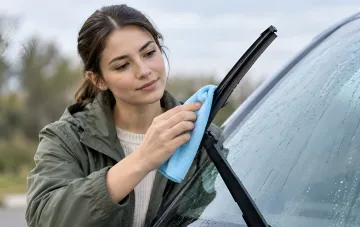
Rain, snow, wet shoes — moisture accumulates in the car cabin faster than it seems. If you leave the mats damp, a musty odor appears within a few days, and the fabric covering begins to warp and lose its shape. Experienced car enthusiasts and service station workers agree: wet mats must never be returned to the cabin until they are completely dry. This is the exact rule that starts the entire procedure recommended by both the American Automobile Association (AAA) and General Motors in their 2025 guidelines.
First Stage: Removal and Initial Treatment of Mats
The first thing to do is take the mats out of the car. For rubber models, it is enough to wipe them with a dry cloth to remove surface water. Fabric mats require a more thorough approach: they need to be thoroughly blotted with a towel to remove excess moisture as much as possible. If the mats are soaked through, they should be left to dry separately in a warm, well-ventilated room. Putting them back into the cabin before they are completely dry is a direct path to mold and a persistent unpleasant odor.
Floor Drying: Why This Is the Most Important Stage
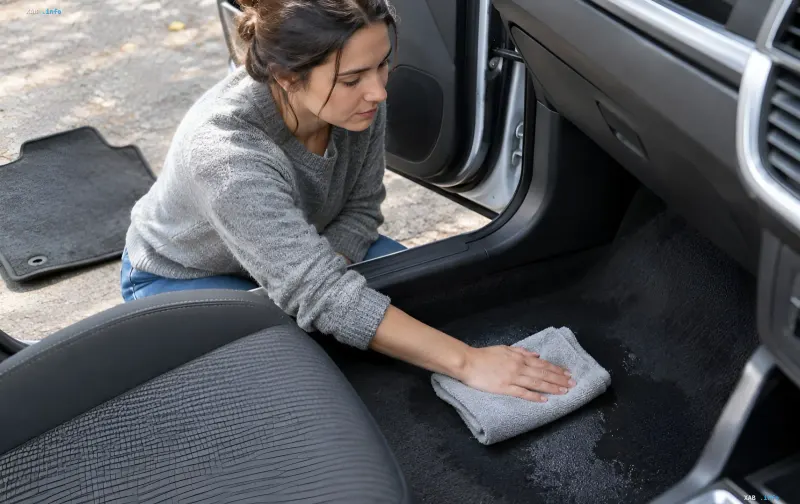
Significantly more moisture can accumulate under the floor fabric covering than it seems at first glance. That is why General Motors in its 2025 instructions recommends a clear sequence of actions: first use a wet vacuum cleaner, then blot the surface with a towel, and only after that direct an airflow from a fan onto the floor. The American Automobile Association (AAA) supplements this scheme: to speed up drying, you can leave doors or windows open in a safe place, use solar heat, and ensure air circulation with a fan. If water has penetrated deep under the covering, self-ventilation may not be enough — in this case, professional drying with partial disassembly of the interior covering is required.
Drying Timeframes and the Danger of Mold
The U.S. Environmental Protection Agency (EPA) emphasizes that damp materials should ideally be dried within 24 to 48 hours. In most cases, adhering to this timeframe prevents mold growth. Putting off drying "for later" is one of the most common mistakes that turns a local problem into a systemic one. It is equally important not to try to mask the odor with air fresheners: they do not eliminate the source of moisture, but only temporarily block the smell while the problem continues to develop under the mats.
When It's Time for a Service Station: Signs of a Hidden Problem
If moisture under the mats appears regularly, a musty smell lingers in the cabin, or the splashing of water is heard while driving, it is time to visit a service station. In such cases, it is necessary to check the tightness of the body and hidden cavities — water may be entering through microcracks in the seals, damaged drainage, or a defective windshield. Regular drying without fixing the cause only postpones the problem, but does not solve it.
The Main Rule
Bringing all recommendations together, one key rule can be formulated: do not return wet mats inside the vehicle until the floor beneath them is completely dry. This is a simple but critically important step that helps avoid mold, unpleasant odors, and further damage to the interior. In the cold season, when moisture in the car appears especially often, following this sequence saves time and money on subsequent repairs.