Every driver has at least once encountered a situation where, in the rain, windshield wipers instead of clearing water smear it across the windshield, leaving thin streaks and missing certain spots. In the dark, when oncoming cars have their headlights on, such a problem turns from annoying to potentially dangerous: visibility drops sharply and the driver's reaction time slows down. However, as automotive experts and manufacturers themselves explain, in most cases the cause is not rubber wear, but accumulated grime that can easily be removed at home.
Film on Glass and Rubber — The Main Culprit Behind Streaks
Over time, road dust, oily residue, car wash wax residues, pollen, tree sap, and other impurities settle on the surface of the windshield and the rubber edges of the wiper blades. A technical bulletin for Chrysler vehicles published in the NHTSA database explicitly states that such a film triggers streaks, water smearing, and the characteristic noise of wiper operation. A similar recommendation is contained in General Motors bulletin 24-NA-164: before buying new blades, it is necessary to clean the glass and rubber elements. Thus, replacement is not the first, but the last step in diagnostics.
Step-by-Step Cleaning: From Rubber Edges to the Lower Glass Border
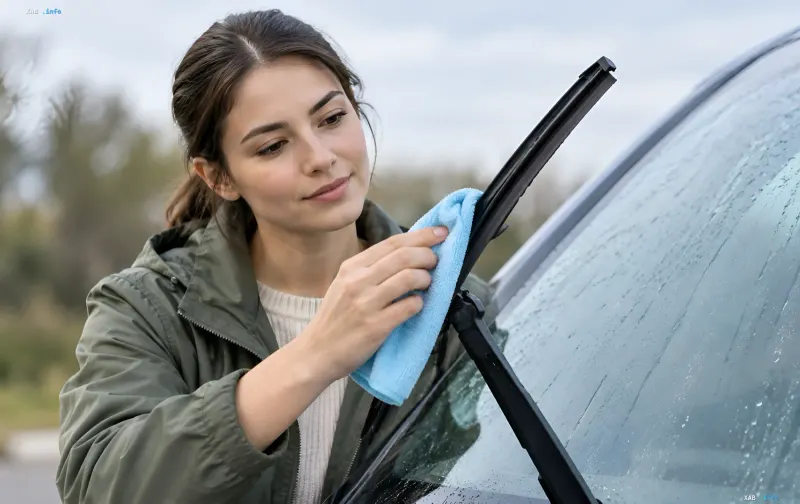
The algorithm is simple. If the vehicle design allows, lift the wipers away from the glass. Take a clean microfiber or lint-free cloth, moisten it with an automotive glass cleaner or washer fluid compatible with rubber. Gently wipe the working edge of the rubber along its entire length; if dark dirt remains on the cloth, repeat the procedure with a clean section. Then treat the glass itself, paying special attention to the lower part where wipers rest in the inactive position and where grime accumulates most often. Regular water spraying is not enough here — a specialized non-abrasive cleaner is required. After the procedure, inspect the rubber blades under good lighting: cracks, tears, hardened areas, and irregularities indicate the need for replacement.
Stubborn Contaminants and the Role of Washer Fluid
If streaks persist after regular washing, most likely residues of wax, resin, or water-repellent coating remain on the glass — especially relevant after an automatic car wash with a wax application program. In this case, a specialized glass cleaner for stubborn contaminants is used, strictly following the manufacturer's instructions and without abrasive sponges. The quality of the washer fluid itself is equally important: it softens road grime and reduces friction between the rubber and glass. You should use a seasonal product with the appropriate temperature range; in winter, summer fluid in the reservoir can freeze and disable the mechanism.
When It Is Actually Time to Replace the Blades
Rain-X recommends focusing not on a formal service life, but on actual cleaning performance. For many blade models, the replacement interval is considered to be 6–12 months, but the actual lifespan depends on weather conditions, usage intensity, and where the car is parked — outdoors or in a garage. If streaks do not disappear after thorough cleaning of the glass and rubber, and the rubber looks intact and elastic, you should check the correct installation of the blades and arm pressure. In cases where even new blades leave streaks, the problem may lie in the arms or mechanism — then diagnostics at a service station are appropriate.
What Not to Do: Common Mistakes
Experts emphasize a number of categorical prohibitions. Do not turn on the wipers on a dry and dirty glass — sand and hard particles scratch the surface. Do not try to "restore" the rubber with sandpaper, a knife, or solvents, and do not use aggressive household chemicals that damage rubber and paintwork. Frozen wipers should not be torn off by force: the glass should be warmed up with defrosters or the rubber freed from ice carefully. And the main safety rule: if streaks impair the driver's normal view of the road, driving should be stopped in a safe place and the problem resolved before continuing the journey.