When nights turn cold, tomatoes in the garden may no longer have time to turn red before the end of the season. In such a situation, the green fruits are picked and brought indoors, where they continue to ripen gradually. The result, however, depends on how well developed the tomatoes were at the time of harvest. Let's look at how to properly ripen the harvest at home, where to keep it, and what to do to make the fruits turn red faster.
Which fruits are suitable for ripening
For ripening, use healthy, fully formed fruits that have already reached the normal size for their variety. Tomatoes with rot, cracks, or significant damage should not be left to ripen. If a fruit has already begun to lighten and its green color is becoming less intense, it has a better chance of ripening properly after harvest. The University of Minnesota Extension notes that fully formed green tomatoes can ripen successfully indoors, whereas very unripe fruits often fail to develop a good flavor.
When to harvest: before the frost
Tomatoes should be brought in before frost damages them: low temperatures can disrupt further ripening. Utah State University Extension recommends picking ripe green or slightly pink tomatoes before a hard frost and moving them indoors to preserve the harvest.
Where and how to keep them: warmth matters more than light
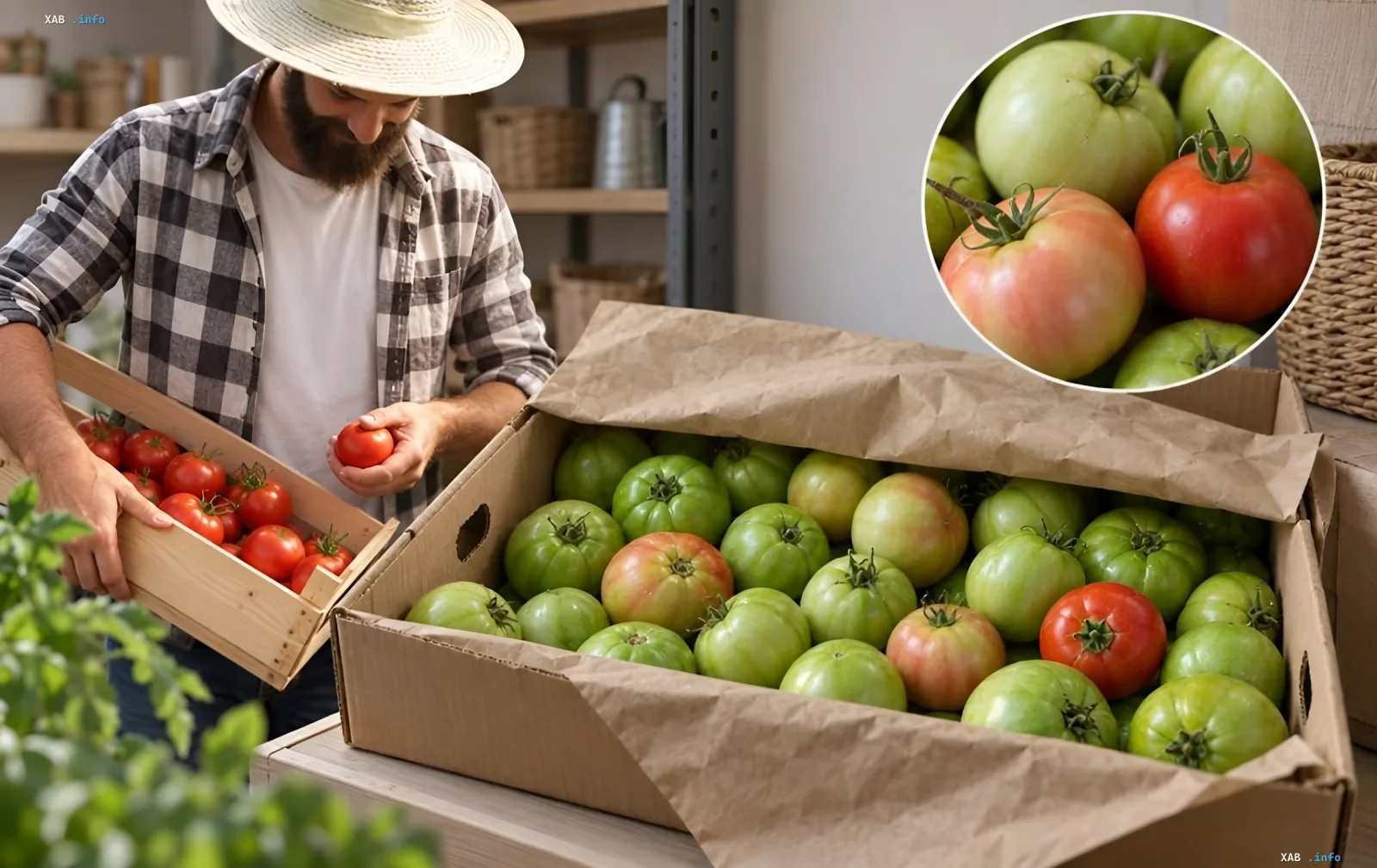
The simplest option is to spread the fruits out in a single layer in a dry room. Tomatoes should not be piled tightly on top of one another: this makes it easier to spot a fruit that has started to spoil in a timely manner. Direct sunlight is not required for ripening — what matters far more is that the room is warm enough. Light is not needed for ripening, while a warm room temperature is decisive. Fruits are best laid out in a single layer so they do not touch one another, and checked regularly as they ripen.
A box with paper and the role of ethylene
One of the recommended methods is to place green tomatoes in a box and cover them with paper. This technique helps retain moisture and allows the fruits to be stored in separate layers; experts advise exactly this approach. During ripening, tomatoes produce ethylene — a natural gas involved in the ripening process: once a fruit reaches the stage of color change, it is already able to continue ripening after harvest. That is why there is no need to put tomatoes on a sunny windowsill — it is better to create stable conditions and check the fruits regularly.
Ripening times and what not to do
There is no exact timeframe: the speed of ripening depends on the variety, the temperature, and the stage of ripeness of the fruit at the time of harvest. Some tomatoes will change color fairly quickly, while others will take longer. To let the harvest ripen gradually, you can regularly remove the fruits that have already turned red, leaving the green ones to keep ripening. The key point is not to put green tomatoes in the refrigerator: low temperature will not help them ripen properly and can worsen their flavor and texture. If some fruits are still very small, heavily damaged, or have started to rot, do not expect them to ripen fully — it is better to use such tomatoes in some other way.