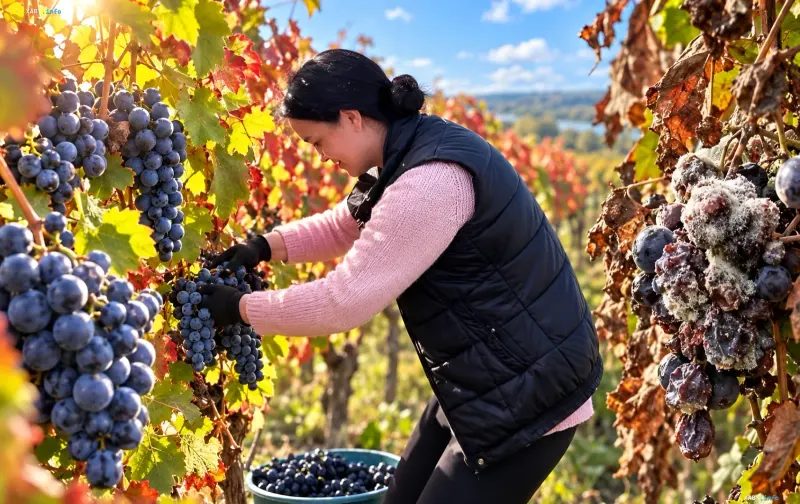
Ripe clusters can start to spoil before the gardener even gets a chance to pick them: the berries darken, crack, soften, or develop a coating, and the cluster sometimes gives off a distinct sour smell. According to Penn State Extension, cool temperatures and humid conditions create a favorable environment for rot to develop, and individual damaged berries become points from which the infection can spread to the entire cluster. We break down the five main causes and practical steps that help stop the problem in the middle of harvest season.
Gray Mold: The Main Enemy of Wet Weather
One of the most common causes of spoilage is gray mold, caused by the fungus Botrytis cinerea. According to Penn State Extension, the problem develops especially actively in wet weather, when berries and clusters take a long time to dry after rain or dew. Individual berries begin to soften and rot, and the infection can subsequently spread to the entire cluster. Agronomists recommend promptly removing damaged berries and clusters so they do not become a source of further spread of the infection.
Cracks and Mechanical Damage
Cracks in the skin open the door to fungi and microorganisms. A berry can be damaged after a sudden influx of moisture, by insects, birds, or mechanical injury. UC Agriculture and Natural Resources IPM specialists note that damaged berries become especially vulnerable to various rot pathogens; the cause of the injury can be insects, birds, cracks during berry growth, or damage associated with other grape diseases. Therefore, cracked berries should not be left among healthy ones for long.
Sour Rot and the Vinegar Smell
If the berries turn brown, break down, leak juice, and the cluster gives off a smell similar to vinegar, the cause may be so-called sour rot. According to Penn State Extension, damaged berries, yeasts, acetic acid bacteria, and fruit flies may be involved in the development of this problem. Insects are attracted to the juice of damaged berries, which helps the problem spread further along the clusters. In such cases, it is important not to leave rotten berries on the vine and to regularly inspect neighboring clusters.
Vine Density and Air Circulation
When clusters are constantly surrounded by dense leaves, air circulates poorly between them. After rain or dew, moisture lingers on the berries longer, creating favorable conditions for rot to develop. Penn State Extension specialists note that improving air circulation and reducing excessive shading help lower the risk of certain types of rot. At the same time, it is important to ensure that the vine is not over-dense and that the clusters dry relatively quickly after precipitation.
Overripening and Harvest Timing
Overripe grapes gradually become softer and more vulnerable to damage. If the berries have already started to crack or the first signs of rot have appeared on some clusters, waiting too long can be risky — especially in warm, humid weather, when rot can quickly move from individual berries to the entire cluster. If most of the grapes are already ripe, it is best to check the clusters regularly and not leave healthy fruit next to fruit that has already begun to spoil.
Contradictory Data
There is a nuance in agronomic recommendations that at first glance looks like a discrepancy. On the one hand, specialists advise improving air circulation and reducing the shading of clusters to lower the risk of rot. On the other hand, the same material warns against exposing clusters too much at the end of the season: berries that have been in the shade for a long time can be damaged by sudden sun. Thus, the approach to ventilating the canopy should be moderate and take the stage of ripening into account: ventilation is important in the middle of the season, while protection from sudden changes in light is important at the end of the season.
What to Do: Practical Steps
If the grapes have already begun to rot en masse, it is important first to determine the nature of the problem: a gray fuzzy coating, cracks, darkening of the berries, or a distinct vinegar smell point to different causes, and therefore the approach to future prevention will differ. Universal measures — promptly removing damaged berries and clusters, monitoring vine density, improving ventilation, and regularly inspecting neighboring clusters in the middle of harvest season. These steps help stop the spread of rot and preserve the healthy part of the harvest.