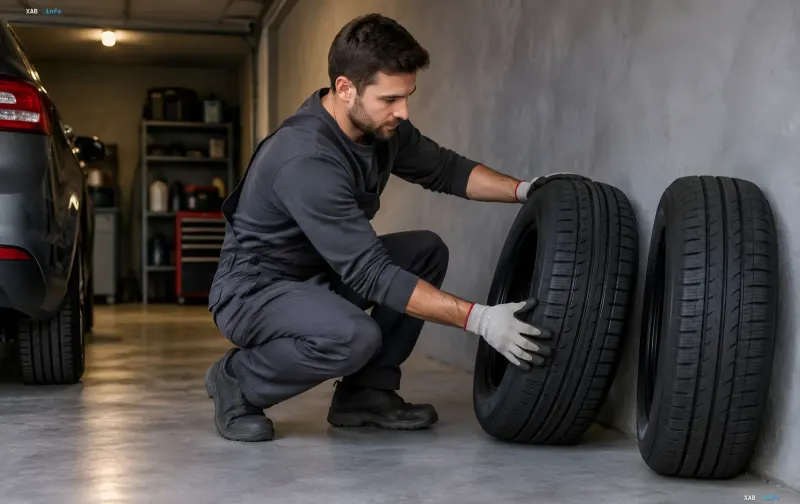
November is the time when drivers massively switch their cars to winter tires. However, replacing the wheels is only half the battle: the summer set needs more than just being put aside until next season — it must be properly prepared for long-term storage. Moisture, sunlight, temperature fluctuations, and contact with chemicals can gradually degrade the rubber compound even while the vehicle is parked. According to automotive experts, tires left in improper conditions can become unusable by spring even with minimal mileage from the previous season.
Cleaning and Inspection: The First Step Before Storage
Before storage, each wheel must be cleaned of dirt, dust, road salt residues, and small stones stuck in the tread. Water and a regular wash without aggressive chemicals are enough for this — you can use a foaming cleaner or just water with car shampoo. After washing, the tires should be completely dried, especially in the areas of contact with the rim if the rubber is stored mounted. In its seasonal storage guidelines, Michelin specifically emphasizes cleaning the wheels and removing foreign objects from the tread: this reduces the risk of rim corrosion and other issues during downtime. Along with cleaning, you should inspect each tire for damage — it is better to fix serious defects at a tire shop before storage rather than discovering them in the spring.
Where to Store: A Dry, Dark, and Cool Place
The optimal location for summer tires is a dry, clean, cool room with moderate ventilation: a garage, pantry, or specialized warehouse. Experts cite a comfortable temperature range from −5 to +25 degrees Celsius and a humidity level of no higher than 70%. Ultraviolet light, heat, and ozone accelerate the aging of the rubber compound, causing micro-cracks to appear on the surface while the tire gradually loses its elasticity and properties. In its recommendations, Continental advises avoiding the outdoors even under a cover and preferring a dry, dark, and moderately ventilated indoor space. At the same time, the set should be kept away from radiators, stoves, and containers with oils or solvents.
On Rims or Without: How to Stack Tires
The storage method directly depends on whether the rubber is removed from the rims. If the tires are stored mounted, they are usually placed vertically in a single row; if unmounted, they are stacked or hung on special hooks to avoid deformation. Michelin recommends preventing tire deformation and avoiding placing heavy objects on top of them. A useful tip from experienced drivers is to mark the original position of each wheel (front left, rear right, etc.): this will help organize proper rotation and balance wear during spring installation.
Packaging and Ozone Protection
For additional protection against dust, tires can be placed in special covers or clean bags. The main condition is that the rubber must be completely dry before packaging, otherwise moisture will accumulate inside. Whenever possible, sealed plastic bags should be used to reduce the impact of ozone on the rubber. However, packaging wet wheels is strictly not recommended: this is a direct path to mold and accelerated aging.
Spring Inspection and Common Mistakes
In the spring, before installation, the tires must be inspected again: check the sidewalls and tread for cracks and deformations, and after mounting, adjust the pressure in accordance with the vehicle manufacturer's recommendations. A common mistake is storing rubber on an unglazed balcony or in an open courtyard: even under a cover, the wheels remain vulnerable to the sun, moisture, and temperature fluctuations. If there is no other place, experts allow only short-term outdoor storage provided that the tires are raised off the ground and covered with a waterproof material featuring ventilation holes to prevent condensation. For long-term off-season storage, manufacturers definitively recommend a closed room.