Winter a century ago had nothing in common with today: no modern heating systems, no warm apartment corners, and no supermarkets with fresh vegetables year-round. The cold season required our ancestors to take a special approach to nutrition—food had to be not only tasty but also as nourishing as possible to provide strength for hard labor in the frost and to warm from within. The basis of the diet consisted of supplies made during the autumn harvest: pantries and cellars were bursting with fermented vegetables, root crops, dried mushrooms, grain, and lard. It was on these products that the entire winter cuisine was built, and it was they that made it easy to overcome severe frosts.
The oven — the heart of the home and the foundation of winter cuisine
The oven was the heart of the Ukrainian home, and in it, dishes were not simply boiled or fried—they were slowly stewed for hours, acquiring a rich aroma and a thick, hearty consistency. Thanks to this cooking method, food retained its heat for a long time and became the main source of energy during the freezing months. It was this slow simmering in the oven that made winter dishes thick and caloric, which was critically important for people whose work took place outdoors at low temperatures.
Shpundra: a forgotten winter energy bomb
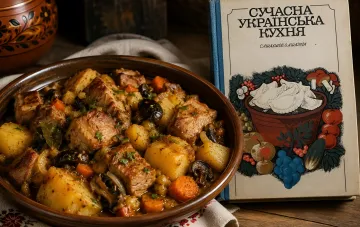
One of the most interesting and at the same time forgotten winter dishes is shpundra, which Ivan Kotlyarevsky mentioned in his «Eneida», describing lavish Ukrainian feasts. This is pork brisket, baked or stewed with fermented or baked beets in beet kvass. The sourish taste of the kvass combined wonderfully with the fatty meat, and garlic and spices gave the dish a special aroma. According to the publication's description, shpundra was a real winter energy bomb that instantly warmed you up after a long journey or work in the cold.
Kapustniak and shtovkhanka: hearty frost classics
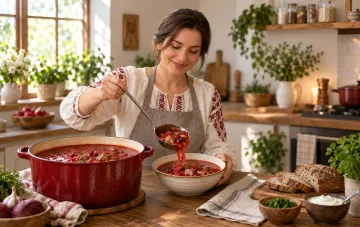
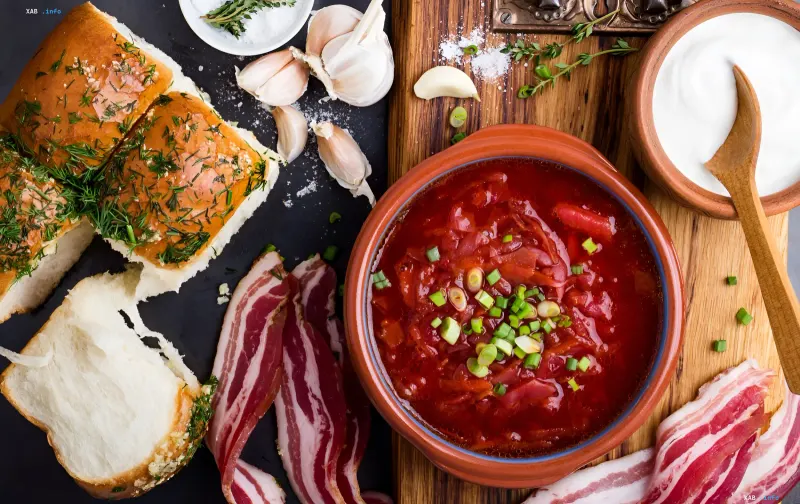
If in summer the main dish was considered a light borscht with greens, winter belonged to kapustniak. It was cooked on a strong meat or rib broth, necessarily adding fermented cabbage, millet, or potatoes. Fermented cabbage was the main source of vitamins in winter, and hot sourish kapustniak, according to popular belief, was capable of banishing any cold from the body. The dish was seasoned with fried onions on cracklings and served with a generous spoonful of sour cream and fresh rye bread. No less important was shtovkhanka—a thick mashed potato dish to which millet or pea porridge, onion and lard roast, and sometimes pieces of stewed meat were added. The name of the dish comes from the cooking process: the ingredients were thoroughly «mashed» with a makohon (wooden pestle) in a clay pot to achieve a uniform but dense consistency, which provided excellent saturation and a long-lasting feeling of warmth.
Drinks and herbs: warming from within
In addition to hearty hot dishes, Ukrainians actively used various drinks and additives to tea or uzvar. Uzvar made from dried fruits—apples, pears, plums, and cherries—was drunk on weekdays and necessarily served during winter holidays. Herbal collections of linden blossom, St. John's wort, mint, dried raspberry berries, and rose hips were considered the best medicine for winter ailments. Honey and spices were added not only for sweetness, but also as a natural antiseptic that helped fight viruses. Together, these habits formed a holistic nutrition system that allowed our ancestors not just to survive, but to live fully in a harsh climate.