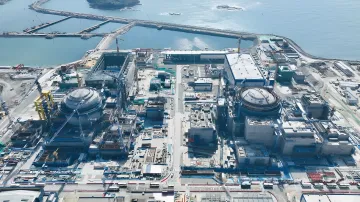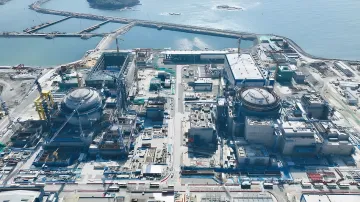
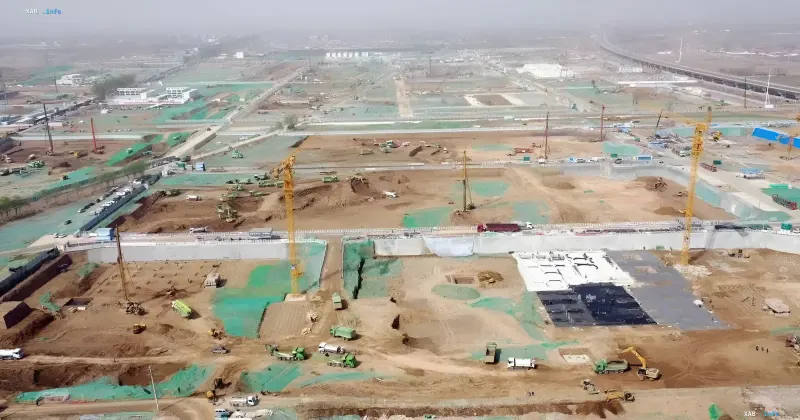
On August 16, 2026, the world observes the global energy landscape, where China is firmly establishing its position not only as the "factory of the world" but also as a technological leader in nuclear energy. A key element of this strategy is the "Hualong-1" reactor. Although commercial operation was officially launched in 2021, it was by 2025, marking the tenth anniversary of the foundation laying, that the project reached its peak maturity, becoming a benchmark for speed and quality in third-generation nuclear power.
Technological Breakthrough and Safety Standards
The "Hualong-1" reactor is not just another nuclear power plant; it is the result of colossal work involving nearly 200,000 people and more than 5,300 manufacturers. The design is based on unique technology combining active and passive cooling. According to conclusions by the International Atomic Energy Agency (IAEA) made back in 2014, "Hualong-1" meets the strictest safety requirements. Even in the event of a complete loss of external and internal power supply, the plant is capable of cooling the reactor core through natural gravity circulation, eliminating the risk of overheating.
A crucial aspect of the project is digitalization. The control system uses artificial intelligence to monitor all processes, which allows for reduced component load and increased generation efficiency by 5-10%. Currently, only a handful of countries—China, the USA, France, and Japan—have mastered similar technologies for integrating AI into nuclear facility management.
Economic Impact and Scale of Implementation
The economic component of the "Hualong-1" project is impressive. According to experts, the implementation of the project brought more than 200 billion yuan (about $30 billion USD) to the economy and created more than 150,000 jobs. The capacity utilization factor reached 85%, significantly reducing the cost of electricity production. The China National Nuclear Power Corporation notes that the construction of the first unit was completed in just 68.7 months, setting a world record for a third-generation nuclear power plant built on schedule.
Export Potential and the "Made in China 2025" Strategy
The "Hualong-1" project is the flagship of the "Made in China 2025" initiative aimed at industrial modernization. China is confident in its ability to export this technology. Exporting one plant can bring in nearly 30 billion yuan (about $4 billion USD), which is equivalent to the export value of 300,000 automobiles. This opens new horizons for Beijing in the geopolitical struggle for energy influence in Southeast Asia, Africa, and the Middle East.
Contradictory Data
Despite the official rhetoric about full independence and record speeds, there are nuances in the interpretation of data. On one hand, Chinese sources claim the project is fully independent and uses 411 key pieces of equipment produced domestically. On the other hand, international analysts note that creating such an ecosystem required about four years of standard development, suggesting a complex process of adapting Western technologies to Chinese realities rather than an instant invention. Furthermore, although the project received the highest score from WANO (World Association of Nuclear Operators), questions regarding the long-term reliability of passive cooling systems under extreme climate change conditions remain a subject of debate in the scientific community.
Decade Conclusions
By 2026, "Hualong-1" has proven its viability. Two units of the demonstration project produced nearly 65 billion kWh of electricity, receiving the National Quality Award. This is not just an energy source but a symbol of China's technological sovereignty, which is now ready to offer the world a ready-made "turnkey" solution combining power, digitalization, and safety.