The People's Republic of China has taken another decisive step towards a massive transformation of its energy landscape. The country's authorities have officially approved the construction of four new nuclear power plants. The total investment in these projects exceeds 25 billion dollars, opening a new stage of unprecedented expansion of the nuclear industry in 2026.
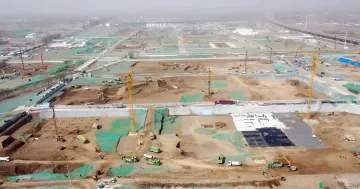
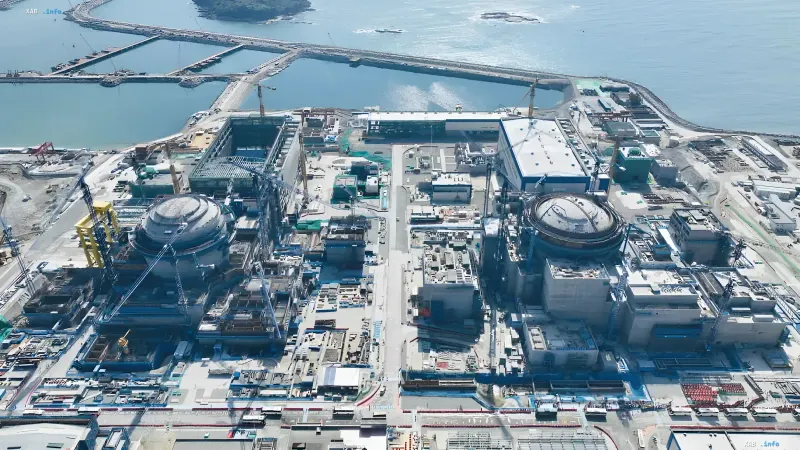
The list of approved facilities includes four strategically important sites located in different regions of the country: the second phase of the Jinmen NPP in Zhejiang province, the third phase of the Taipingling NPP in Guangdong province, as well as the new Zhuanghe NPP site in Liaoning province and the Laiyang NPP in Shandong province. According to Chinese sources, these projects are a key element of Beijing's long-term strategy to increase the share of nuclear generation and transition to a low-carbon economy.
Implementation of advanced Hualong One technologies
Particular attention is paid to the technological component of the new projects. The Jinmen NPP will deploy Hualong One Version 2.0 reactors — an upgraded version of a Generation III reactor developed by Chinese engineers. Upon completion, the plant will have six units and will become the fourth nuclear power base of the city of Ningbo. Notably, the project implementation involves the attraction of private capital, which indicates investor confidence in the nuclear sector.
The same Hualong One Version 2.0 technology will be used at the Taipingling NPP. Here, six units with a capacity of 1217 MW each are planned for commissioning. After full launch, the plant will be able to generate more than 55 billion kilowatt-hours of electricity annually, significantly supporting the power grid of one of the most economically developed regions of China.
Record project in Shandong province
One of the most ambitious projects of the program is the Laiyang NPP. The first two units of this plant will be equipped with Guohe One reactors — another Chinese Generation III development. The capacity of each such reactor will be an impressive 1543 MW. The total investment in the construction of Laiyang is estimated at approximately 18 billion dollars.
After the completion of all six units, the plant will become the largest in China in terms of installed capacity. Moreover, this project will become a catalyst for the mass standardized construction of Guohe One reactors, which will allow accelerating the pace of building new capacities in the future.
China as a global leader in nuclear energy
The approval of these projects launches a regular program for coordinating new nuclear construction sites for 2026. The dynamics of the industry's development are impressive: from 2022 to 2025, the country's authorities annually approved the construction of at least 10 new reactors. According to the latest data, China already holds the first place in the world both in terms of the number of operating capacities and the number of reactors under construction. New projects confirm that nuclear energy remains one of the largest areas of infrastructure investment in the country.