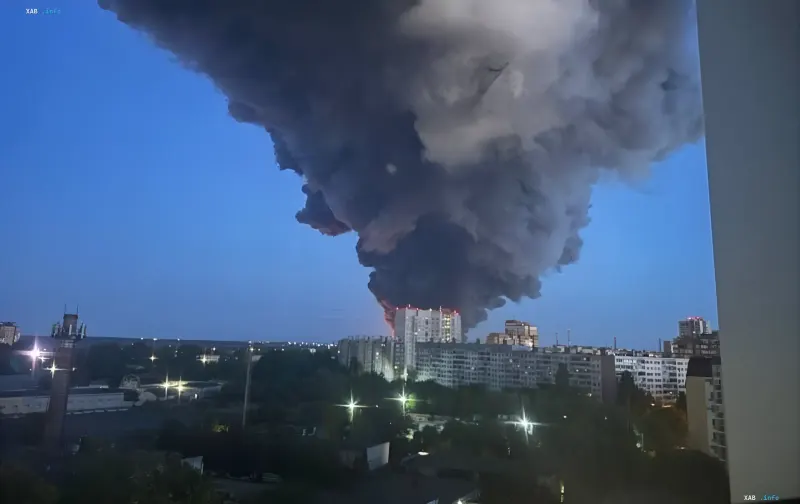
Volgograd, located deep in the Russian rear, has become the site of a major incident. A powerful attack was recorded in the city, the consequences of which are visible for tens of kilometers. Footage from the scene captures a giant column of black smoke rising into the sky, indicating a serious fire.
Targets of the strike: fuel infrastructure and logistics
According to OSINT researchers, strikes may have been launched against two strategically important objects simultaneously. The first likely target was the Lukoil-Volgogradneftepererabotka oil refinery. This is one of the key production facilities in Russia, processing between 13 and 15 million tons of oil annually, which accounts for about 5% of the total Russian volume.
The plant is critically important for supplying fuel not only to the civilian sector but also for military needs. The enterprise's products include gasoline, diesel, and aviation fuel. Damage to such an object contributes significantly to the existing fuel shortage in the country.
The second object that may have been damaged is the distribution center of the Wildberries marketplace. The logistics complex, covering 44,000 square meters, serves as a key hub for delivering goods to the Volgograd, Astrakhan, and neighboring regions. A fire at a warehouse of this scale could paralyze logistics in the region for an indefinite period.
Strikes on the rear and economic consequences
Information from the Exilenova+ source confirms the operation of unmanned aerial vehicles (UAVs) with combat payloads over Volgograd. It remains unclear whether missiles were used for the attack or exclusively drones, however, the scale of the fire speaks to the high effectiveness of the strike.
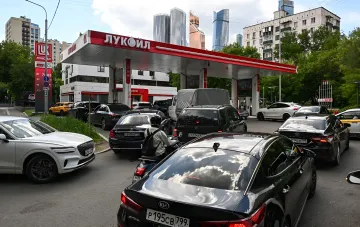
This event fits into the general picture of attacks by the Ukrainian side on Russia's energy infrastructure. Over the past two months, drones have taken out about 40% of the capacity of Russian refineries. The result has been an acute fuel shortage, which has already affected about 50 million Russians.
The economic consequences of the crisis are becoming increasingly tangible. The head of the Central Bank of Russia, Elvira Nabiullina, admitted that the fuel shortage is already having a direct impact on the rise in prices for goods and services across the country. The fuel crisis has ceased to be a local problem and has begun to hit citizens' wallets.
Business reaction: relocation of capacities
Against the backdrop of constant threats and real attacks, Russian companies are forced to review their logistics chains. Earlier, RBK-Ukraine reported that Wildberries is considering the possibility of relocating part of its warehouse capacities to Kazakhstan. The company is urgently looking for new safe premises, trying to minimize the risks of losing goods and service disruptions.