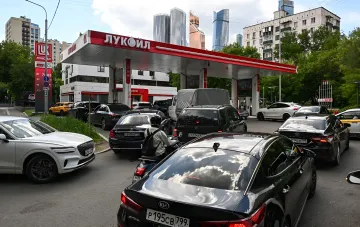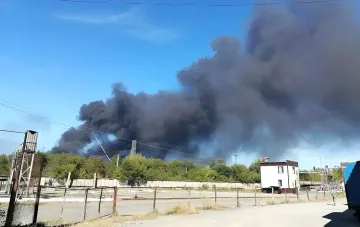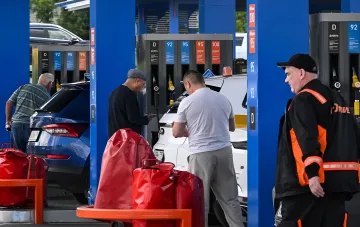
The fuel market in the Volgograd region has been hit again. In the region, where authorities had declared the situation stabilized just a few days ago, Lukoil and Gazprom networks were forced to reintroduce strict restrictions on fuel sales. The reason for this was a sharp surge in demand triggered by drone attacks on key industrial facilities.
Return of limits after three days
The situation at gas stations in the region developed rapidly. As recently as July 28, local officials reported that the fuel market had stabilized and the need for restrictions had passed. However, the calm did not last long. Just three days later, following an attack on the region's largest oil refinery, Lukoil and Gazprom networks returned to the previous rules.
According to the regional Committee for Industrial Policy, Trade, and the Fuel and Energy Complex, measures were introduced due to an abnormal increase in consumption. Now, at gas stations of these networks, a strict limit is in effect: one vehicle is allowed to refuel no more than 40 liters of gasoline.
Restrictions on diesel and strikes on infrastructure
The situation is exacerbated by the fact that the Lukoil network has also introduced restrictions on the sale of diesel fuel. This creates additional difficulties for logistics and owners of commercial transport in the region.
The cause of the panic and rush was the attack on Lukoil-Volgogradneftepererabotka — one of the largest enterprises of its kind in Russia. The General Staff of the Armed Forces of Ukraine confirmed the strike on the facility. In addition, last night strikes were carried out on the Saratov Refinery, as well as the Engels oil depot and airfield. A direct hit followed by a fire was recorded at one of the sites.
Market reaction to the threat
The reintroduction of restrictions just a few days after their cancellation vividly demonstrates the fragility of the fuel market in frontline and industrial regions. A sharp rise in demand, driven by fears of supply disruptions due to strikes on infrastructure, forces networks to introduce emergency measures to prevent the complete depletion of reserves.