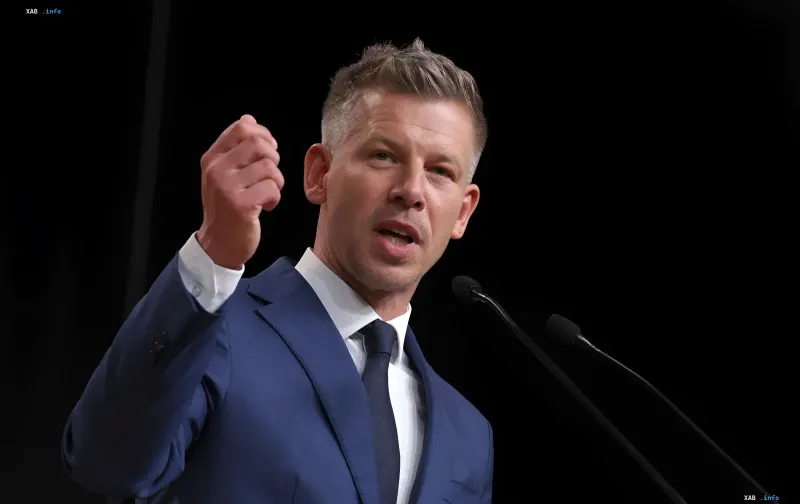
The Hungarian government, led by Prime Minister Péter Magyar, has cemented a sharp shift in Budapest's official stance toward Moscow. According to a report by RBC-Ukraine citing the "Hungarian Herald," the new line is reflected in the instructions for the Hungarian delegation to the 81st session of the UN General Assembly, which Magyar signed personally. The document explicitly names Russia a threat not only to Hungary but also to Europe's security and the international order.
Official Turn: What Was Signed in Budapest
The document records the condemnation of Russia's war against Ukraine and the reaffirmation of support for Ukraine's sovereignty and territorial integrity within its internationally recognized borders. The instruction separately states that Budapest recognizes Ukraine's right to self-defense. Thus, the formulations that were previously characteristic of a softer Hungarian diplomatic course are now enshrined in an official document sent to the UN and signed by the Prime Minister.
Key Points of the UN Instruction
In addition to condemning the war, the text emphasizes that Russia's actions pose serious risks to the Hungarian minority living in Zakarpattia. This provision links Budapest's foreign policy to the protection of compatriots abroad and strengthens the argument that the threat is not abstract but direct. In the same vein, Magyar's government announced its support for efforts aimed at launching negotiations to achieve a lasting peace and long-term security guarantees.
Context: From EU Blockade to "Threat to Europe"
The new position does not arise out of thin air: after his victory in the parliamentary elections in the fall, Magyar had already publicly stated that Russia represents a threat to Europe. At the same time, Hungary had recently blocked Ukraine's accession to the EU again, making the current shift in rhetoric a particularly striking contrast. Experts are drawn to the combination of two facts: the critical assessment of Russian actions in the UN document and the continued blocking positions within the framework of Kyiv's Eurointegration.
Kyiv's Reaction and the "Deal of the Century"
Against this backdrop, it was previously reported that President Volodymyr Zelenskyy sent Magyar an open letter and invited him to Kyiv. In addition, it recently became known that Magyar suspects Russia of sabotaging the so-called "deal of the century." The totality of these signals indicates that Budapest is reassessing its lens on the conflict while maintaining its own negotiation and domestic political agenda.