Hungarian investigators, during an anti-corruption operation, discovered and seized $19.5 million in cash, some of which was buried in the ground in forested areas. This was announced on Friday, November 13, by the National Asset Recovery and Protection Agency, a new body established by Peter Magyar's government to investigate alleged misuse of public funds. The searches took place on November 12 and 13 in Budapest and three other regions of the country. According to the agency, Hungarian forints, euros, and US dollars were found in agricultural buildings, warehouses, a private house, as well as in an "expensive safe in a secluded location" and underground in forests. The agency released a video showing law enforcement officers digging outdoors in the dark and inspecting bundles of cash, after which they were transferred to the state treasury.
Twelve Treasury Employees and Eight Hours of Counting
Hungarian Finance Minister Andras Karman stated on Facebook on Friday that 12 treasury employees spent eight hours counting the seized money. According to him, the cash was deposited into the state treasury. Karman did not disclose details on exactly how the funds were distributed across currencies and where the largest "finds" were located, but the publication of video materials by the agency indicates that some of the money was stored in conditions requiring field work, including in forested areas outside populated settlements.
The Miklos Sesztak Case: Suspicions of Receiving $37.2M in Bribes
The investigation in which the cash was found is linked to Miklos Sesztak, who served as Hungary's Minister of Development from 2014 to 2018. According to investigators, Sesztak is suspected of receiving more than $37.2 million in bribes and kickbacks related to the procurement of overpriced used buses by a state transport company, as well as public construction projects. Thus, the amount of seized cash accounts for approximately half of the total sum that Sesztak allegedly received through corrupt schemes. Sesztak's official status in the investigation is not specified in the published materials; the agency limited itself to stating the fact of the searches and the discovery of the funds.
"End of the Fidesz-KDNP Mafia": Political Context
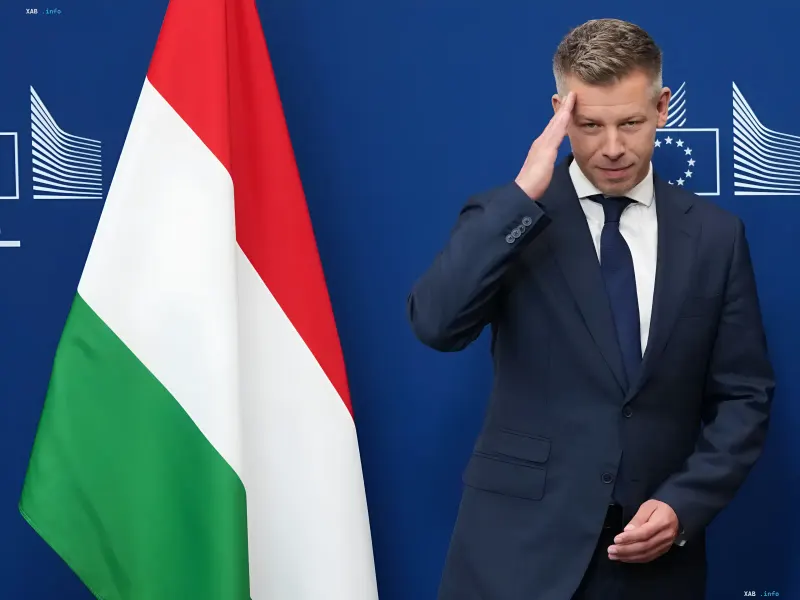
Prime Minister Peter Magyar, whose centrist pro-European Tisza party ended Viktor Orban's 16-year rule in April 2026, stated on Facebook on Friday that the cash seizure "signals the end of what I call the Fidesz-KDNP mafia." Fidesz is Orban's right-wing party, and KDNP (Christian Democratic People's Party) is its smaller ruling ally. Orban, in turn, previously accused the new government of using investigations to force him out of politics. Thus, a public controversy has erupted around the anti-corruption operations: for Magyar, they are a tool for "cleansing" the state apparatus, while for Orban, they are political pressure on an opponent.
Broader Picture: Arrests of Former Ministers and Position of Ex-Central Bank Chief
The Sesztak case is not isolated. In separate investigations, other former ministers of the Orban era were detained. In particular, Gyorgy Matolcsy, the former governor of the Central Bank of Hungary who sets the country's monetary policy, is under arrest. His case concerns alleged misuse of state assets managed by a foundation affiliated with the central bank. Matolcsy denies any wrongdoing. Public support for anti-corruption efforts, according to a poll conducted this week by Hungarian news site HVG in cooperation with the Median research center, stands at 70 percent: that is how many respondents considered investigating alleged corruption under Orban and holding those responsible accountable to be "very important."
What's Next
The National Asset Recovery and Protection Agency is likely to continue its work: the publication of video materials and the prompt reaction of the finance minister indicate that the agency intends to demonstrate transparency in the process. For Sesztak, the key issue will be whether he will be formally charged and to what extent. The political resonance of the operation is likely to persist until the end of 2026, as it directly affects the narrative of a "break with the past" staked by Magyar's government after coming to power in April.