In the context of the ongoing aerial war, where Russian attack drones have become one of the main tools of pressure, Ukraine has developed a unique counter-tactic. If a year ago the main method of fighting 'Shaheds' was expensive anti-aircraft missiles, today interceptor drones play a key role. This solution is not only more cost-effective but also allows the line of defense to be moved directly into the sky, creating a dense shield over populated areas and critical infrastructure.
24/7 Duty and Rapid Deployment
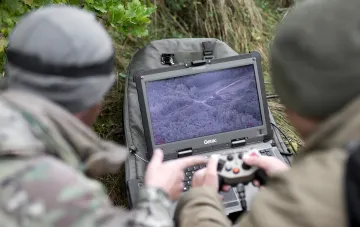
The work of interceptor drone crews is based on a strict schedule and high readiness. According to the Training Center of the Serhiy Prytula Charity Foundation, operators are on constant duty, arriving at positions in advance to deploy equipment. A mobile fire group usually consists of a drone operator, a navigator, and specialists responsible for radar support. As soon as all communication and control systems are checked, the crew reports to the duty officer that they are ready to perform the combat mission.
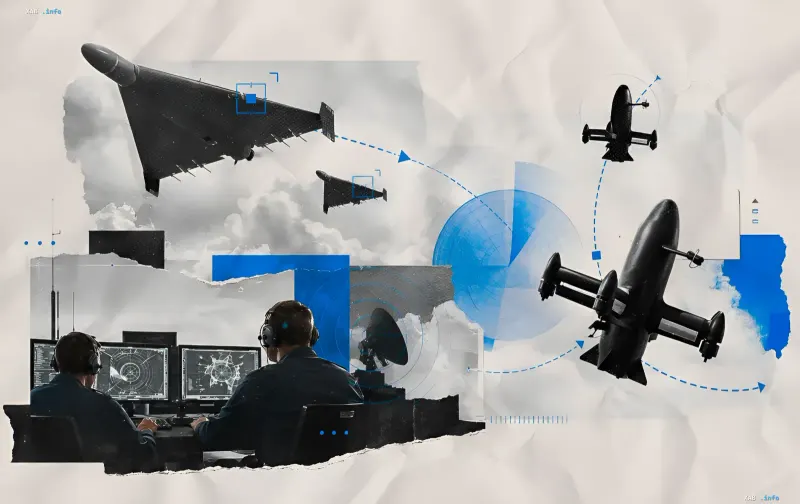
The deployment time of the complex varies from 10 to 30 minutes, depending on the type of equipment and weather conditions. However, once on position, operators are ready for instant takeoff. As soon as the radar detects an enemy target, the group receives coordinates and plots a trajectory for the interceptor. This allows for a faster response to the threat than traditional air defense systems, which require time for deployment and trajectory calculation.
Automatic Terminal Homing and the Role of Artificial Intelligence
One of the main innovations in the fight against drones has been the introduction of automatic terminal homing systems. Modern complexes, such as the Octopus-100 produced by TAF Industries, are equipped with algorithms that allow the drone to independently capture and destroy a target. At close range, the system recognizes the 'Shahed', and the operator only needs to press a button to initiate the capture. The interceptor then proceeds to the enemy in automatic mode, compensating for the influence of external factors, such as adverse weather or electronic warfare (EW) measures.
Artificial intelligence plays a critical role in reducing the probability of operator error. Electronic systems help narrow the search zone, providing data on the target's altitude, speed, and direction of movement. However, at the final stage, the operator still needs to visually confirm the target and engage it. In some cases, systems are used that help keep the target in the sights, ensuring a guaranteed result in a short period of time.
Technical Specifications: Speed vs. Maneuverability
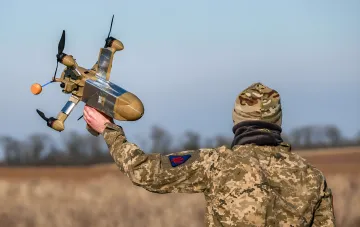
The choice of interceptor drone type depends on the specific combat mission. Multicopters have high maneuverability but lose in speed and flight range. At the same time, fixed-wing interceptors, such as the P1-SUN Jetkille, can reach speeds of up to 360 km/h and even higher, allowing them to catch up with jet 'Shaheds'. As Yartura CEO Oleksandr Bukarenko noted, the presence of wings allows for increased range and gliding, utilizing fewer resources of the device itself.
The flight duration of an interceptor drone varies from 10 to 40 minutes. For example, TAF Industries drones can stay in the air for up to 15 minutes with a warhead weighing 1.2 kg, which is the optimal time for engaging a target. At the same time, new developments, such as 'smart missiles', are capable of accelerating to 700 km/h, making them ideal for intercepting high-speed targets.
The Economics of War: Why Drones Are More Profitable Than Missiles
The use of interceptor drones is not only a tactical but also an economic necessity. The cost of one interceptor is incomparably lower than the cost of an anti-aircraft missile, allowing for massive defense without exhausting budget funds. Moreover, drones can be reused after repair, whereas missiles are single-use.
The effectiveness of interceptor drones is confirmed in practice: they are capable of shooting down up to 90% of enemy drones, making them one of the most reliable air defense means. In conditions where Russia continues to increase the production of attack drones, Ukraine is forced to constantly improve its technologies to stay one step ahead of the enemy.