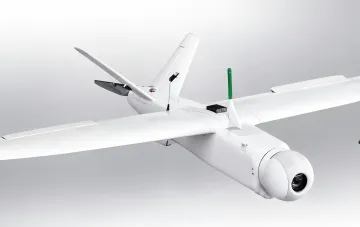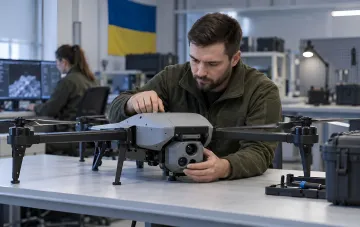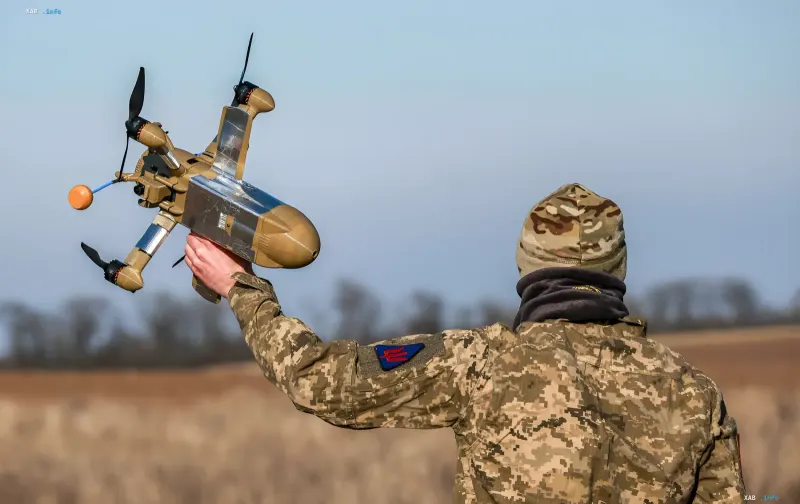
Modern warfare in Ukraine has transformed into a battle of algorithms and neural networks. According to the Ministry of Defense of Ukraine, the country's defense forces are already actively employing more than 70 different models of systems based on artificial intelligence (AI) and machine vision technologies. The implementation of these technologies is fundamentally changing the principles of unmanned system application, delegating tasks such as navigation, object identification, and even autonomous terminal guidance to algorithms.
Scale of production and development ecosystem
A powerful defense production ecosystem focused on high-tech solutions has formed in Ukraine. Currently, more than 200 companies are engaged in the production of drones with AI capabilities. To coordinate and distribute developments, a specialized marketplace, Brave1 Market, has been created. On this platform, defenders already have access to 46 different AI solutions. These include target recognition modules, optical stabilization systems, and automatic terminal guidance algorithms, which allow drones to operate effectively even in conditions of complex electronic interference.
Autonomy in the context of electronic warfare
The key advantage of implementing neural networks is the ability of unmanned aerial vehicles (UAVs) to operate without constant contact with an operator. Machine vision algorithms analyze the terrain and landmarks below, comparing them with loaded maps. This ensures precise positioning without a GPS signal, both day and night. When a drone approaches a target, computer vision allows it to lock onto the object and continue moving towards it autonomously. This is critically important for engaging targets when communication with the operator is lost due to the active operation of enemy electronic warfare (EW) systems.
Human remains in the decision-making loop
Despite the high degree of automation, the final decision on target selection and engagement remains with the human. Algorithms act as an advanced tool, processing visual information, detecting enemy equipment and manpower, but ethical and tactical control remains with the operator. For these algorithms to work effectively, arrays of verified data are required. In Ukraine, a secure environment, Brave1 Dataroom, has been created where developers gain access to structured datasets for the validation, training, and fine-tuning of AI solutions in the military sphere.
International recognition and new models
The successes of Ukrainian engineering in the field of drones are receiving international recognition. An American manufacturer announced the release of Magura sea drones, which were developed and tested directly during combat operations in Ukraine. Furthermore, the Ukrainian strike UAV "February" was modified into a missile carrier and presented for the first time at an international exhibition in the UK, indicating growing interest from Western partners in Ukrainian technologies.