Crossovers have long become the dominant segment of the auto market: their appeal lies in their versatility, high seating position, and spaciousness. However, this format has a systemic drawback — increased fuel consumption compared to hatchbacks and sedans of the same class. Designers of major automakers have given a clear answer to this challenge: the hybrid powertrain. According to a review by RBC-Ukraine, by 2026 the supply of hybrid SUVs on the Ukrainian market has noticeably expanded, and new models have emerged that genuinely reduce fuel costs without sacrificing the usual freedom of movement.
How a Hybrid Works and Where It Saves Money
The idea of a hybrid drive is not new: the first mass-produced hybrid cars appeared about a quarter of a century ago, and their concept has remained unchanged — combining the advantages of a gasoline engine and an electric motor to get a car that consumes less fuel and pollutes the environment less. At the same time, a hybrid does not require the driver to get used to the limitations of fully electric transport: the range does not rely on battery capacity, and there is no need to look for charging stations or wait for hours at an outlet. The electric component works for efficiency, while the gasoline engine preserves familiar mobility.
At the heart of a full hybrid (HEV) is the interaction of two power units — an internal combustion engine and an electric motor. Electronics coordinate their work, activating each motor at the moment when it is most appropriate. In addition to the two engines, the design includes a traction battery, an electronic control unit, and a special transmission for power distribution. The practical sense of such a scheme is to use fuel more efficiently precisely in those conditions where a conventional gasoline car wastes it irrationally: in the urban cycle with frequent stops, starts from a place, short accelerations, and traffic jams. Here, the electric motor takes on a significant part of the work, and the regenerative braking system returns some energy back to the battery.
Renault Symbioz: A Family Crossover with Two Hybrid Options
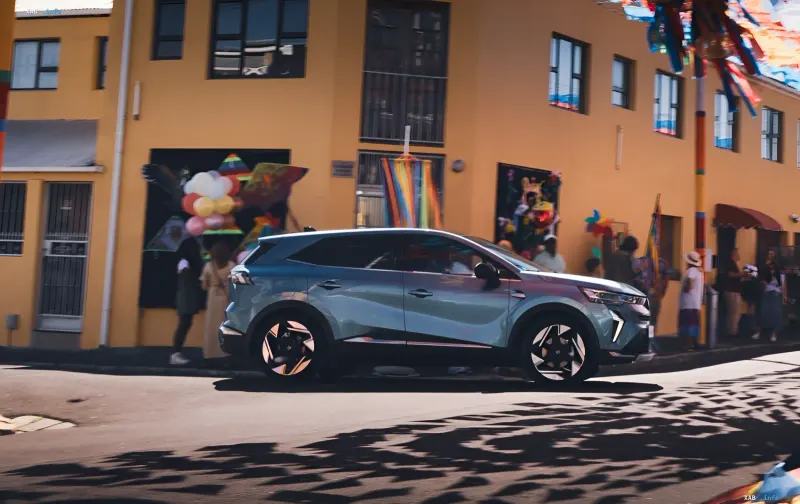
A novelty in the French lineup is a practical family crossover with a length of 4412 mm. Externally, it looks representative, while inside it offers a spacious cabin with a sliding rear bench, allowing you to increase the trunk volume. At the same time, the manufacturer positions Symbioz as affordable transport for a modern family. The model is offered with two hybrid setups to choose from: a mild hybrid with a 1.3-liter engine producing 140 hp or a full hybrid with a 1.8-liter motor producing 160 hp. The second option, according to the manufacturer's statement, provides up to 40% fuel savings in the urban cycle, since 80% of urban routes can be covered by the car on electric traction. On the road, Symbioz is characterized as spirited and easy to handle, and the suspension is tuned for comfortable travel rather than dynamic maneuvers.
Compact Jeep: A Hybrid for an Active Lifestyle
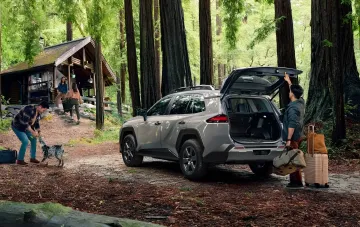
Another approach to building an SUV is demonstrated by the compact Jeep crossover with a length of 4088 mm, focused on off-road trips. The power unit is a 1.2-liter gasoline engine with 100 hp paired with a hybrid setup and an automatic transmission. The hybrid here is 'mild', with a compact battery, which does not prevent the car from positioning itself as an off-road option. Despite its off-road pedigree, this Jeep is well adapted for the city as well: it is claimed to run on electric traction for up to 50% of urban trips, and it is also equipped with an electric parking mode.
Toyota Corolla Cross Hybrid: The Experience of the Genre's Founder
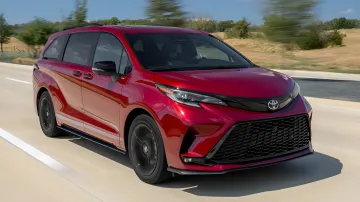
The recently updated model from the company considered the founder of the mass hybrid segment relies specifically on the powertrain as its main highlight. The classic Toyota unit — a 2.0-liter Atkinson-cycle gasoline four-cylinder combined with an electric motor — produces a total of 197 hp. The power of the two motors is transmitted to the wheels through a planetary transmission, ensuring smooth torque distribution between the ICE and the electric motor. For the owner, this means a time-tested scheme, minimal risk of emergency situations, and predictable efficiency in various driving modes.
What the Hybrid Crossover Owner Gets
The degree of benefit for a particular driver depends on the type of hybrid setup and the car model. A full HEV hybrid (like the 1.8L Renault Symbioz or Toyota Corolla Cross) provides maximum savings in the city due to prolonged operation on electric traction and recuperation. A mild hybrid (like the compact Jeep) reduces consumption moderately, but allows maintaining the compactness and lightness of the design. At the same time, in most hybrid SUVs, the trunk volume is practically not reduced due to electric drive components — the batteries are placed in the space that remains unfilled in classic cars. Thus, by 2026, hybrid crossovers have ceased to be a niche product and have become a full-fledged option for those who want to combine SUV practicality with real fuel savings.