International Atomic Energy Agency (IAEA) Director General Rafael Grossi stated that North Korea continues to expand the original uranium enrichment facility at its main nuclear complex in Yongbyon. According to his statement to the IAEA Board of Governors, «since mid-September 2026, further expansion of the original uranium enrichment facility in Yongbyon has been underway, with the new part of the complex externally completed by the end of October 2026.» Grossi emphasized that the ongoing expansion of the DPRK's uranium enrichment program «remains a cause for serious concern.»
Monitoring Without Inspector Access
The agency's assessment was made under conditions where the IAEA has had no access to Yongbyon and other sites in North Korea since Pyongyang expelled the agency's inspectors in 2009. Consequently, the IAEA stated that satellite imagery and open-source information are used to monitor the development of the North's nuclear program. Specifically, the agency tracks changes at nuclear sites through the analysis of commercial satellite images and materials from open sources, including photographs from North Korean state media.
What is Known About the New Capacities
Earlier, in a report dated August 28, 2026, IAEA experts—comparing satellite images with state media photographs taken during Kim Jong Un's June visit—identified a new two-story building in Yongbyon as the second uranium enrichment facility in the area. According to expert estimates, the building is capable of housing up to 28 centrifuge cascades, and imagery indicates that cascades are installed on both the upper and lower floors. In addition, the DPRK has begun operating an expanded annex at the Kangson enrichment plant. Nuclear weapons, according to the agency, can be produced from highly enriched uranium or weapon-grade plutonium, and Yongbyon features facilities for producing both materials.
Diplomatic Context
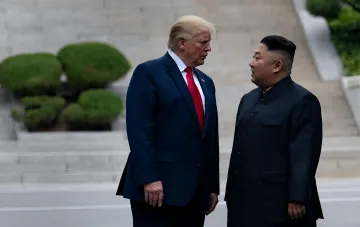
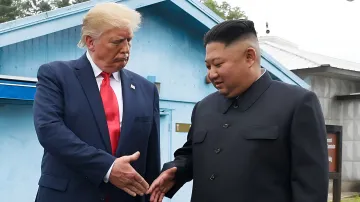
Grossi's statement came against the backdrop of US President Donald Trump expressing readiness to meet with North Korean leader Kim Jong Un while in Asia for a summit in China. According to US Secretary of State Marco Rubio, the president does not yet have a planned meeting during his visit to China, but he is ready to initiate a new dialogue with Pyongyang. North Korea, in turn, has not responded to Trump's new outreach proposals. Kim Jong Un previously stated that he could return to negotiations if the US abandons its «hostile policy» and recognizes the North's status as a nuclear state.
Pyongyang's Strategic Goals
According to observers, North Korea took steps to establish additional uranium enrichment facilities in Yongbyon and elsewhere after Kim's previous nuclear diplomacy with Trump collapsed in 2019. Last year, South Korean Unification Minister Chung Dong-young stated that the DPRK operates four uranium enrichment facilities and that they operate daily. Experts assess that Pyongyang aims to achieve international recognition as a nuclear state in order to subsequently demand the lifting of UN economic sanctions. North Korea itself has referred to the Yongbyon complex as the «heart» of its nuclear program.