Finnish company Iceye, one of Europe's largest developers and operators of synthetic aperture radar (SAR) satellites, has made a bid to acquire Italian rocket manufacturer Avio for over $2.2 billion. The deal, if finalized, will unite two key parts of the space industry: Iceye develops and operates satellite hardware, while Avio manufactures the Vega C rocket and provides orbital delivery. If successful, Iceye will gain the ability to build its own assets and ensure access to space without dependence on third-party launch providers. Avio has confirmed receipt of the offer, and the company's board of directors is currently reviewing the terms.
What is Avio and the Vega C rocket
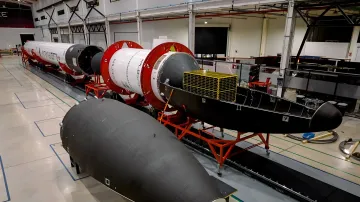
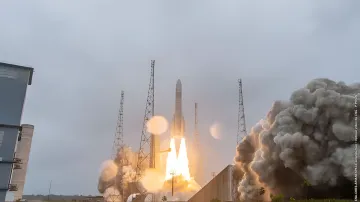
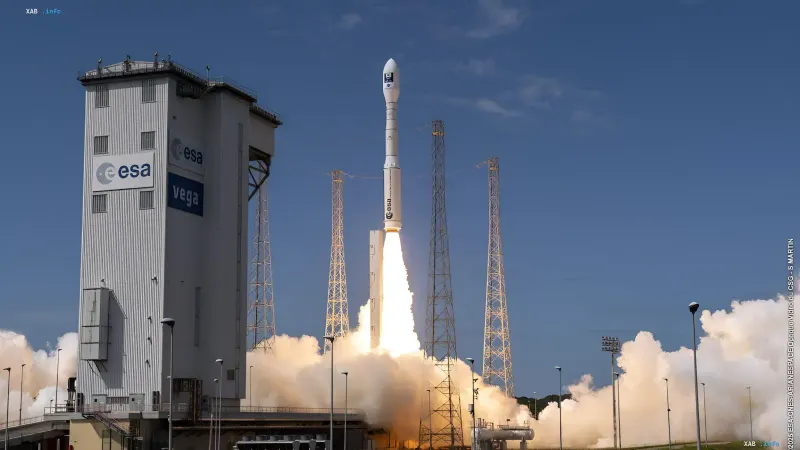
Avio produces the Vega C rocket, capable of carrying a payload of up to 3.3 tons into low Earth orbit. Since 2022, the rocket has successfully launched seven out of eight times. The company is also involved in the European Vega program, responsible for final stage assembly, and has recently been gradually taking over marketing, sales, and launch organization from France’s Arianespace. Thus, Avio occupies a strategic niche in European rocket manufacturing, although its commercial load remains modest: the Vega family conducts an average of fewer than three launches per year, and apart from European government and space programs, it has few commercial orders.
Iceye’s portfolio and valuation
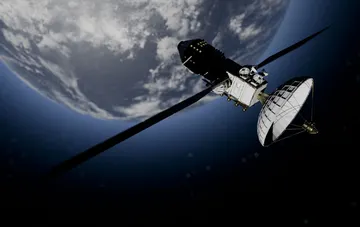
Iceye has already built and launched 84 radar satellites. Such hardware allows for capturing images of the Earth's surface at night and through clouds — a critical capability for defense and intelligence tasks. The company sells data to commercial clients and nations, and also supplies satellites directly to national governments. Following its latest funding round in June, its valuation exceeded $12 billion. Iceye explains its interest in Avio as a necessity to strengthen European independence in space and defense: owning rockets will allow the company to better control launch schedules and expand satellite constellation production.
Plans with Nokia and growing launch demand
The demand for such launches is set to increase significantly. Last month, Iceye, along with fellow Finnish company Nokia, announced plans to create a low-Earth orbit satellite network for European communications, primarily for defense and security purposes. The companies expect to begin deploying 50 satellites annually starting in 2028, though they have not yet disclosed the total size of the future constellation or technical communication parameters. For comparison, the existing Starlink network features over 11,000 satellites, highlighting the scale of the Finnish companies' ambitions.
Deal economics: not everything is certain
Buying Avio could provide Iceye with its own launch channel, but the economic side of the deal is not straightforward. A dedicated Vega C launch is valued at approximately $55 million — about the same cost as launching on a more powerful Falcon 9. At the same time, the majority of Iceye’s satellites have so far reached space as rideshare missions on SpaceX rockets, where space for a satellite of similar size cost approximately $700,000. According to the authors, even accounting for potential cost savings after the merger, launching an Iceye satellite on a Vega C could be 2–3 times more expensive than a current rideshare launch. However, Avio would receive investment to scale production, which is important for a company with low current utilization.
Part of a broader trend
The deal fits into a wider trend: satellite companies are increasingly seeking to control not only the hardware but also the means to deliver it into orbit. SpaceX develops Starlink alongside its own Falcon 9 and Starship rockets, while American company Rocket Lab expanded its business into satellite manufacturing after launching its Electron rocket. Iceye is also preparing for a period where access to launches may become more difficult: SpaceX intends to gradually phase out its rideshare program after 2028, prioritizing its own projects. This is precisely what makes control over one’s own launch channel a strategic asset for European players.