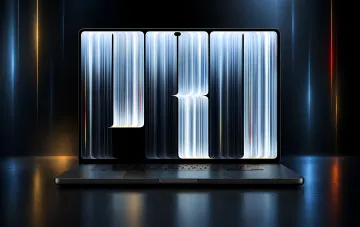
iFixit technicians have completed the teardown of the 14-inch Apple MacBook Pro with a PROLED XDR touch screen and rated its repairability at 5 out of 10. The design, as is customary for the manufacturer, proved challenging, yet the new model received one point more than last year's M5-chip version. The main innovation is the touch display based on a dual-layer OLED matrix with a 120 Hz refresh rate and a peak brightness of 2000 nits, while the glowing logo has returned to the laptop lid. The total weight of the computer is approximately 1.38 kg.
PROLED XDR Touch Screen: What the Microscope Showed
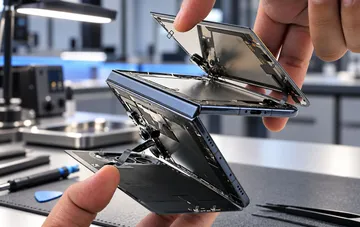
The teardown confirmed that the screen can still only be replaced along with the lid: separating the panel without damage is virtually impossible. Even iFixit technicians damaged the OLED layer and touch surface when attempting to remove the glass. Examining the dual-layer OLED panel under a microscope, specialists found that the blue pixels are noticeably larger than the red and green ones. According to their assessment, this is because blue elements wear out faster: the increased area distributes the load over a larger section of material, reduces operating intensity, and increases durability.
Glowing Apple: How the Logo Backlight Works
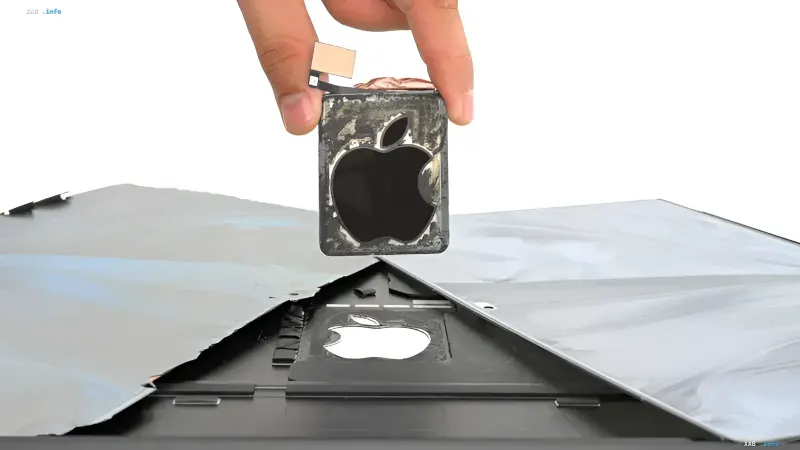
The logo backlight is no longer connected to the screen, unlike older MacBooks where the apple was illuminated by the LED display's backlight. In the new model, four LEDs direct light onto a reflective layer, after which it passes through a diffuser and evenly illuminates the Apple emblem. At the same time, repairing the backlight again requires complex disassembly of the lid, so experts advise against counting on a simple replacement of individual elements.
Repairability: 5 out of 10 and What Improved
During the component replacement check, an important improvement was recorded: after installing a logic board from another unit, the system recognized the battery, screen, and Touch ID sensor. Without additional configuration, the touch screen, brightness control, and True Tone technology started working, and the fingerprint scanner was successfully configured. Thus, Apple has improved the lid design and enhanced the software for part recognition.
Weight Reduction and Remaining Limitations
Apple reduced the weight primarily through the chassis and lid: the bottom case became 92 g lighter, and the screen assembly 101 g lighter. The 72.6 Wh battery remained virtually unchanged with a weight of 276 g; it is glued in again, and extracting it without damage is not easy. Cooling fans and USB Type-C ports are located under the printed circuit board, so replacing them requires its disassembly. The HDMI port and SD card reader are soldered to the board, RAM and storage cannot be replaced, and the keyboard, built into the upper case, complicates DIY replacement — unlike the affordable MacBook Neo, where it was possible. The final 5 out of 10 score reflects a balance: an improved lid and parts-recognition software versus difficult access to fans and ports, soldered components, and laborious battery replacement.