The reishi mushroom, known in Eastern tradition as lingzhi or the immortality mushroom, attracts the attention of both traditional wellness enthusiasts and modern science. In October 2026, interest in this unique organism continues to grow against the background of new discussions in the Ukrainian segment of the internet. In particular, blogger Yaroslav Fishchenko in a video on his social media pages reminded viewers of the features of this organism and where it grows in Ukrainian forests. However, behind its attractive cultural status lies a complex reality: scientists urge separating centuries-old myths from evidence-based medicine.
Appearance and Habitat of Reishi in Ukrainian Forests
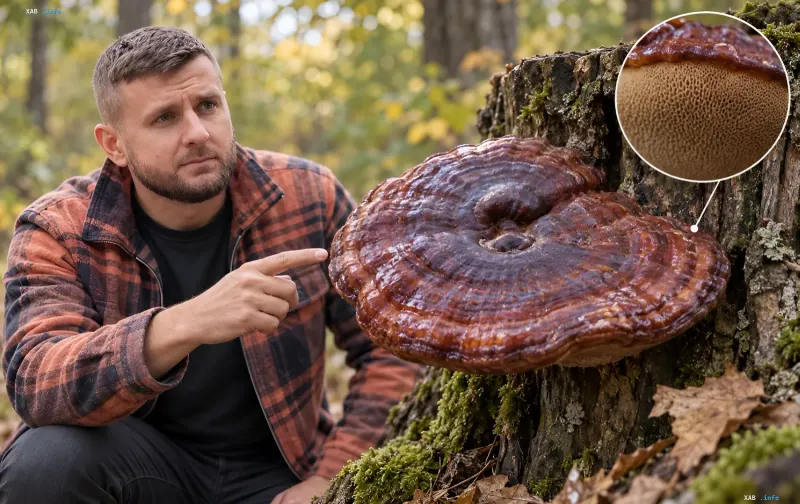
Officially, reishi is known as the glossy bracket fungus or Ganoderma lucidum. It is extremely difficult to confuse with ordinary gilled mushrooms due to its hard, woody structure and fan-shaped or kidney-like appearance. The main external feature is its characteristic glossy surface, as if coated in varnish, with colors ranging from deep red-brown to dark burgundy. On the underside, instead of familiar gills, it features tiny pores, and the organism typically grows on stumps, roots, and trunks of deciduous trees such as oak.
According to mycological guides and biological catalogs, the glossy bracket is found in various regions of Ukraine, including Western Polissia, the Forest-Steppe, and the Carpathians. Nevertheless, mycologists warn against a superficial approach to harvesting. Other externally similar species of Ganoderma exist in nature, and precise identification requires professional knowledge. An identification error means you may have harvested a completely different mushroom with a different chemical composition, making independent foraging potentially unsafe.
Scientific Research and Actual Properties of Ganoderma Lucidum
In traditional Chinese medicine, lingzhi has been used for centuries to maintain vitality, improve overall well-being, and strengthen the body. Modern science takes an interest in reishi due to its high content of polysaccharides and triterpenes—biologically active compounds actively studied in laboratories. Researchers analyze their potential impact on immune processes, blood sugar and cholesterol levels, and chronic fatigue. However, experts emphasize that experiments in test tubes or on animals cannot be automatically extrapolated to humans.
Reputable medical centers, such as Memorial Sloan Kettering Cancer Center, note a lack of reliable clinical data confirming reishi's declared effectiveness in treating severe illnesses. The popular name immortality mushroom is a cultural-historical metaphor rather than a scientific fact. Reishi cannot serve as a replacement for traditional anti-tumor treatment or prescription medications. Any attempts to use wild-harvested specimens for therapeutic purposes without consulting a physician carry serious health risks.
Significance of the Mushroom for Modern Science and Mycology
The heightened interest in the glossy bracket reflects a general trend toward finding natural bioactive substances to support human health. Despite the lack of evidence proving its ability to grant longevity or cure serious diseases, studying reishi components expands fundamental knowledge about the properties of wild mushrooms. Understanding how polysaccharides and triterpene compounds interact with living organisms opens prospects for future pharmacology. The main takeaway for mushroom foragers remains the need for careful treatment of nature and a critical view of any folk remedies whose effectiveness lacks rigorous clinical trial verification.