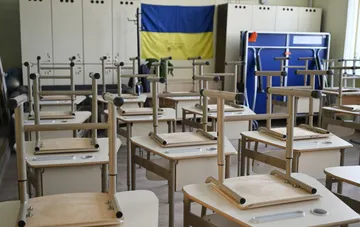
On Friday morning, September 11, the Department of Education and Science of the Odesa City Council published an appeal to parents of schoolchildren on its Telegram channel. Officials reminded residents that the air raid alert had continued throughout almost the entire night in the city, and asked them not to rush to send their children to educational institutions until it is lifted. "We ask you to keep your children at home until the air raid alert is lifted," the Department emphasized, adding that on such a day the child's safety and well-being are more important than any lesson.
Call to assess the child's condition after a sleepless night
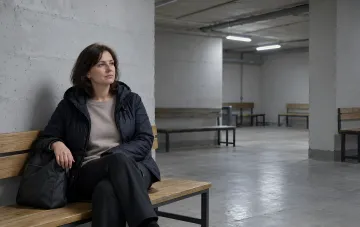
In its appeal, the Department of Education and Science of the Odesa City Council drew adults' attention to the fact that after a difficult sleepless night spent under the conditions of an alert, parents should pay attention to the child's physical and emotional state. "Perhaps it would be better to keep him or her at home today," the department suggested. Parents were advised not to rush and to make the decision individually, based on the schoolchild's well-being. For children whom parents objectively have no opportunity to keep at home, duty groups will operate at educational institutions, with mandatory sheltering during the air raid alert.
Duty groups and the operating procedure after the alert is lifted
According to the Department, after the air raid alert is lifted, each educational institution will operate in accordance with its approved working schedule. Specific information on exactly how the day will be organized was promised to be communicated to parents in class chats. Thus, there was no single schedule for the morning of September 11: the decision was made at the level of each individual institution, taking into account the local situation and the duration of the alert in a specific district of the city.
Reaction from the head of the Odesa Regional Military Administration's education department
The situation was also addressed by Oleksandr Lonchak, head of the Department of Education and Science of the Odesa Regional Military (State) Administration. On his Facebook page, he acknowledged that in certain areas of Odesa Oblast the air raid alert has been ongoing due to an attack by enemy drones, and expressed understanding of parents' anxiety. At the same time, he noted that in the fifth year of the war, questions about what to do during a morning alert still arise, and he urged teachers to communicate with parents more promptly, since parents also need to plan their day. "Take care of yourselves and your children," the official concluded.
Algorithms of action and the absence of changes to the rules
Lonchak separately emphasized that each educational institution has an approved algorithm of action in the event of an air raid alert, and the procedure depends on exactly what time the alert was declared. He stated that "no innovations regarding the color of alerts have changed these rules," and declared that the safety of children is a matter in which experiments or differing interpretations are unacceptable. Parents were advised to rely on the instructions of their institutions and the information in class chats, rather than on general assumptions.
Thus, the morning of September 11 in Odesa passed in a mode of heightened caution: the regional and city authorities emphasized that the decision on whether to attend school under conditions of an ongoing or just-concluded air raid alert must be made by parents, taking into account the child's condition and the official instructions of the specific educational institution.