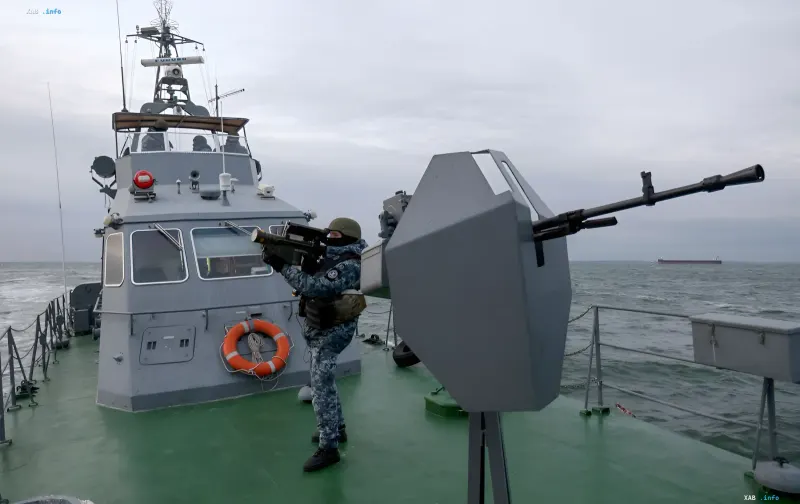
At the G20 Foreign Ministers meeting in Atlanta, US Secretary of State Marco Rubio stated that a number of countries have expressed readiness to join efforts to stabilize the situation regarding Black Sea security. According to him, Turkey and India presented concrete ideas on how to restore the flow of grain cargoes through the region, which, from Washington's perspective, is directly linked to global food security and, to a certain extent, energy security.
Rubio's Statement and the Grain Track
“When it comes to the Black Sea, many countries have spoken out and declared their readiness to join. Both Turkey and India came forward with some ideas on how we can facilitate the movement of grain shipments, as this impacts global food security and, to a certain extent, energy security,” Rubio is quoted by RBC-Ukraine as saying. Thus, at the G20 level, the Black Sea is discussed not only as a military hub, but also as an economic and logistical one upon which the supply of grain to global markets depends.
Zelenskyy's Position: Three Parties and a Ceasefire
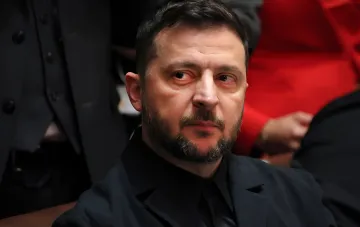
Ukrainian President Volodymyr Zelenskyy linked these initiatives to his peace plan, in which, according to him, involving three parties to achieve a ceasefire and peace is key. He recalled that Turkey had previously transmitted a proposal to Ukraine and Russia regarding a truce in the Black Sea and that Erdogan had discussed this matter with him personally. “Restoring security in the Black Sea must be our priority. Especially when there are countries interested in this and ready not only to talk about it, but to ensure it,” Zelenskyy emphasized, adding: “Now — the sea. Next — energy. Let's move.”
Trilateral Format and Turkey's Role
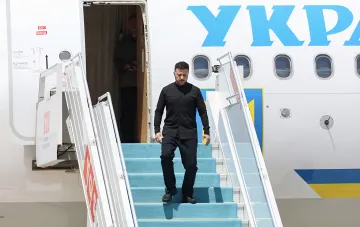
The context for these statements goes back to October 31, when following talks with Turkish President Recep Tayyip Erdogan, Zelenskyy announced that Ukraine was preparing for a trilateral format involving the US and Russia in the first half of November. The parties discussed involving Turkey, Europe, and other partners, as well as the possibility of holding a meeting on Turkish territory. Already on November 5, Erdogan announced his intention to discuss ending the war with Vladimir Putin and reported that Turkish officials maintain contacts with representatives of Ukraine and Russia regarding a new meeting in Turkey.
Caveats and Next Steps
The Kremlin, however, stated that there are no concrete agreements yet regarding a conversation between Erdogan and Putin. This means that despite Ankara's active diplomatic engagement and Washington's interest in Black Sea initiatives, the practical fixation of the format and dates for trilateral contacts remains unfinalized at the time of publication. Nevertheless, the coincidence of signals — from the G20 in Atlanta to statements by Zelenskyy and Erdogan — indicates that the issue of Black Sea security and the grain track is becoming central to the current diplomatic cycle.