After a period of acute tension, culminating in armed clashes in the Galwan Valley in 2020 — where both sides reported casualties for the first time in nearly 45 years — New Delhi and Beijing have been taking consistent steps toward de-escalation and the strengthening of cooperation. According to RT, the turning point in the relationship began after the BRICS summit in Kazan in 2024: it was the first official, structured bilateral meeting between the two countries since the Galwan conflict. Since then, direct flights have resumed, certain old trade routes have begun to reopen, and Indian pilgrims have once again gained access to the Kailash–Mansarovar complex, sacred to Hinduism, in China's Tibet Autonomous Region.
The Fifth Border Round and Eight Points
The key institutional mechanism remains the dialogue on the border issue. The 25th round of talks between the special representatives of India and China on the border question took place during the visit of India's National Security Advisor Ajit Doval to China. The following day, both capitals issued joint statements of similar content, each consisting of eight points. In them, the sides again committed to advancing negotiations on a framework agreement for resolving border issues on the basis of the 2005 Agreement on the Political Parameters and Guiding Principles for the Settlement of the India–China Border Question. Maintaining this mechanism demonstrates the two countries' choice to keep the border issue under control and prevent it from becoming a new flashpoint of tension.
Water as a Factor of Coordination
A separate item on the agenda was the decision to hold, at the end of the month, the next meeting of the India–China Expert Mechanism on transboundary rivers, with an emphasis on the exchange of hydrological data. The issue is particularly sensitive for India against the backdrop of reports that China is apparently building a large dam on the Brahmaputra River (known in Tibet as the Yarlung Tsangpo). Recent sudden floods with human casualties in Nepal, which borders Tibet, once again underscored the importance of coordination in the sphere of transboundary water resources.
The Economy as a Stabilizer of Relations
The rapprochement is driven not only by border and water-related topics. Both countries are major importers of energy, and recent tensions in the Middle East have narrowed supply options. India and China previously imported oil from Iran, but that practice has ceased; U.S. sanctions have also affected both countries' exports to the American market. New Delhi is now increasing its purchases of crude oil from Russia, the UAE, and Venezuela, while Beijing faces external pressure, including U.S. tariffs. Meanwhile, bilateral trade reached 151.1 billion dollars in the financial year ending on 31 March — a figure that in itself creates a powerful incentive to maintain stability. Both countries also maintain close ties with Russia, which remains a key supplier of weapons to India and a linking element within BRICS.
The BRICS Summit in New Delhi
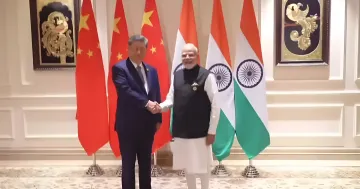
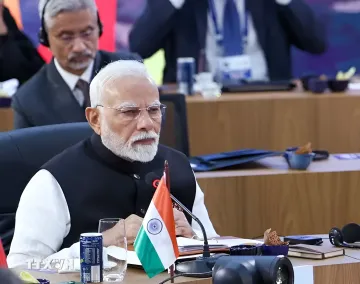
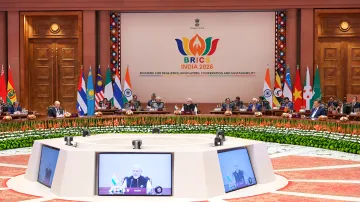
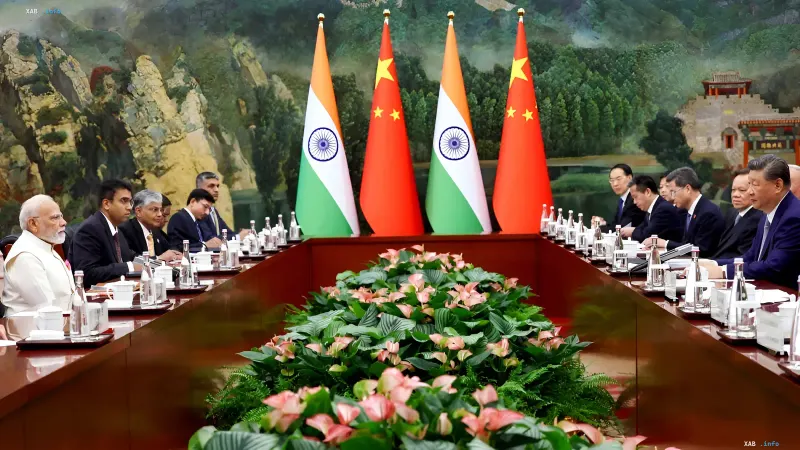
Before meeting in New Delhi, Indian Prime Minister N. Modi and Chinese President Xi Jinping had already held talks on the sidelines of the SCO summit in Bishkek. Xi Jinping's visit to India to attend the BRICS summit on 12–13 September marked his first trip to New Delhi since 2019. According to Chinese state media, as a result of the meeting the leaders reached a consensus that China and India should be partners rather than rivals, marking a return of the relationship to a more predictable, stable course.
Contradictory Data
The sources contain a minor discrepancy in chronology and in the nature of some facts. The original text describes Xi Jinping's visit to New Delhi as planned ("as scheduled"), whereas the publication of 13 September records an already-held meeting and a reached consensus — that is, the event moved from plan to fact. In addition, information about the construction of a large dam on the Brahmaputra is presented in the source as probabilistic ("apparently"), not as a confirmed fact, and requires additional verification. The trade figure of 151.1 billion dollars is given in the original material without reference to an independent statistical source.