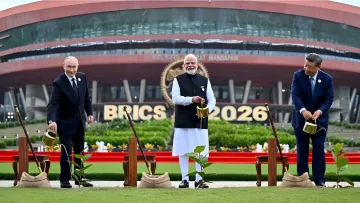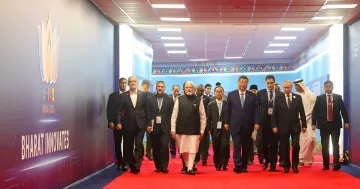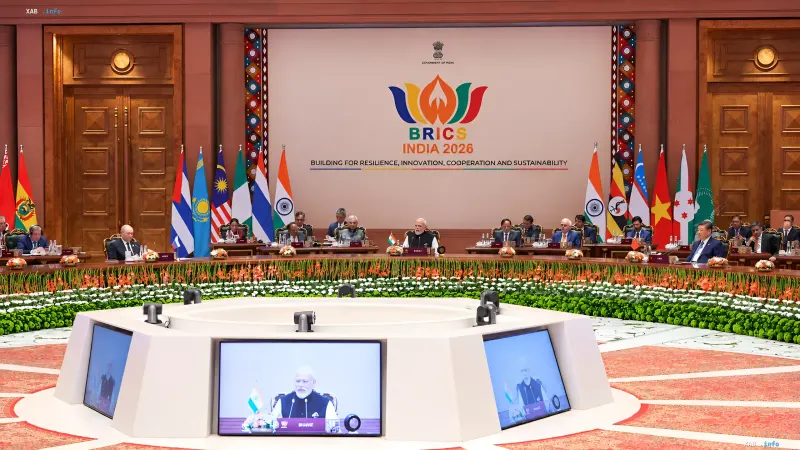
The 18th BRICS Summit has concluded at the Bharat Mandapam in New Delhi, with the leaders adopting the New Delhi Declaration, consisting of 140 points. The document became the main outcome of the multi-day negotiation program and recorded the bloc's positions on global trade, finance, the reform of international institutions, and food security. Two themes received particular attention in the briefings and speeches: the fate of the long-discussed idea of a single alliance currency and the push toward settlements in national currencies. According to analysts, it is precisely these decisions that set the vector of BRICS economic integration for the coming years and are of direct significance for countries oriented toward diversifying trade flows, including Uzbekistan.
Common Currency: The Official Cross
One of the most discussed topics of the summit was speculation about the introduction of a single bloc currency, to which, as it turned out, an official cross has now been put. Indian Foreign Ministry Secretary Sudhakar Dalvi confirmed at a briefing in New Delhi that the alliance is not considering the creation of a common single monetary unit. Thus, the Indian side, which is heading the 2026 chairmanship, has publicly closed the discussion that had been sustained for several years by part of the expert and media landscape. New Delhi's official position is that an artificial supercurrency is neither a necessary nor a realistic tool for a bloc with such a diversity of economies and currency regimes.
National Currencies and Alternative Payments
Instead of a single artificial currency, the main emphasis is placed on the direct use of each country's national currency in mutual trade and investment. To this end, according to data presented at the summit, alternative transaction mechanisms are being developed to ensure fast, cheap, and secure international payments. The logic of the approach is simple: rather than creating a new monetary instrument, BRICS countries are striving to bypass intermediation in others' reserve currencies, settling with each other in their own money. This reduces currency risks, conversion costs, and dependence on infrastructure controlled by third parties.
Reform of Global Institutions: Modi's Position
In his address, Indian Prime Minister Narendra Modi emphasized that international institutions created in the mid-20th century — the UN, the Security Council, the IMF, and the World Bank — do not reflect today's realities. He called for comprehensive reforms taking into account the interests of developing countries, which in the document and in the speeches are referred to by the collective term "Global South." This rhetoric became a cross-cutting theme of the New Delhi Declaration: the bloc declares the need to redistribute influence in global governance in favor of countries with a growing share in the world economy.
WTO, Sanctions, and the "BRICS Grain Exchange"
The declaration approved specific initiatives for the swift restoration of the WTO Appellate Body's dispute-settlement function, which is important for the predictability of trade rules. A separate position was recorded on limiting unilateral sanctions and protectionist tariffs. It also provides for expanding financing of infrastructure projects in national currencies through the New Development Bank (the BRICS Bank) under the leadership of Dilma Rousseff, as well as the launch of the "BRICS Grain Exchange," aimed at strengthening food supply chains within the bloc.
What This Means for Uzbekistan
These decisions are also of significant importance for Uzbekistan in terms of external trade without third-party restrictions, conducting settlements directly with key partners in national currencies, and expanding the possibilities of alternative logistics corridors. For a country actively developing its transit and production potential and striving to diversify payment instruments, BRICS's course on national currencies and alternative payment mechanisms opens additional channels for reducing transaction costs and strengthening settlement autonomy.
Contradictory Data
It is appropriate here to honestly distinguish two versions. The official position of India, voiced by Foreign Ministry Secretary Sudhakar Dalvi, is measured: there is no common currency and none is planned; the bloc is betting on settlements in national currencies and alternative payment mechanisms. At the same time, a number of Russian and pro-bloc outlets present the same events in a sharper frame — as a move toward an "alternative to the dollar" and a "settlement system invisible to the US." Formally, these versions do not contradict each other in fact (neither implies a single currency), however, the media presentation often exaggerates the degree of readiness and politicization of the process, while official New Delhi emphasizes the pragmatic, rather than confrontational, nature of the initiatives. It is important for the reader to distinguish the bloc's declarative goals from the real, still-being-developed mechanisms.
Transition of the Chairmanship: China and Beijing-2027
In 2027, the BRICS chairmanship will pass to China, and the 19th summit will be held in Beijing. This means that the initiatives enshrined in the New Delhi Declaration — from settlements in national currencies to the "Grain Exchange" and the reform of institutions — will be carried into practical implementation under Chinese leadership, which is expected to provide the process with additional resource and organizational support.