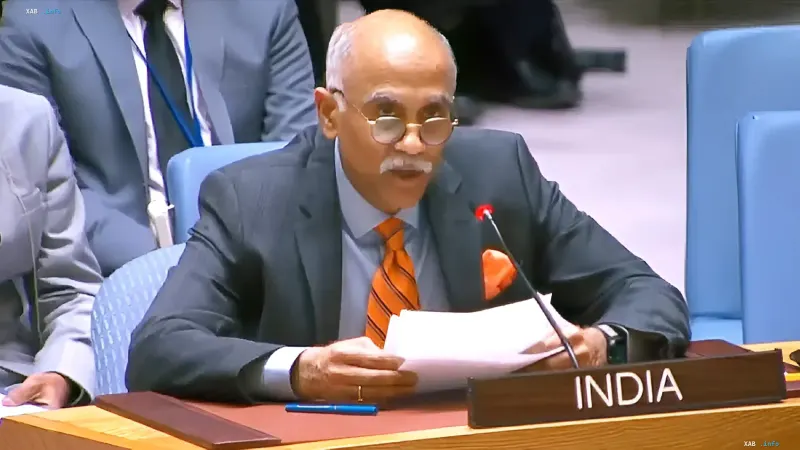
During UN reform discussions in New York on October 26, India's Permanent Representative to the UN, Harish Parvathaneni, stated that New Delhi opposes the creation of a "second-tier" group of permanent members in the Security Council and demands equal veto power for all permanent members in an expanded format. According to him, preserving the privileges of the current five permanent members while depriving new members of veto power will only exacerbate existing inequalities within the global organization.
New Delhi's Position
The diplomat stressed that proposals for permanent membership without veto power create "second-tier" members of the Council. "Fairness and justice require that all permanent members enjoy equal rights and responsibilities," Parvathaneni declared, adding that as long as the veto mechanism remains in the Council, it must also apply to new permanent members.
How the Security Council is Structured Today
Currently, the Security Council consists of five permanent members—Russia, China, the United States, the United Kingdom, and France—who hold veto power, alongside ten non-permanent members elected for two-year terms. The only expansion of its composition took place in 1965, when the number of non-permanent seats was increased from six to ten, while the number of permanent members remained unchanged.
Historical Initiatives and the African Union Model
In 1997, the then-President of the UN General Assembly, Razali Ismail of Malaysia, proposed expanding the Council's composition, including adding five new permanent members, but without veto power. Earlier this year, the African Union officially put forward its own reform model, providing for at least two permanent seats for Africa as well as veto power.
The Group of Four and Moscow's Support
India, along with its Group of Four partners—Brazil, Germany, and Japan—has called for negotiations on expanding both permanent and non-permanent seats. These reforms have received backing from Russia: at the General Assembly session last September, Foreign Minister Sergey Lavrov reaffirmed Moscow's support for granting permanent seats to India and Brazil and called for increased representation for Asian, African, and Latin American countries.
The Charter Ratification Barrier
Any amendments to the UN Charter require ratification by two-thirds of member states, which effectively implies the consent of all five current permanent members. Against this backdrop, India's argument for equal veto power becomes a crucial condition for any potential expansion: in New Delhi's estimation, without granting veto power to all permanent members, the reform will merely cement existing inequalities within the Security Council structure.