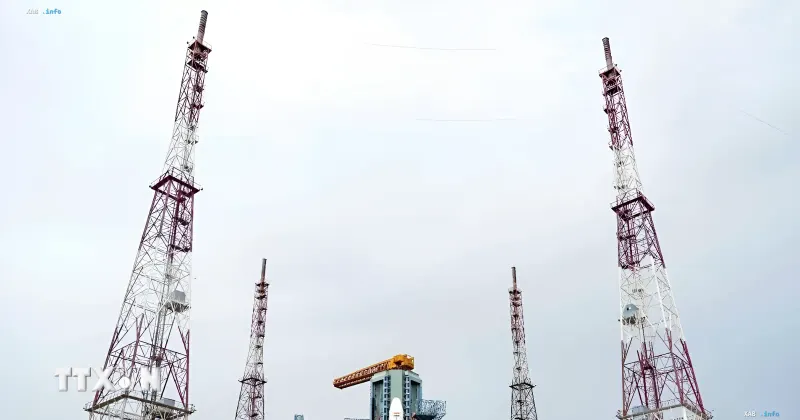
On October 30, 2026, the Indian Space Research Organisation (ISRO) successfully launched the next-generation navigation satellite NVS-03 into orbit. The GSLV-F18 carrier rocket lifted off from the Satish Dhawan Space Centre on Sriharikota Island (Andhra Pradesh) at 18:21 UTC (23:51 Indian Standard Time). Approximately 30 minutes after liftoff, ISRO confirmed that the spacecraft, weighing over two tons, had been injected into the target geostationary transfer (elliptical) orbit with high precision, as stated by agency chairman Vanniaperumal Narayanan. On October 31, Prime Minister Narendra Modi posted on social media X to congratulate ISRO scientists and engineers on the mission's success, calling it a major step in strengthening the national NavIC navigation system.
Mission Parameters and Launch Vehicle
The launch was carried out using a three-stage GSLV Mark II rocket (flight designation GSLV-F18) standing approximately 52 meters tall. According to ISRO, this is the 14th flight of this variant, 12 of which have been successful. The NVS-03 satellite, formerly designated IRNSS-1L, became the third next-generation spacecraft introduced into India's navigation network. Following orbital insertion, the spacecraft must undergo a commissioning phase and checks of its onboard systems before being integrated into the operational constellation.
Third Next-Generation Satellite with Atomic Clocks
The NVS series satellites are equipped with atomic clocks and advanced technologies that, according to ISRO, enhance the accuracy, stability, and signal compatibility of the NavIC system. Transitioning to next-generation spacecraft allows India to update its aging constellation and ensure more reliable positioning. The deployment of NVS-03 completes the baseline set of next-generation satellites envisioned under the national navigation development program.
Restoring NavIC's Minimum Operational Configuration
The key practical significance of the launch lies in restoring the network's minimum operational configuration, which, according to ISRO, consists of four satellites. Prior to the launch of NVS-03, three spacecraft remained fully operational, and the system had recently faced reduced capacity as some satellites reached the end of their operational lifespans or experienced technical issues. Following the deployment of NVS-03, ISRO leadership stated that the constellation now possesses the necessary number of spacecraft for full functionality, although the satellite is still undergoing system verification checks.
Strategic Significance: Independence from GPS and BeiDou
NavIC is a regional satellite navigation system developed by India that provides positioning, navigation, and timing services across the country and an extended area of approximately 1,500 km beyond its borders. The system serves transport, shipping, telecommunications, vehicle tracking, as well as defense and security tasks. The development of NavIC allows New Delhi to reduce its dependence on foreign navigation systems, primarily the American GPS and Chinese BeiDou, which Prime Minister Modi linked to enhancing technological self-reliance and safeguarding strategic infrastructure.
Context: A Course Toward Independent Space Technologies
The successful launch of NVS-03 aligns with India's broader strategy to develop its own space technologies and national digital infrastructure. The stable operation of the navigation constellation is viewed as an element of the country's strategic security capabilities and an economic development factor, as precise positioning is utilized across civil and commercial sectors. Thus, the GSLV-F18 mission reaffirms New Delhi's commitment to strengthening an independent space industry and expanding the application of positioning systems in everyday and strategic domains.