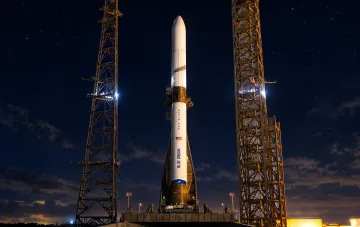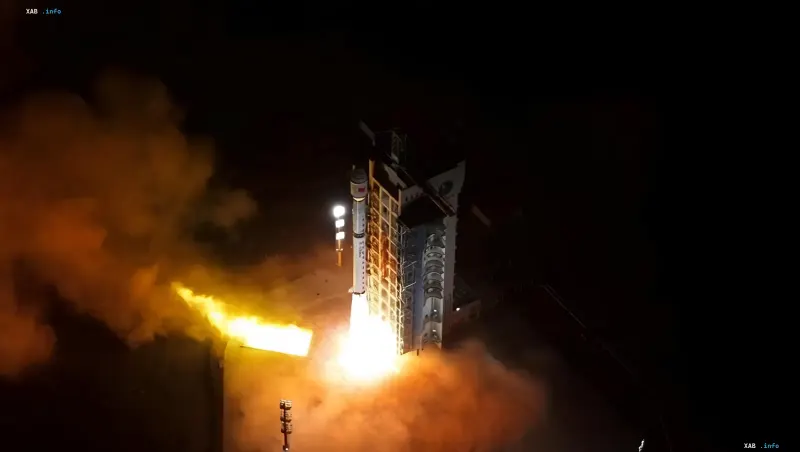
On November 11, 2026, China successfully completed another space launch: at 19:41 local time (14:41 Moscow time), a Long March 2D rocket blasted off from the Jiuquan Satellite Launch Center, placing the Pathfinder satellite into its intended orbit. This was reported by Chinese state media. The mission marked the 677th flight of the Long March rocket family, one of the most prolific in global astronautics. Images published online show the bright engine flame cutting through the darkness of the night sky, piercing clouds of hot steam and smoke as the booster stage separates from the launch complex.
Long March 2D: The Workhorse of Chinese Launches
The Long March 2D carrier is a two-stage liquid-fueled rocket developed by the Shanghai Academy of Spaceflight Technology (SAST). The design is capable of delivering up to 1.3 tons of payload into a sun-synchronous orbit at an altitude of approximately 700 km. The rocket is highly versatile, capable of performing both single and multi-satellite launches, which makes it sought after for both commercial and scientific missions. Across the 677 total flights of the Long March family and dozens of launches of the 2D variant specifically, this rocket has established itself as one of the fundamental tools of China's orbital program.
Pathfinder and the Origin Exploration Program
The satellite, internationally named Pathfinder (Chinese designation: “Tanyuan Jihua Tanluzhe”), was developed under the Origin Exploration program. However, as analysts emphasize, the program's name alone does not allow for the definitive conclusion that the spacecraft is intended specifically for studying the origins of the Universe. The exact purpose of the satellite, its scientific instrumentation, and specific research objectives are currently not disclosed. To better understand the mission, additional details regarding the equipment installed on board the Pathfinder are required.
Context: China Increases the Pace of Orbital Launches
The launch of Pathfinder comes against the backdrop of a steady increase in the number of Chinese space missions. The Jiuquan launch site, located in the desert province of Gansu, remains one of the country's key launch complexes and is traditionally used for placing spacecraft into low Earth and sun-synchronous orbits. The 677th Long March flight confirms that China continues to maintain a high pace of launches, comparable to the indicators of other leading space powers. Each successful launch strengthens the infrastructure and expertise necessary for more ambitious projects, from human spaceflight to lunar programs.
What is Known and What is Still Lacking
Confirmed facts: the launch took place, the rocket delivered the payload to the specified orbit, and the mission was successful. Chinese state media reported no deviations or malfunctions. However, details of the Pathfinder scientific mission remain closed: no list of instruments, no specific research questions, and no project partners are mentioned in open sources. Experts note that it is not uncommon in Chinese space practice for the exact purpose of a craft to become known only after some time, as observation results are published. Apparently, additional information about Pathfinder will appear in the coming weeks or months as data from orbit begins to enter the public domain.