A group of Taiwanese scientists has published a paper assessing the impact of large rocket launches on Earth's ionosphere and, consequently, on the performance of global positioning systems (GPS). The authors used data from ground-based sensors that recorded massive disturbances during the Artemis II mission, concluding that such events can introduce meter-level errors in coordinate positioning — a critical issue for GPS-dependent drones and autonomous vehicles.
Measuring the rocket's impact on the ionosphere
To conduct the assessment, the researchers utilized a network of stations designed to track tectonic plate movement. These stations are equipped with high-precision GPS receivers, providing the most accurate picture of the global positioning network's state. The ionosphere extends from 48 to 965 km above sea level and contains free electrons — an ionized region of the upper atmosphere. Because GPS satellites are positioned much higher, at an altitude of about 20,200 km, signals passing through the disturbed ionosphere experience delays, affecting positioning accuracy.
Three disturbance episodes per flight
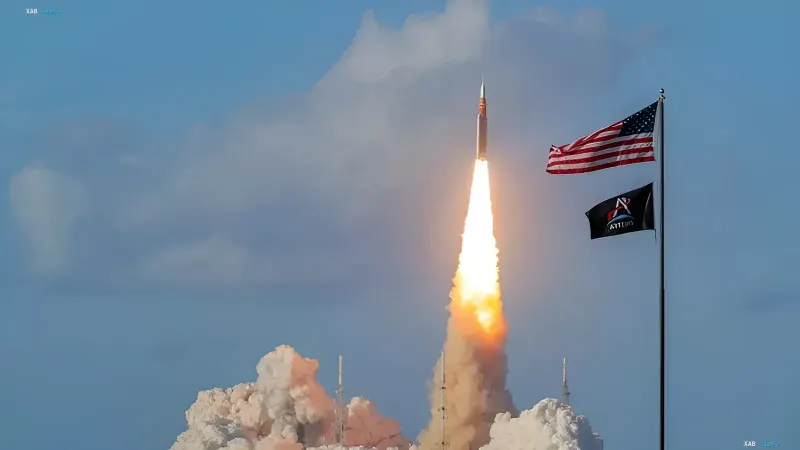
According to the measurements, the Artemis II rocket launch on April 1, 2026, caused three major ionospheric disturbances. The first occurred immediately at launch, accompanied by the propagation of acoustic and gravity waves. The second was recorded approximately 1 hour and 48 minutes after liftoff, when the upper stage engines were ignited to raise the orbit's apogee. The third episode occurred about 25 hours after launch during the trajectory insertion maneuver toward the Moon. The latter two events were marked by particularly pronounced changes in electron density.
Why upper stages had a stronger effect
The most massive disturbance was associated with the second episode: it spread over approximately 50 degrees of longitude over North America, covering roughly 5,000 km. The researchers emphasize that the impact is created not only by the mechanical passage of the rocket through the atmosphere. Rocket fuel combustion products, entering the ionized medium, trigger chemical reactions that reduce the concentration of free electrons, while shock waves play an additional role. Remarkably, subsequent engine firings caused stronger disturbances than the initial SLS boosters, despite significantly lower thrust, highlighting the importance of altitude and maneuvering conditions.
What this means for GPS and autonomous systems
Changes in electron concentration affect the propagation speed of GPS radio signals. The authors estimate that such disturbances could lead to coordinate determination errors of several meters, which is potentially significant for self-driving cars and drones. However, the researchers do not cite instances of actual failures during the historic crewed launch and subsequent orbital maneuvers. It is noted that the GPS signal disturbance caused by the SLS rocket was ten times stronger than anything observed during the Starship test flights, and future lunar and Martian missions will impact the system even more severely. The authors urge that measures be taken before accidents related to such errors become a reality.