New York-registered American startup InfinitEnergy has received a $250,000 grant from the New York State Energy Research and Development Authority (NYSERDA). The funds were allocated under the innovation program for power generation and storage, which supports promising technologies that have not yet reached the commercial market. The company intends to channel the funding into further development of battery cells and verifying their performance under conditions where external mechanical pressure is not required.
The Challenge: The Problem of External Pressure
The key technical challenge of solid-state batteries that InfinitEnergy is trying to solve is the need for constant external mechanical pressure for stable cell operation. In such a design, pressure is primarily required so that the internal layers of the battery fit tightly against each other and maintain reliable electrical contact. Eliminating external pressure will simplify the design and reduce the weight of the finished product, which is especially important for applications in transportation and portable electronics.
Who Is Behind the Project
The company was founded by Quinn Qiao, chair of the Department of Mechanical and Aerospace Engineering at Syracuse University, and Anthony Terroni, a researcher in the same department. The team emphasizes that the received funding should help bring the development closer to practical application, although it is still too early to talk about the technology's readiness for mass production.
Why Solid-State Batteries Are Considered Promising
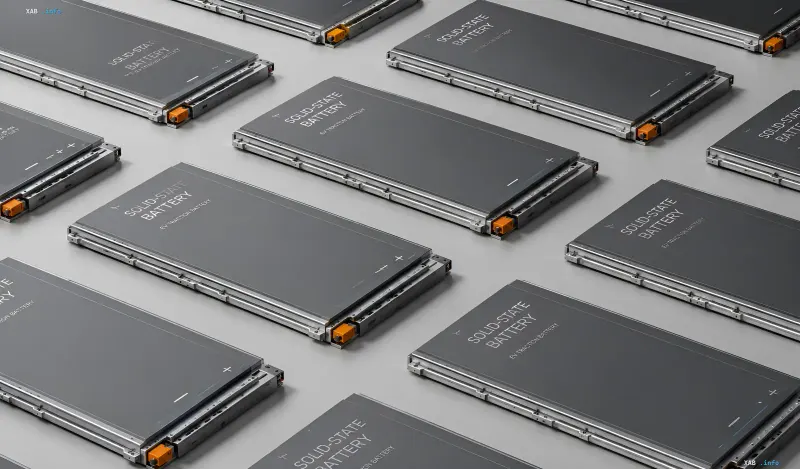
Unlike traditional lithium-ion batteries, solid-state cells use a solid electrolyte to transfer ions between the anode and cathode. This same layer serves as a physical barrier preventing short circuits and generally possesses higher chemical and thermal stability compared to liquid electrolytes. An additional advantage is potentially higher energy density: individual developments can reach 500 Wh/kg compared to approximately 250 Wh/kg for conventional lithium-ion cells. This is why the industry views solid-state architecture as one of the main candidates to replace current batteries, although, according to major manufacturers, mass deployment of large cells for electric vehicles remains far off.
What Remains Undisclosed and Open Questions
InfinitEnergy does not disclose the chemical composition of its cells, their actual energy density, or the number of charge-discharge cycles. Without this data, it is impossible to objectively assess how ready the claimed technology is for serial production and how it will compete with existing solutions. Nevertheless, the very fact that a grant was awarded by the New York State government program indicates that the team's approach — eliminating external pressure — is recognized as a promising direction in energy storage.