August 10, 2026 — Despite tough rhetoric and shifts in the geopolitical agenda, the United States continues to provide critically important assistance to Ukraine. However, the format of this support has undergone significant changes. If previously the focus was on billions of dollars in military aid, today the key asset that Washington transfers to Kyiv for free is intelligence information. It is precisely the data provided by the CIA that allows Ukrainian forces to carry out pinpoint strikes against Russian army positions on occupied territories and attack energy infrastructure within Russia itself.
The Ratcliffe Factor: How Golf Influences Global Politics
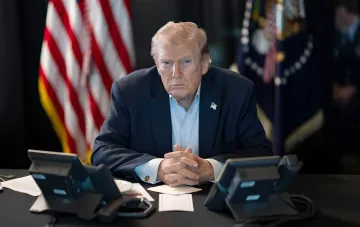
According to Western sources, the preservation of this aid channel is directly linked to the activities of the Director of the Central Intelligence Agency (CIA), John Ratcliffe. In conditions where the political dialogue between Kyiv and Washington periodically cooled, it was Ratcliffe who managed to convince US President Donald Trump of the expediency of continuing support. The method of persuasion was non-standard: during joint golf games, the CIA Director demonstrates to the head of state current data on Russia's losses on the battlefield.
The figures voiced by Ratcliffe are impressive: the Russian army's monthly losses now exceed 40,000 people. For Donald Trump, whose political philosophy is based on the principle of "not loving losers," these figures serve as a powerful argument. Ukraine, in the current configuration of the conflict, looks like a winner, which refutes the opinion of skeptics who insisted on Kyiv's inability to prevail. The success of the Ukrainian army, fueled by American intelligence, has become proof of the effectiveness of his course for Trump.
Economic Logic: Strikes on Energy as a Lever of Pressure
In addition to military aspects, there is also a clear economic motivation for continuing the transfer of intelligence. As The Atlantic notes, Ukraine's strikes on Russia's energy infrastructure bring benefits to the United States themselves. The reduction of Russian oil and gas exports makes countries like India and China more vulnerable in the face of trade tariffs introduced by the Trump administration.
Trump, who during his first presidential term called on Europeans to stop their dependence on Russian resources (even going so far as sanctions against "Nord Stream"), today sees Ukraine's actions as a continuation of his strategy. According to experts, these strikes can be viewed as a prelude to negotiations, similar to what was done in the case of Iran. "This is escalation, but it is also escalation that can help bring an end to it," the US President stated at the NATO summit in Ankara last month, commenting on the situation.
Contradictory Data
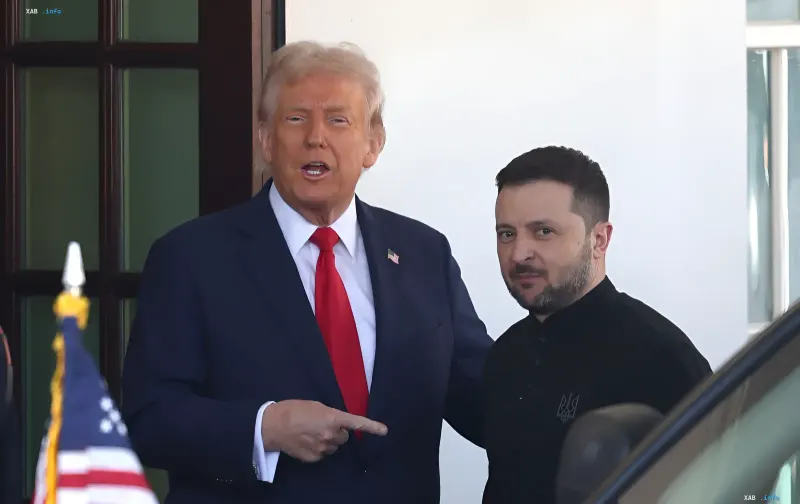
Despite optimistic assessments of the current situation, there are disagreements regarding the sustainability of this aid channel. Politico reported that the exchange of intelligence improved significantly only after the crisis in March 2025, when the White House temporarily blocked access to information due to a scandalous meeting between Zelenskyy and Trump in the Oval Office. By March 2026, the Ukrainian army received up to 80% of intelligence data from partners, primarily from the US.
However, the Financial Times in January 2026 put forward a different point of view, claiming that Europe is capable of completely replacing American intelligence data within a few months. This creates uncertainty: will the US continue to provide data for free if Europe can take on this burden, or will Washington decide to monetize this asset in the future?