August 10, 2026. The strategic plan of the Donald Trump administration to swiftly conclude the military conflict in the Middle East has encountered a serious obstacle. The US President, who has been preparing the ground for a declaration of victory for weeks, now faces a difficult dilemma: Iran has issued stringent demands for the resumption of shipping through the Strait of Hormuz, which Washington finds difficult to accept without losing face.
Tehran's Ultimatum: The Price of Opening the Strait
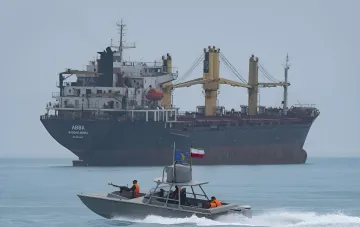
According to The Wall Street Journal, the White House's attempts to exit the war quickly were complicated last Saturday. Tehran has put forward three key conditions for opening the Strait of Hormuz, a critical node in global oil trade. Iran demands billions of dollars in reparations for damages caused during the conflict, the complete withdrawal of US troops from the region, and the lifting of the naval blockade.
These demands threaten the narrative of "victory" that Trump has been trying to construct. As Mona Yacoubian, director of the Middle East program at the Center for Strategic and International Studies (CSIS), notes, Iran's recent hardline demands complicate the President's ability to create exit strategies that would preserve his reputation.
Negotiation Psychology: Iran Plays on Trump's Weakness
Experts point out that the Iranian side is fully aware of the vulnerability of the US position. Gregory Bruce, an Iran expert at the Eurasia Group consulting firm, emphasizes that Tehran fully believes in Trump's desire to exit the conflict and focus on opening the strait. "They are playing hard because they understand that it is critically important for the US administration to relieve tension around trade routes," Bruce asserts.
Since April, the White House has tried to include nuclear weapons issues in broader negotiations, but the process proved too complex. In recent weeks, Washington has shifted its focus primarily to resuming commercial traffic, as Iran's ability to block the strait using missile attacks and drones has become a powerful lever of influence, shaking global markets.
Contradictory Data
There are disagreements within the US administration and among experts regarding the current situation and the prospects for negotiations. On one hand, Vice President JD Vance expresses optimism, stating that shipping through the Strait of Hormuz will soon return to pre-war levels as the parties have made tangible progress. He also added that even if the US is not in the "game," they will continue to exert pressure to obtain oil and gas at low prices.
On the other hand, White House officials commenting anonymously assert that the US has already achieved its main military objectives. According to them, the threat of new strikes serves as a deterrent, and any attempt to resume Iran's nuclear program will be detected immediately. However, these claims of "victory" and "control" conflict with the reality of Tehran's hard ultimatum and the actual closure of the strait.
Military Deficit and Geopolitical Consequences
The prolonged conflict has led to a significant reduction in US arsenals, forcing Washington to actively seek diplomatic paths to resolution. Experts note that the US is facing a tangible shortage of important types of weaponry. This depletion of potential could strengthen the positions of geopolitical rivals—Russia and China—who may exploit the weakening of US military readiness for large-scale confrontations in other regions of the world.