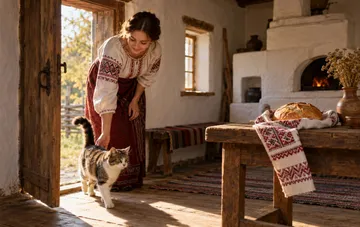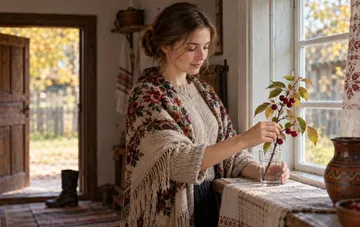
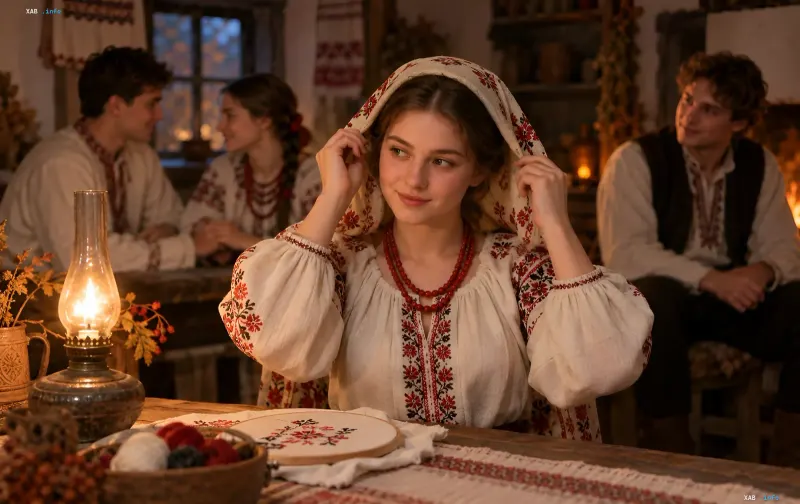
The Feast of the Intercession of the Holy Theotokos has traditionally held a special place in folk tradition, closely intertwined with family creation, protection, and the beginning of a new agricultural cycle. According to Daria Antsibor, a folklorist and scientific editor of the «Vitoky» project, the main meaning of the holiday in traditional culture was patronage. The name originates from the church legend about the veil with which the Virgin Mary protected praying people. This image was also transferred to everyday life: the Intercession «covers» the dwelling with a roof, the ground with the first snow, and a girl's head with a headscarf, which had a direct connection to wedding rituals and girls' hopes for a speedy marriage.
Symbolism of Marriage and Folk Prayers
In Ukrainian villages, there has long been a belief that the Intercession helps girls find family happiness. In the Dnipro region, there was a saying about how the holiday «stood in church.» Girls appealed to the saint with traditional pleas: «Most Holy Intercession! Cover my head, even with a rag, so I won't be a maiden.» Covering the hair with a headscarf among Slavic peoples historically denoted the transition to the status of a married woman, so such requests reflected a deep desire to change social status and find a match.
The Beginning of the Wedding Season and Autumn Evening Gatherings
The wedding and matchmaking season officially started from the Feast of the Intercession and lasted until the beginning of the Philip's Fast. Such a calendar was dictated by purely practical considerations: by mid-autumn, main field work and harvesting were completed, after which the usual lifestyle of peasants changed. The time of long autumn evening gatherings began. In various regions of Ukraine, these meetings were called differently, but their essence remained unchanged: young people received a legitimate opportunity to gather together, communicate, sing, and look out for each other during joint work and leisure.
Leisure Traditions and the Role of Gatherings in Youth Life
As ethnologist Natalia Stisheva emphasizes in her study «Ukrainian Calendar Holidays of the Autumn Cycle», evening gatherings performed a crucial social function. They allowed young men and women to regularly see each other in a safe and community-controlled environment. While girls were engaged in handicrafts — spinning, embroidering, and sewing — boys crafted household tools or courted their chosen ones. Such a format of joint labor, accompanied by jokes, songs, and legends, created an ideal space for rapprochement, the birth of sympathies, and preparation for future marital unions.
Contradictory Data
While most ethnographic sources unambiguously link the Intercession with the beginning of the wedding season and youth festivities, significant local differences in rituals were observed across various regions of Ukraine. For example, the timing of evening gatherings and the strictness of work bans on the holiday could vary noticeably depending on local traditions in Central Ukraine, the Carpathians, or Sloboda Ukraine. Some researchers point out that in certain communities, matchmaking was allowed to begin even before the Intercession if weather conditions and the completion of field work permitted, which sparks discussions about the exact chronology of traditional folk calendars.